Insights

Follow us and subscribe to our newsletter to keep in touch

The Hermix’s Guide to RFP, RFQ, and RFI in Public Procurement

Creating requests for proposal, quotations, and information is central to public sector buying. Get these procurement documents right and you attract qualified suppliers who understand your needs. Get them wrong and you waste months evaluating proposals that miss the mark.

This guide shows procurement professionals how to use RFPs, RFQs, and RFIs effectively in government tendering. You’ll learn when to use each document type, how to structure them for better responses, and what evaluation criteria actually work. We’ll cover the complete RFP process from defining requirements through vendor selection, with specific examples from public sector procurement. Whether you’re issuing your first tender or refining your approach, these insights help you buy better.

Create your free account and start winning public contracts, easier.

What is the RFP Process in Public Procurement and Why Does It Matter?

The RFP process is how government organizations solicit proposals for complex purchases where the solution approach matters as much as pricing. Unlike simple purchases where you know exactly what you want, an RFP invites suppliers to propose how they’ll meet your requirements. This process allows you to evaluate different approaches and select the vendor or supplier whose proposal best satisfies your needs.

In public procurement, the RFP process follows a structured path. First, your procurement team defines requirements by working with internal stakeholders to document what you need. Next, you prepare the RFP document that specifies project scope, evaluation criteria, timeline, and submission requirements. After publishing the tender on official procurement portals, you answer supplier questions, receive proposals, evaluate submissions against published criteria, and make your final selection. This entire cycle typically takes 3-6 months depending on project complexity.

The RFP process allows transparency and fair competition while giving you flexibility to consider innovative approaches. When you issue an RFP, you’re not just asking “how much does this cost?” You’re asking “how will you deliver this, and why is your approach better?” This matters for complex technology implementations, consulting services, or any situation where methodology and capability differentiate vendors. The structured evaluation ensures you can defend your selection decision with documented evidence.

When Should Buyers Use RFQ vs RFI vs RFP in Government Procurement?

Understanding when to use each procurement document type saves time and gets better results. An RFI (request for information) comes first when you need market intelligence. Issue an RFI when you’re exploring what solutions exist but haven’t finalized requirements. Suppliers respond with information about their capabilities, products and services, and approaches without providing formal pricing. RFIs help you understand the market before committing to a specific procurement path.

An RFQ (request for quotation) works when you know exactly what you want and just need pricing. Use RFQs for purchasing well-defined goods or services with clear specifications. For example, if you need 500 laptops with specific technical specs, an RFQ asks vendors to quote their price for exactly what you specified. RFQs create straightforward price comparisons because every vendor quotes on identical requirements. The evaluation focuses primarily on price, delivery terms, and warranty rather than on solution approach.

A request for proposal applies when the purchase involves complexity, customization, or when vendor methodology matters. RFPs work for IT system implementations, facilities management, consulting projects, or any situation where you want vendors to propose their approach. You provide requirements and evaluation criteria, then evaluate how well each proposal addresses your needs. Public sector buyers often issue RFPs for services contracts where technical approach, team qualifications, and delivery methodology carry significant weight alongside pricing.

Some organizations use RFx as shorthand for this family of procurement documents. You might also encounter ITT (invitation to tender) which functions similarly to an RFP, or EOI (expression of interest) which resembles an RFI. The specific terminology varies by country and sector, but the underlying purpose remains consistent. Choosing the right document type based on what you’re buying and how much you know about the solution prevents wasted effort.

How Do You Create an Effective RFP Document for Government Contracts?

Creating an effective RFP document starts with a clear outline of what you’re buying and why. Begin with an executive summary that explains your organisation, the project background, and objectives. This section gives potential vendors context about your needs and goals. Specify the problem you’re solving or the capability you’re building. When vendors understand your “why,” they can propose solutions aligned with your actual needs rather than just responding mechanically to requirements.

The scope of work section forms the heart of your RFP. Here you specify exactly what you need the vendor to deliver. For services procurement, outline the deliverables, performance standards, and service levels required. For complex projects, break the scope into phases or work packages. Include enough detail that vendors understand requirements, but avoid being so prescriptive that you eliminate innovative approaches. Well-crafted RFP documents balance clarity with flexibility, defining outcomes you need while allowing vendors to propose how they’ll achieve them.

Evaluation criteria must be explicit and measurable. Specify what criteria you’ll use to evaluate proposals and how much weight each carries. Common criteria include technical approach (30-40%), relevant experience (20-30%), team qualifications (15-20%), and pricing (20-30%). Make the evaluation criteria transparent so vendors know what matters most. When suppliers understand how you’ll evaluate their proposal, they can tailor responses to address your priorities. Clear criteria also make your evaluation process more efficient because reviewers know exactly what to assess.

Additional sections should cover submission requirements, timeline with all key dates, terms and conditions, compliance requirements, and contact information for questions. Specify format requirements clearly: page limits, required sections, document formats, and how to submit. Include a detailed timeline showing when you’ll answer questions, when proposals are due, evaluation period, and expected contract award date. These details help potential suppliers plan their response and ensure consistency across all submissions.

What Makes a Successful RFP in Government Tendering?

A successful RFP attracts multiple qualified proposals that genuinely meet your needs. Success starts with requirement definition. Before drafting your RFP, invest time understanding your organisation’s needs. Engage stakeholders who will use the product or service. Document their requirements clearly. Too often, procurement teams rush RFP drafting without fully clarifying what they’re buying, resulting in proposals that don’t satisfy actual business requirements.

Clarity throughout the document prevents misaligned proposals. Use plain language without jargon. When technical terms are necessary, define them. Structure the document logically with clear headings, numbered sections, and consistent formatting. Many suppliers respond to RFPs from multiple government agencies. If your document is confusing or poorly organized, vendors waste time seeking clarification instead of crafting strong proposals. Clear RFP documents get better responses because suppliers can focus on demonstrating their capabilities rather than deciphering your requirements.

Realistic timelines and reasonable evaluation criteria mark successful RFPs. If you compress the response timeline too much, you may lose qualified vendors who need adequate time to prepare thoughtful proposals. If your evaluation criteria overweight factors like local presence or specific certifications, you may artificially limit your vendor pool. The best RFPs balance thoroughness with accessibility, attracting a competitive field of capable suppliers without creating unnecessary barriers. We’ve seen that successful RFPs in public procurement typically receive 4-8 qualified proposals, suggesting the requirement definition and evaluation approach resonate with the market.

How Can Procurement Teams Make the RFP Process More Efficient?

Making the procurement process more efficient starts with preparation before you issue RFPs. Conduct market research upfront to understand what solutions exist and typical pricing ranges. This intelligence helps you set realistic budgets and timelines. When you publish an RFP with a budget that’s 50% below market rates, you waste everyone’s time. Similarly, if you specify requirements that only one vendor can meet, the competitive process becomes meaningless. Understanding market realities before drafting saves months of iteration.

Templates and standardized components speed RFP drafting while ensuring consistency. Develop templates for common procurement types: IT services, facilities management, consulting, equipment purchases. Include standard sections for terms and conditions, submission requirements, and evaluation criteria. When you issue a new RFP, you can use the template as a foundation and customize the technical requirements. This approach ensures you don’t forget critical sections while reducing the time to prepare each new procurement document.

Collaborative tools help internal stakeholders contribute efficiently. Modern procurement software allows multiple team members to review and comment on draft RFPs simultaneously. Subject matter experts can review technical requirements without waiting for sequential document circulation. Project management platforms track who needs to review which sections and by when. This collaborative approach reduces the RFP development cycle from months to weeks while improving quality through broader input. The time saved on document preparation can be redirected toward better requirement definition and vendor engagement.

Clear processes for handling vendor questions reduce back-and-forth during the response period. Establish upfront that all questions must be submitted in writing by a specific deadline. Publish answers to all vendors simultaneously, maintaining fairness. Some procurement teams hold bidder conferences where vendors can ask clarification questions directly. Whether you use written Q&A, conferences, or both, structured clarification processes ensure all potential suppliers have equal access to information. This reduces protests and challenges after contract award.

What Are the Best Practices for RFP Drafting in Public Sector Procurement?

Best practices for RFP drafting begin with focusing on outcomes rather than prescribing specific solutions. Instead of specifying exact technologies or methodologies, describe the results you need to achieve. This approach invites innovation while ensuring proposals remain relevant to your goals. For example, rather than requiring a specific software platform, specify the functional capabilities and performance requirements the system must deliver. Vendors can then propose various solutions that meet your needs, potentially offering approaches you hadn’t considered.

Involve stakeholders early and continuously throughout RFP development. The people who will use the product or service understand requirements better than procurement teams working in isolation. Schedule workshops with end users, technical staff, and management to gather their input. Document their needs systematically. After drafting the RFP, have stakeholders review it to confirm the requirements accurately reflect their needs. This investment upfront prevents costly misalignment later when the selected vendor delivers something that doesn’t satisfy your actual requirements.

Balance detail with flexibility in your specifications. Provide enough detail that vendors understand what you need without being so prescriptive that you eliminate competitive proposals. In technical specifications, distinguish between mandatory requirements (must-haves) and preferred features (nice-to-haves). This distinction helps vendors understand what’s negotiable and where they must comply fully. Clear specification of mandatory vs. preferred requirements also protects you during evaluation because you can eliminate non-compliant proposals early while considering trade-offs among qualified submissions.

Align evaluation criteria with your actual priorities. If service quality matters more than price, weight technical evaluation heavily. If you need proven capability with similar projects, make relevant experience a significant factor. Many public sector RFPs default to 50/50 technical/financial splits without considering whether that weighting reflects true priorities. We’ve analyzed thousands of government contracts and found that when buyers weight criteria according to what actually matters for project success, they report higher satisfaction with selected vendors.

How Do RFIs Help Shape Better RFPs in Government Procurement?

RFIs provide valuable market intelligence before you commit to a specific procurement approach. Issue a request for information when you’re exploring options but haven’t finalized requirements. RFIs ask suppliers to describe their capabilities, explain their approach to problems like yours, and provide examples of similar work. Because RFIs don’t commit you to a purchase, vendors often share more information about their solutions than they would in a formal proposal.

The responses you receive from an RFI help you shape requirements for the subsequent RFP. If your RFI responses show that most vendors use a particular technical approach, you can evaluate whether to specify that approach or remain technology-neutral. If responses reveal capabilities you didn’t know existed, you might expand your requirements. If all vendors identify specific challenges you hadn’t considered, you can address those in your RFP. RFIs essentially crowdsource market expertise, helping you draft better procurement documents.

Using RFIs before RFPs also helps you identify the vendor pool for your needs. If you receive 15 RFI responses from qualified suppliers, you know there’s healthy market competition. If only 2-3 vendors respond, you might need to reconsider your requirements or budget. This intelligence prevents you from issuing an RFP that attracts insufficient competition. Some procurement teams even use RFIs to shortlist vendors before issuing a formal tender, though this approach must comply with public procurement regulations about fair competition.

The timeframe for RFIs is typically shorter than RFPs since vendors provide general information rather than detailed proposals. Allow 3-4 weeks for responses. Make clear that the RFI doesn’t commit you to a purchase and that you may issue an RFP later. Some vendors invest significant effort in RFI responses hoping to influence the eventual procurement in their favor. While you should welcome detailed information, ensure your final RFP remains fair to all potential bidders based on insights gathered from the entire RFI process.

What Should Your RFP Timeline Include for Realistic Public Procurement?

Your RFP timeline needs to balance thoroughness with efficiency. Start by allocating adequate time for requirement definition and document drafting before publication. We’ve seen procurement teams rush this phase, publishing RFPs with unclear requirements that generate dozens of clarification questions. Spending an extra 2-4 weeks upfront to get requirements right saves months of rework later. Include time for internal stakeholder review and approval before publishing.

After publication, allow sufficient response time for vendors to prepare quality proposals. Simple procurements might need 30 days. Complex services contracts often require 60-90 days. Consider the level of effort required to respond. If you’re asking for detailed technical proposals, team CVs, past performance references, and pricing for multiple scenarios, vendors need time to assemble this information. Compressed timelines favor larger vendors with dedicated bid teams and disadvantage smaller suppliers who might offer innovative solutions but lack resources for rapid response.

Build in time for the question and answer period. Specify a deadline for vendor questions, typically 1-2 weeks before the proposal due date. This gives you time to compile questions, prepare answers, and publish them while vendors still have time to incorporate clarifications into their proposals. Some procurement teams hold bidder conferences 1-2 weeks after publication, providing another opportunity for clarification. Factor these events into your overall timeline.

The evaluation phase requires adequate time for thorough review. For complex procurements, allow 4-6 weeks for proposal evaluation. Evaluators need time to read submissions carefully, score them against criteria, discuss their assessments, and reach consensus. If you plan to conduct negotiations with top-ranked vendors or request a best and final offer, add another 2-4 weeks. After final selection, factor in time for contract negotiation and approvals before award. A realistic timeline for a complex public sector RFP from publication to contract award typically spans 4-6 months.

How Do You Evaluate Proposals Effectively Using Clear Criteria?

Effective proposal evaluation starts with the evaluation criteria published in your RFP. These criteria must be specific enough that different evaluators assessing the same proposal reach similar scores. Vague criteria like “demonstrates experience” allow too much subjective interpretation. Better criteria specify exactly what you’re assessing: “describes at least three similar projects completed in the last five years, with government agencies of comparable size, showing measurable outcomes.”

Assemble an evaluation team with relevant expertise before proposals arrive. For technical procurements, include technical staff who understand the requirements. For services contracts, include people who will work with the selected vendor. Provide evaluators with clear guidance on how to score each criterion. Many public sector procurement teams use numerical scoring (1-5 or 1-10 scales) with descriptions of what each score means. This structure helps ensure consistency across evaluators and provides clear documentation of your selection rationale.

Evaluate all proposals independently before meeting as a group. Each team member should review all submissions and complete individual scoring sheets. This prevents groupthink and ensures every evaluator engages deeply with the proposals. After independent review, convene the evaluation team to discuss scores and resolve any significant discrepancies. The goal isn’t necessarily consensus on every score but understanding why evaluators see proposals differently and ensuring scores reflect considered judgment.

Document your evaluation thoroughly. For each proposal, record scores on each criterion with brief explanations of why that score was assigned. Note any areas where the proposal excelled or fell short. This documentation serves multiple purposes: it helps you explain your selection decision to stakeholders, provides feedback to unsuccessful vendors, and protects you if your decision is challenged. We’ve seen cases where well-documented evaluations withstood legal challenge while poorly documented evaluations created significant problems for procurement teams even when they made the right selection.

What Common Mistakes Should Procurement Teams Avoid?

One frequent mistake is being too prescriptive about the solution. When you specify exactly how vendors must deliver rather than what outcomes you need, you limit innovation and potentially favor incumbent suppliers who know your current approach. This happens especially in recompetitions where procurement teams essentially write an RFP for the current vendor’s solution. Better practice is focusing requirements on business outcomes and letting vendors propose their methodology. You might be surprised by approaches that achieve your goals more efficiently than your predetermined solution.

Unrealistic budgets undermine procurement success. If you publish an RFP with a budget significantly below market rates, qualified vendors may not respond. Those who do respond may propose scaled-down solutions that don’t meet your needs. Conduct market research before finalizing your budget. Understand typical pricing for similar projects. If your budget is constrained, consider reducing scope rather than expecting vendors to deliver the full scope at below-market rates. Mismatched budgets and scope waste everyone’s time and rarely lead to successful outcomes.

Unclear or contradictory requirements generate confusion and weak proposals. We’ve reviewed RFP documents where section 3 required approach A while section 7 required approach B, with A and B being incompatible. Or where the technical requirements specified one timeline but the project management section assumed a different timeline. These inconsistencies force vendors to make assumptions, and their assumptions may not match yours. Before publication, have someone uninvolved in drafting review the entire RFP document specifically looking for contradictions and ambiguities.

Changing requirements during the response period creates unfairness and delays. If you publish significant amendments or clarifications late in the response period, you must extend the deadline to give all vendors equal opportunity to adjust their proposals. Some procurement teams try to avoid extensions by publishing vague initial documents and relying on the Q&A process to clarify. This approach favors vendors who ask the right questions. Better practice is investing time upfront to create a clear, complete RFP document that requires minimal clarification.

How Does Procurement Intelligence Improve Your RFP Outcomes?

Procurement intelligence helps you make informed decisions before issuing your RFP. Understanding what similar organisations have purchased, what they paid, and which vendors won provides context for your own procurement. This intelligence helps you set realistic budgets, understand typical timelines for implementation, and identify potential suppliers you might not have considered. When you know that similar projects typically cost €500K-700K and take 12-18 months, you can plan accordingly rather than guessing.

Analyzing past contract awards reveals patterns about vendor capabilities and pricing. If a particular supplier has won 10 similar contracts across different government agencies, they likely have strong relevant experience. If contract values for similar scope cluster around certain ranges, you understand market pricing. This data-driven approach to budget-setting and vendor qualification produces better RFP outcomes than relying solely on internal assumptions. We’ve seen procurement teams avoid issuing RFPs that would have failed because market intelligence revealed their budget was 40% below typical pricing.

Market intelligence also helps you evaluate proposals more effectively. When a vendor claims their approach is “innovative” or “best practice,” you can verify those claims against what other organisations have purchased. If their pricing is significantly higher or lower than market norms, you can explore why during evaluation. This context helps you distinguish genuinely superior proposals from those that simply claim superiority. Reducing the risk of selecting a vendor whose proposal sounds good but doesn’t reflect real capability or realistic pricing.

Using platforms that aggregate public procurement data gives you this intelligence without manual research. Instead of spending weeks searching individual authority websites and reading tender documents, you can analyze thousands of contracts in hours. This capability matters because procurement teams rarely have time for extensive market research before each RFP. Tools that automatically surface relevant contract awards, supplier performance patterns, and pricing benchmarks make market intelligence practical rather than aspirational. The result is RFPs that reflect market reality and attract proposals that genuinely meet your needs.

Create your free account and start winning public contracts, easier.

Key Takeaways: Creating Better RFPs, RFQs, and RFIs in Public Procurement

  • Use the right document type for your needs – RFIs gather market intelligence, RFQs get pricing for defined requirements, RFPs solicit proposals for complex projects where approach matters
  • The RFP process requires 4-6 months, typically from requirement definition through contract award, and rushing any phase usually creates problems later
  • Clear requirements and evaluation criteria produce better proposals – specify outcomes you need rather than prescribing solutions, and make evaluation criteria measurable and aligned with actual priorities
  • RFIs conducted before RFPs help shape better requirements by providing market intelligence about available solutions, typical approaches, and potential suppliers
  • Realistic timelines allow vendors adequate time to respond – 60-90 days for complex proposals ensures you attract qualified suppliers who can prepare thoughtful submissions
  • Effective evaluation requires clear criteria, independent scoring, and thorough documentation to ensure fair selection and defensible decisions
  • Common mistakes include being too prescriptive, setting unrealistic budgets, publishing unclear requirements, and changing specifications during the response period
  • Stakeholder involvement throughout RFP development ensures requirements reflect actual needs and prevents costly misalignment after contract award
  • Templates and collaborative tools make the process more efficient by standardizing common sections while allowing customization for specific procurements
  • Procurement intelligence about past contract awards, pricing patterns, and vendor performance helps you set realistic budgets and evaluate proposals with market context
  • Well-crafted RFP documents balance clarity with flexibility – provide enough detail that vendors understand requirements without eliminating innovative approaches
  • Success means attracting multiple qualified proposals that genuinely satisfy your needs – typically 4-8 competitive submissions from vendors with relevant capability
Demystify public procurement! This guide outlines the RFP, RFQ, and RFI processes. Learn how to issue RFPs, evaluate responses, and ensure a successful project.

Request for Proposal in Public Procurement: RFP Meaning, Process, and How to Win Government Contracts

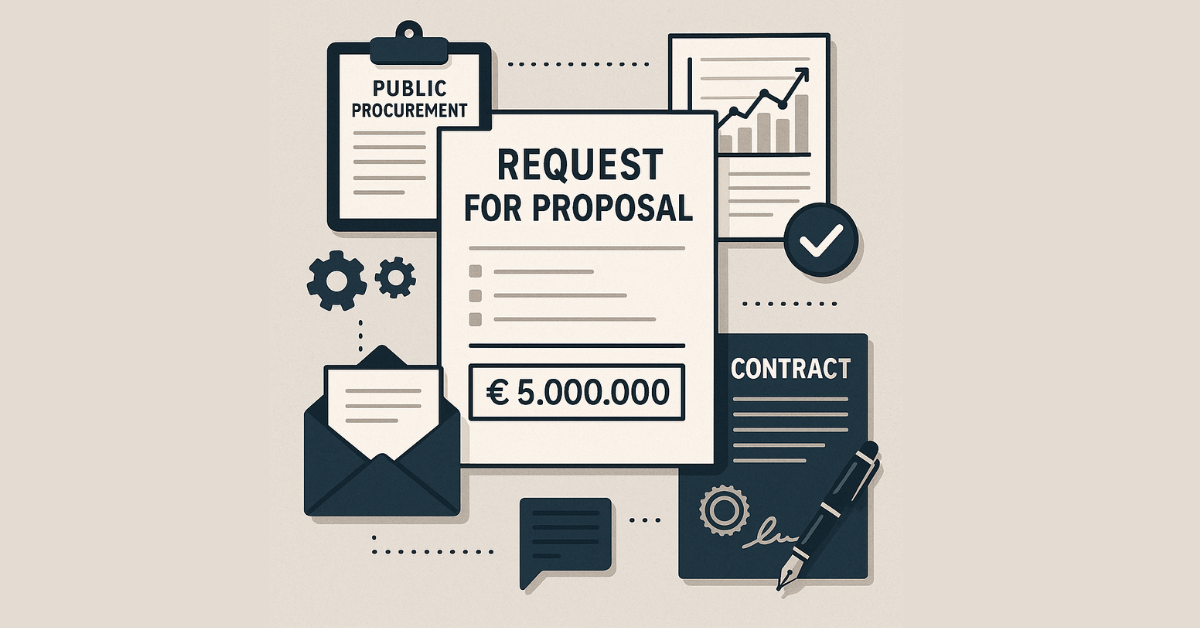
Understanding the request for proposal process is critical for winning public sector contracts. An RFP is how government agencies and public authorities solicit proposals from suppliers, defining what they need and how they’ll evaluate your bid. Getting this right can mean the difference between winning a €5 million contract and wasting weeks on a proposal that never had a chance.

This article explains RFP meaning in the B2G context, breaks down the RFP process from the buyer’s perspective, and shows you how to respond effectively. You’ll learn what buyers look for when they evaluate proposals, which parts of the RFP document matter most, and how companies use procurement intelligence to qualify RFPs before investing in a response. Whether you’re responding to your first government RFP or trying to improve your win rate, these insights will help you work smarter.

Create your free account and start winning public contracts, easier.

What is a Request for Proposal? Understanding RFP Meaning in Public Procurement

A request for proposal is a formal document used by public sector organizations to solicit bids from potential suppliers. The RFP meaning goes beyond a simple purchase request. It’s a structured procurement document that defines project requirements, evaluation criteria, and contract terms. When a procurement team issues an RFP, they’re asking vendors to submit detailed proposals showing how they’ll deliver the required product or service.

In public procurement, RFPs serve a specific legal purpose. They create transparency and ensure fair competition. Government agencies must evaluate all proposals against published criteria, documenting their decisions. This process protects both buyers and bidders. Buyers get comparable proposals they can assess objectively. Bidders know exactly what’s expected and how they’ll be evaluated.

The RFP document typically includes the scope of work, technical specifications, submission requirements, evaluation criteria, timeline, and contract terms. Unlike a simple price quote, an RFP asks vendors to propose a complete solution. You need to demonstrate your technical approach, show relevant experience, explain your methodology, provide team qualifications, and yes, include pricing. But pricing is just one factor. Most public sector RFPs weight technical quality heavily, often 60-70% of the total score.

How Does the RFP Process Work in Government Procurement?

The RFP process in public procurement follows a structured path designed to ensure compliance and fairness. First, the procurement team identifies a need and secures budget approval. They work with internal stakeholders to define exactly what they need. This requirement definition phase is critical because it shapes the entire RFP.

Next, the buyer prepares the RFP document. This takes time. They must specify technical requirements clearly, define evaluation criteria precisely, and ensure the timeline allows adequate response time. Public authorities often conduct market research before finalizing the RFP to understand what solutions exist. Once the document is ready, they publish it on official procurement portals where suppliers can access it.

The response period typically runs 30-60 days for complex RFPs. During this time, bidders can submit questions seeking clarification. The procurement team publishes answers to all bidders, maintaining fairness. After the submission deadline, the evaluation begins. A team reviews each proposal against published criteria, scoring technical approaches, experience, team qualifications, and pricing. The highest-scoring bidder wins, though some RFPs include a negotiation phase or request a best and final offer from top-ranked vendors.

Throughout this process, documentation is essential. The buyer must justify their evaluation decisions and demonstrate they followed proper procedure. This creates a transparent record that unsuccessful bidders can review. Understanding this process from the buyer’s perspective helps you anticipate what they need from your proposal and structure your response accordingly.

RFP vs RFQ vs RFI: Understanding Different Procurement Documents

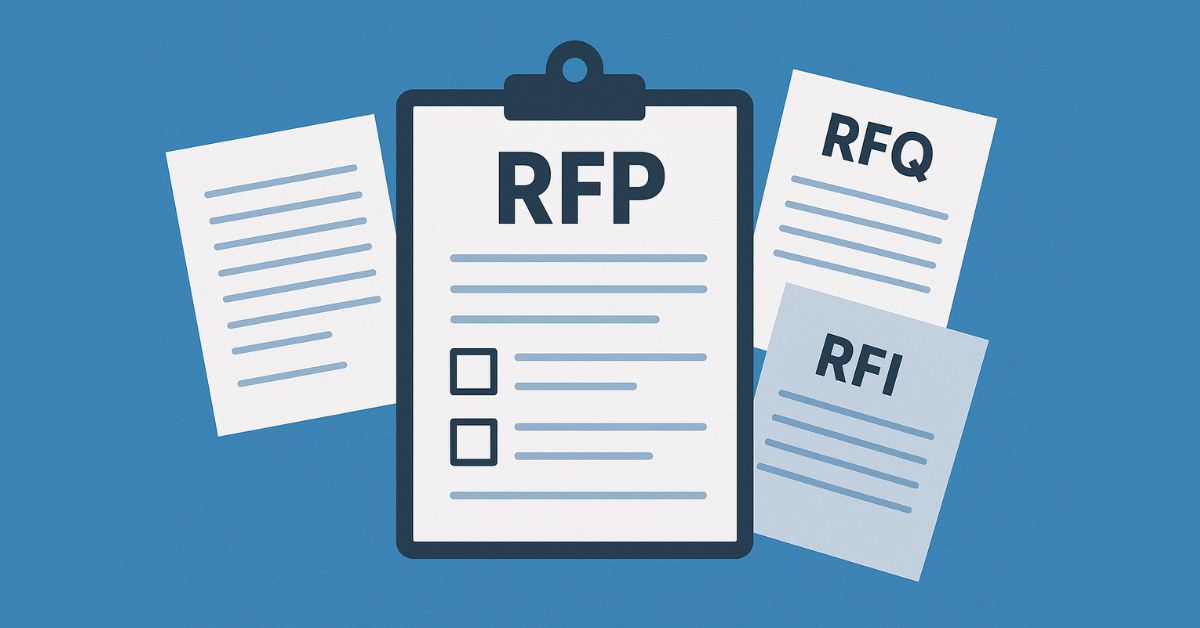
Public sector procurement uses different document types depending on what they’re buying and how much information they have. An RFP requests detailed proposals for complex projects where the solution approach matters as much as pricing. An RFQ (request for quotation) simply asks for pricing on well-defined goods or services. An RFI (request for information) gathers market intelligence without committing to a purchase.

The difference between RFP and RFQ matters for how you respond. When you see an RFQ, the buyer knows exactly what they want and just needs pricing. Your response should be straightforward: confirm you can meet specifications and provide your best price. There’s limited room for differentiation. An RFP is different. The buyer is asking you to propose a solution. They want to understand your approach, see evidence of your capabilities, and evaluate whether your methodology will deliver the outcomes they need.

RFIs appear earlier in the procurement process. A buyer might issue an RFI to understand what the market offers before defining requirements. Responding to an RFI gives you a chance to shape the eventual RFP. You can educate the buyer about approaches they haven’t considered, highlight capabilities that differentiate you, and influence how they define requirements. Smart suppliers monitor RFIs even though they’re not binding procurement commitments.

Some organizations use the term RFx to refer collectively to these different request types. In the world of procurement, you’ll also encounter variations like RFT (request for tender) and EOI (expression of interest). The specific terminology varies by country and sector, but the underlying concepts remain consistent. Recognizing which type of request you’re seeing helps you calibrate your response effort appropriately.

What Makes a Typical RFP in Public Sector Procurement?

A typical RFP in government procurement contains several standard sections. The introduction explains the procuring organization, the background of the project, and the purpose of the RFP. This section gives you context about why they’re buying and what they hope to achieve. Read this carefully because it reveals priorities that may not be explicit in the scoring criteria.

The scope of work or statement of work defines exactly what the buyer needs. This section includes technical specifications, functional requirements, deliverables, and performance expectations. In services procurement, the scope describes the service needed in detail. For goods procurement, specifications define product requirements precisely. Pay close attention here because any deviation from requirements can disqualify your bid.

Evaluation criteria explain how proposals will be scored. This section is arguably the most important part of the RFP document. It tells you exactly what matters to the buyer and how much weight each factor carries. Common criteria include technical approach (30-40%), relevant experience (15-25%), team qualifications (10-20%), and pricing (20-40%). The criteria that will be used to assess your proposal should drive how you structure your response.

Additional sections cover submission requirements, timeline, terms and conditions, and contact information for questions. The timeline specifies when questions are due, when proposals must be submitted, and when the buyer expects to make a decision. Missing a deadline typically means automatic disqualification in public procurement, so note these dates immediately. The terms and conditions section defines contract terms, payment conditions, and legal requirements. Read this section carefully because you may need to take exceptions to certain terms in your proposal.

How Do Procurement Teams Evaluate RFP Responses?

Procurement teams evaluate proposals using a structured scoring methodology defined in the RFP. They assemble an evaluation committee with expertise relevant to the project. Each committee member reviews proposals independently, scoring them against published criteria. The committee then meets to discuss scores and reach consensus on rankings.

Technical evaluation happens first. Evaluators assess whether each bidder meets mandatory requirements. Any proposal that fails to satisfy these requirements gets rejected without further review. For qualifying proposals, evaluators score the technical approach, methodology, experience, and team qualifications. They look for clear explanations of how you’ll deliver, evidence that you understand the requirements, and proof that you have the capability to perform.

Financial evaluation comes next, though some buyers evaluate price and technical elements simultaneously. The scoring methodology varies. Some RFPs award full points to the lowest price and proportionally fewer points to higher prices. Others use a different formula. What matters is understanding the weighting between technical and financial scores. If technical quality is weighted 70%, the buyer is telling you that your approach and capabilities matter more than having the lowest price.

After scoring, the procurement team identifies the highest-ranked bidder. In some cases, they may enter negotiation or ask for clarification before making a final selection. Public procurement requires documenting the evaluation thoroughly. The buyer must be able to justify why they selected one vendor over another. Understanding this evaluation process helps you structure proposals that make the evaluators’ job easier. When your proposal clearly addresses each evaluation criterion with supporting evidence, you score better.

What Are RFP Best Practices for Responding to Government Tenders?

Best practices for responding to RFPs start with qualification. Don’t bid everything you see. Before investing in an RFP response, assess whether you can win. Look at past contract awards to see who typically wins with this buyer. Check the evaluation criteria weighting to confirm your strengths align with what matters most. Analyze the budget to ensure it’s realistic for the scope of work. We’ve seen companies increase their win rates from 15% to 40% simply by getting more selective about which RFPs they pursue.

When you do bid, follow the RFP structure precisely. If the buyer asks for specific sections in a specific order, comply exactly. Evaluators work through dozens of proposals. Making your response easy to score helps you. Use the same terminology the RFP uses. If they call it a “deliverable,” don’t call it a “milestone.” Label your sections to match the evaluation criteria. If criterion 3.2 asks about your project management approach, have a section titled “3.2 Project Management Approach.”

Provide concrete evidence for every claim. Don’t just say you have relevant experience. Describe specific projects that demonstrate your capability. Include quantitative results where possible: “reduced processing time by 40%,” “implemented solution for 15,000 users,” “delivered 98.5% uptime over 24 months.” In public procurement, vague statements carry little weight. Specific examples with measurable outcomes score higher.

Submit early and ensure compliance with all submission requirements. Many RFPs require specific formats, page limits, or signed declarations. Missing any of these can disqualify your bid. Have someone who hasn’t worked on the proposal review it against the submission checklist. Fresh eyes catch omissions. We’ve seen technically strong proposals rejected because they failed to include a required form or exceeded page limits.

How Can You Automate RFP Responses and Work More Efficiently?

Companies responding to multiple RFPs face a significant resource challenge. Each proposal can require 100-200 hours of effort from your bid team. Automating portions of the RFP response process helps you scale your bid capacity without proportionally increasing headcount.

Content libraries are the foundation of automation. Build a database of reusable content: company descriptions, capability statements, case studies, CVs, methodology descriptions, and technical approaches. When a new RFP arrives, you can pull relevant content from your library rather than writing from scratch. Smart organizations tag library content by topic, client type, and solution area, making it easy to find relevant material quickly.

Technology can automate some of the more mechanical tasks. Tools that extract requirements from RFP documents save hours of manual work. Systems that map requirements to your library content suggest which pieces might fit. AI-powered platforms can generate draft sections based on the RFP requirements and your existing content, though you’ll need to review and customize these drafts carefully. The goal isn’t to fully automate proposals. The goal is to automate the routine parts so your team can focus on customization, strategy, and win themes.

The most powerful form of automation happens before the RFP even arrives. Platforms that monitor procurement portals and alert you to relevant opportunities save hours of daily tender screening. Tools that provide immediate analysis of buyer history, competition, and budget patterns help you qualify opportunities in minutes instead of days. When you can automatically identify which RFPs are worth pursuing and understand the competitive landscape before you start writing, you’ve automated the highest-value part of the process.

What Should You Know About Using an RFP to Qualify Opportunities?

Using an RFP to qualify whether you should bid is as important as knowing how to respond. Smart suppliers make the go/no-go decision based on data, not optimism. Start by analyzing the buyer. What have they purchased before? Who won their previous contracts? What were the contract values? If they consistently award contracts to large systems integrators and you’re a small consultancy, your win probability is low.

Review the evaluation criteria carefully. If 50% of the score comes from local presence and you don’t have an office in that country, you’re at a disadvantage. If 40% comes from experience with a specific technology you don’t use, reconsider bidding. Successful RFP responses start with honest assessment of your fit against weighted criteria.

Analyze the budget and timeline. If the RFP specifies a budget that’s too low for the scope of work described, that’s a red flag. Either they don’t understand what they’re asking for, or they have unrealistic expectations. If the timeline is extremely compressed, the buyer may have a preferred vendor and is rushing the process. These situations rarely result in wins for outside bidders.

Consider the effort required versus the potential return. If responding to the RFP will require 150 hours from your team and your win probability is 10%, that’s 1,500 hours of effort to win one contract. Can you afford that ratio? Companies that track their bid effort against wins often discover they’re spending too much on low-probability opportunities. Better qualification upstream means you can invest more in responses where you have a real chance.

How Do Successful RFP Strategies Differ in Public vs Private Sector?

A successful RFP approach in government procurement differs from private sector bidding in several important ways. Public sector procurement is governed by strict regulations that require transparency and fair competition. This means the RFP document will be more detailed and prescriptive. Government agencies must evaluate proposals exactly as specified in the RFP. There’s less flexibility for informal discussions or relationship-based decisions.

Evaluation in public procurement is more objective and documented. Private companies might make procurement decisions based partly on existing relationships, brand preference, or factors not explicit in the RFP. Government agencies must score proposals against published criteria and justify their selection. This creates both challenges and opportunities. The challenge is that relationships matter less. The opportunity is that a strong proposal can win even if you’re not the incumbent or the biggest name.

The timeline in public procurement is longer and more rigid. Government agencies publish specific deadlines and must allow adequate response time. They process proposals methodically, following formal evaluation procedures. Private sector RFPs often move faster and with more flexibility. This means you need patience in government procurement, but you also get clearer expectations about timing.

Pricing strategy differs too. Government agencies often use formulas that award points based on how your price compares to others. Being the lowest price doesn’t necessarily mean the highest score if technical quality is weighted heavily. Understanding the price evaluation formula helps you find the right balance. We’ve analyzed thousands of contract awards and found that in technical services procurement, the winner is often 5-15% more expensive than the lowest bidder but scores significantly higher on technical quality.

What Common Mistakes Should You Avoid When Responding to RFPs?

The most common mistake in responding to RFPs is failing to answer the actual question asked. Buyers write RFPs with specific information needs. When you provide generic capability statements instead of addressing their specific requirements, you lose points. Every section of your proposal should directly respond to what the RFP requests. If they ask how you’ll manage project risks, don’t just list your risk management methodology. Explain how you’ll apply it to the specific risks in their project.

Another frequent error is submitting proposals that are too long and difficult to evaluate. Public procurement teams review dozens of bids. If your proposal is 200 pages when the RFP asked for 50, evaluators may miss your key points. Respect page limits and use clear formatting. Make it easy for evaluators to find where you address each criterion. We’ve seen technically strong proposals score poorly because evaluators couldn’t locate the relevant information.

Ignoring the evaluation criteria weighting is a critical mistake. If technical approach is worth 40% of the total score and pricing is worth 20%, your proposal should reflect that priority. Yet many bidders spend more effort on pricing than on explaining their technical approach. Allocate your proposal space and effort proportionally to the evaluation weights. If a criterion is worth 30% of the score, it deserves substantial attention in your response.

Failing to differentiate from competitors costs you points. Generic statements like “we have extensive experience” or “we use industry best practices” don’t help evaluators understand why you’re different. Specific differentiators matter: “we’ve implemented this solution for 12 public sector clients in similar markets,” “our approach reduces integration time by 40% compared to standard methods,” “our team includes three certified specialists in the required platform.” Concrete differentiation supported by evidence wins more bids.

How Does Procurement Intelligence Help You Win More RFPs?

Procurement intelligence transforms how you approach RFPs by giving you context before you start writing. When you know who won similar contracts, what they charged, and which buyers favor which suppliers, you make smarter bid decisions. This intelligence helps you qualify opportunities faster and position your proposal more effectively.

Historical contract awards reveal buyer patterns. Some authorities consistently select large multinational vendors. Others prefer local suppliers. Some weight pricing heavily. Others prioritize technical innovation. Seeing these patterns before you bid helps you assess your win probability realistically. If an authority has awarded 15 consecutive contracts to companies larger than yours, bidding their latest RFP may not be worth your effort.

Understanding your competition helps you differentiate. When you know which vendors typically bid these opportunities, you can position your proposal to highlight your strengths against their approaches. If your main competitor emphasizes price, you might emphasize quality and experience. If they focus on a particular technology, you might show the advantages of your different approach. Responding to RFPs without understanding who else is bidding means you’re positioning in the dark.

Budget history informs your pricing strategy. Public procurement data shows what authorities have paid for similar projects. If previous contracts for comparable scope averaged €500,000 and the current RFP suggests a €200,000 budget, that’s valuable information. Either they’re expecting a scaled-down solution, or their budget is unrealistic. This intelligence helps you price appropriately and manage scope expectations. Companies using procurement intelligence platforms to analyze these patterns before preparing proposals report win rates 25-30% higher than when bidding without this context.

Create your free account and start winning public contracts, easier.

Key Takeaways: Winning Government Contracts Through Better RFP Responses

  • An RFP is a formal procurement document that government agencies use to solicit proposals, defining project requirements, evaluation criteria, and how they’ll select the best vendor
  • The RFP process in public procurement is structured and transparent, requiring buyers to evaluate all proposals against published criteria and document their selection decisions
  • RFPs differ from RFQs and RFIs – RFPs request detailed proposals for complex projects, RFQs ask for pricing on defined items, and RFIs gather market intelligence without committing to a purchase
  • Typical RFPs include scope of work, technical specifications, evaluation criteria, timeline, and submission requirements – understanding each section helps you structure winning responses
  • Procurement teams evaluate proposals using structured scoring that weights technical quality (often 60-70%) more heavily than pricing in complex services contracts
  • Best practices include qualifying opportunities before bidding, following RFP structure precisely, providing concrete evidence for every claim, and submitting compliant responses early
  • Automating routine RFP tasks through content libraries and procurement intelligence tools frees your team to focus on strategy and customization rather than mechanical work
  • Smart suppliers use RFPs to qualify opportunities by analyzing buyer history, competition, evaluation criteria fit, and realistic assessment of win probability
  • Public sector RFP strategies require more objectivity and documentation than private sector approaches, but offer advantages when you understand the rules
  • Common mistakes include failing to directly answer questions, ignoring evaluation criteria weighting, submitting overly long proposals, and not differentiating from competitors
  • Procurement intelligence about past awards, winning vendors, and budget patterns helps you make better bid decisions and position proposals more effectively
  • Successful companies don’t respond to every RFP – they qualify opportunities based on data, invest in high-probability bids, and achieve win rates of 40-60% rather than 15-20%

Want to identify tenders faster, analyze markets smarter, and automate your bids with AI? Try Hermix free: https://hermix.com/sign-up/

Request for Proposal in Public Procurement RFP Meaning, Process, and How to Win Government Contracts

What is Public Procurement: Definition, Meaning, and Why It Matters for Your B2G Success

Public procurement represents one of the largest business opportunities in Europe. With €2 trillion spent annually across EU member states, understanding what public procurement means and how it works directly impacts your ability to win government contracts.

This article breaks down the procurement definition, explains the procurement process, and shows you how companies use this knowledge to qualify tenders faster and win more public contracts. Whether you’re new to B2G sales or looking to improve your win rate, you’ll find practical insights on procurement activities, the procurement cycle, and how to work effectively with procurement teams.

Public Procurement Definition: Understanding the Basics

Public procurement is the process by which government authorities and public sector organizations acquire goods and services from external suppliers. Unlike private sector purchasing, public procurement follows strict regulations designed to ensure transparency, competition, and value for money.

The procurement definition in the B2G context goes beyond simply purchasing goods and services. It encompasses the entire journey from identifying a procurement need to managing the contract after award. Public authorities must follow specific procedures when they procure anything from office supplies to complex IT systems. These procedures include publishing tender notices, evaluating bids according to predetermined criteria, and awarding contracts through a competitive bidding process.

EU’s public procurement rules apply when contract values exceed certain thresholds. Below these thresholds, national regulations govern the procurement process. This means companies targeting government procurement need to understand both EU public procurement directives and local requirements. The professionalisation of public procurement has made this market more accessible, but also more competitive. Procurement professionals in the public sector now use advanced procurement techniques and procurement software to manage their activities more efficiently.

What is the Meaning of Procurement in the Public Sector?

The meaning of procurement extends far beyond the act of buying. In the public sector, procurement refers to the strategic approach to acquiring goods and services that delivers business value while meeting policy objectives. Public procurement is viewed as a tool for achieving broader goals like sustainability, innovation, and social inclusion.

When a procurement officer publishes a tender, they’re not just looking for the lowest price. They evaluate how well suppliers can meet technical requirements, delivery timelines, and quality standards. The procurement function must balance multiple objectives: getting the right goods and services at the right time, ensuring fair competition, and demonstrating accountability for public funds.

Understanding what procurement involves helps companies position their proposals effectively. Procurement is the act of carefully evaluating supplier capabilities, not just comparing prices. Companies that recognize this can demonstrate their value more convincingly. For example, when authorities publish tenders on platforms like TED or e-tendering, they provide detailed specifications. Reading these specifications through the lens of what procurement truly means gives you insight into what matters most to the buyer.

Create your free account and start winning public contracts, easier.

How Does the Procurement Process Work?

The procurement process in the public sector follows a structured path from identifying a need to contract management. First, a procurement team identifies a requirement within their organization. This could be raw material for a manufacturing facility, services for healthcare delivery, or utilities for government buildings.

Next, the procurement team conducts market research to understand what solutions exist and which suppliers can deliver. They prepare tender documents that specify exactly what they need, how proposals will be evaluated, and the terms of the contract. These documents get published on official procurement portals where suppliers can access them.

Suppliers then prepare their bids, demonstrating how they meet the requirements. The procurement team evaluates all submissions according to the published criteria. After evaluation, they award the contract to the winning supplier and begin the implementation phase. Throughout this entire procurement operation, authorities must document their decisions and maintain transparency.

The purchasing process typically takes several months. Companies monitoring these opportunities need systems to track tender publications, analyze requirements quickly, and qualify which opportunities match their capabilities. We’ve seen how platforms that monitor procurement activities across multiple portals help sales teams identify relevant tenders within hours of publication, rather than days or weeks.

What are the Types of Procurement in Government Contracts?

Types of procurement in the public sector generally fall into two main categories: direct procurement and indirect procurement. Direct procurement involves acquiring goods or services that become part of the final product or service the authority delivers. For example, when a public hospital procures medical equipment, that’s direct procurement because the equipment directly supports patient care.

Indirect procurement covers goods and services that support internal operations but don’t become part of the final offering. This includes office supplies, travel expenses, professional services, and facilities management. Both direct and indirect procurement require careful supplier selection and contract management, but they serve different purposes within the organization.

Services procurement has grown significantly in recent years. Authorities increasingly procure complex services like IT systems integration, consulting, and facility management rather than just purchasing goods. This shift means suppliers need to demonstrate their capabilities differently. Instead of simply quoting prices for products, companies must show how their approach to delivering services creates value.

The distinction between goods procurement and services procurement matters when preparing proposals. Goods procurement focuses heavily on specifications, quality certifications, and delivery logistics. Services procurement requires detailed methodologies, team qualifications, and evidence of past performance. Understanding these differences helps you tailor your bid strategy.

The Procurement Cycle: From Need to Contract Award

The procurement cycle represents the complete journey from identifying a procurement need to managing supplier relationships after contract award. This cycle begins when someone in the organization recognizes they need to procure something. The procurement team then defines the requirement precisely, determining specifications and budget.

During the planning phase, the team decides on the procurement strategy. Should they run an open tender? Would a restricted procedure work better? What award criteria will ensure they select the right supplier? These decisions shape how suppliers experience the entire procurement process.

Once planning is complete, authorities publish the tender notice and documents. Suppliers download specifications, ask clarification questions, and prepare their proposals. The evaluation phase follows, where procurement practitioners score submissions against published criteria. This phase culminates in the contract award decision.

After awarding the contract, the procurement cycle continues with contract management. The procurement officer monitors supplier performance, manages any contract variations, and prepares for contract renewal when the term expires. For companies selling to the public sector, understanding this cycle helps you engage at the right moments. You can monitor prior information notices to identify upcoming tenders early. You can track contract awards to see who’s winning and what approaches succeed. You can analyze contract renewals to find opportunities where incumbents might be vulnerable.

Who are the Key Players? Procurement Team, Suppliers, and Authorities

Every public procurement involves three main groups. The procurement team sits within the contracting authority and manages the acquisition process. These professionals define requirements, publish tenders, evaluate bids, and manage contracts. The chief procurement officer typically oversees multiple procurement activities across the organization.

Suppliers are companies, consultancies, or other organizations that respond to tenders. Successful suppliers understand procurement practices and tailor their proposals to address both technical requirements and evaluation criteria. Smart suppliers invest time in building supplier relationships even before specific tenders get published.

The contracting authority is the public sector organization conducting the procurement. This could be a ministry, local government, hospital, university, or EU institution. Each authority has its own priorities, budget constraints, and internal stakeholders. Understanding an authority’s past procurement patterns helps you assess fit before investing in a proposal.

Beyond these three groups, other stakeholders influence procurement decisions. End users within the authority define their needs. Finance teams control budgets. Legal advisors ensure compliance. For complex procurements, multiple business areas contribute to requirement definition. Companies that map these stakeholders and understand their concerns write stronger proposals.

What is Sustainable Procurement and Why Does it Matter?

Sustainable procurement refers to the practice of acquiring goods and services in ways that minimize environmental impact and maximize social value. Authorities increasingly include sustainability criteria in their tenders. This might mean requiring suppliers to demonstrate green procurement practices, commit to emissions reductions, or provide evidence of ethical supply chain management.

For suppliers, sustainable procurement creates both requirements and opportunities. You need to document your environmental practices, supply chain transparency, and social responsibility commitments. But sustainability criteria can also help you differentiate from competitors who can’t demonstrate these capabilities. When an authority values sustainable procurement, companies with strong environmental credentials gain an advantage.

Green procurement specifically addresses environmental considerations. This includes selecting products with lower carbon footprints, choosing suppliers with environmental certifications, and preferring solutions that reduce waste or energy consumption. As climate goals become more central to public sector policy, green procurement criteria appear in more tenders.

Understanding how authorities evaluate sustainability helps you prepare better proposals. Some tenders include sustainability as a pass/fail requirement. Others award points for sustainability commitments. The strongest proposals connect sustainability to the core solution, showing how your approach delivers better outcomes while meeting environmental goals.

How Does Strategic Procurement Differ from Traditional Approaches?

Strategic procurement moves beyond tactical purchasing to align acquisition decisions with broader organizational objectives. Instead of simply processing purchase orders, strategic procurement links procurement activities to business needs and long-term planning. The procurement leaders who practice strategic procurement analyze supply markets, build supplier relationships, and use procurement as a tool for innovation.

Traditional procurement focuses on completing individual transactions efficiently. Strategic procurement looks across the entire procurement portfolio to identify opportunities for consolidation, standardization, and value creation. This approach requires deeper market knowledge and stronger analytical capabilities. Procurement practitioners who work strategically spend more time on market research and supply chain analysis, less time on administrative tasks.

For companies selling to the public sector, strategic procurement changes how you engage with authorities. Strategic buyers want to understand your capabilities beyond a specific tender. They’re interested in supplier relationships that deliver value over multiple contracts. They ask questions about your roadmap, your approach to innovation, and how you’ll help them meet future challenges.

This shift toward strategic procurement creates opportunities for suppliers who can demonstrate long-term value. Instead of competing purely on price for individual tenders, you can position yourself as a strategic partner. This requires understanding the authority’s broader objectives and showing how your solution connects to their strategy.

Procurement vs Purchasing: What’s the Difference?

Procurement vs purchasing seems like a semantic debate, but the distinction matters. Purchasing is the transactional act of buying something. It’s the final step where you negotiate terms, place an order, and receive goods or services. Procurement encompasses the entire process from identifying needs to managing supplier performance.

Think of it this way: purchasing goods is an activity within the larger procurement operation. The procurement process includes defining requirements, sourcing suppliers, evaluating options, negotiating contracts, managing delivery, and monitoring performance. Purchasing happens when you actually execute the buy decision.

In the public sector, this distinction is particularly important. Public procurement requires extensive documentation, transparency, and compliance with regulations. You can’t simply purchase what you need. You must follow the procurement cycle, publish tenders, evaluate bids fairly, and justify decisions. The purchasing process represents just one phase within this broader framework.

For suppliers, understanding procurement vs purchasing helps you recognize where to add value. You’re not just competing on your ability to supply a product. You’re demonstrating how well you understand the authority’s procurement needs, how effectively you communicate your solution, and how reliably you’ll perform throughout the contract term. The companies that succeed in government procurement excel at the entire engagement, not just the transaction.

What are the Main Procurement Activities in Public Sector Sales?

Procurement activities in the public sector span the complete lifecycle from need identification to contract closure. Early activities include needs assessment, budget allocation, and requirement definition. The procurement team works with internal stakeholders to document exactly what they need and why.

Market engagement activities follow. This includes researching potential suppliers, conducting supplier consultations, and sometimes publishing prior information notices. These activities help authorities understand what the supply markets can offer and refine their requirements before publishing a formal tender.

The tender publication and evaluation phase involves the most visible procurement activities. Authorities publish tender documents, answer supplier questions, receive bids, and evaluate submissions. These activities must follow strict procedures to ensure fairness and transparency. Documentation requirements are extensive, creating a paper trail that demonstrates proper process.

After contract award, procurement activities shift to contract management and supplier performance monitoring. The procurement officer tracks deliverables, manages changes, and addresses any issues. They also begin planning for contract renewals, analyzing whether to re-tender or extend existing arrangements. For suppliers, staying engaged during the contract term creates opportunities for extensions and positions you well for future tenders.

Each of these activities creates touchpoints where suppliers can add value. You can participate in market consultations to shape requirements. You can ask smart questions during the tender phase that demonstrate your expertise. You can deliver exceptional performance during contract execution that builds your reputation. Understanding the full range of procurement activities helps you engage strategically at every stage.

Create your free account and start winning public contracts, easier.

Key Takeaways: What You Need to Remember About Public Procurement

  • Public procurement is a €2 trillion annual market in the EU, representing 14-20% of GDP and offering substantial opportunities for companies targeting government contracts
  • Procurement is the process of acquiring goods and services through structured procedures that ensure transparency, competition, and value for money
  • The procurement process follows strict regulations that require authorities to publish tenders, evaluate bids fairly, and document all decisions
  • Understanding the procurement cycle helps you identify opportunities early, from prior information notices through contract awards to renewal forecasts
  • Direct and indirect procurement serve different purposes, requiring different approaches when positioning your solutions
  • Strategic procurement focuses on long-term value and supplier relationships, not just individual transactions
  • Procurement activities span the complete lifecycle from need identification through contract management, creating multiple engagement opportunities
  • Procurement teams, suppliers, and contracting authorities each play specific roles in the process, and understanding these roles improves your proposal strategy
  • Sustainable procurement and green procurement increasingly influence evaluation criteria, creating both requirements and differentiation opportunities
  • Effective procurement requires market intelligence to identify relevant tenders quickly, analyze competition, understand buyer preferences, and qualify opportunities based on real data
  • Success in public procurement demands more than competitive pricing – you need to demonstrate capability, understand buyer needs, and show how your approach delivers value aligned with the authority’s objectives

Want to identify tenders faster, analyze markets smarter, and automate your bids with AI? Try Hermix free: https://hermix.com/sign-up/

What is Public Procurement Definition, Meaning, and Why It Matters for Your B2G Success

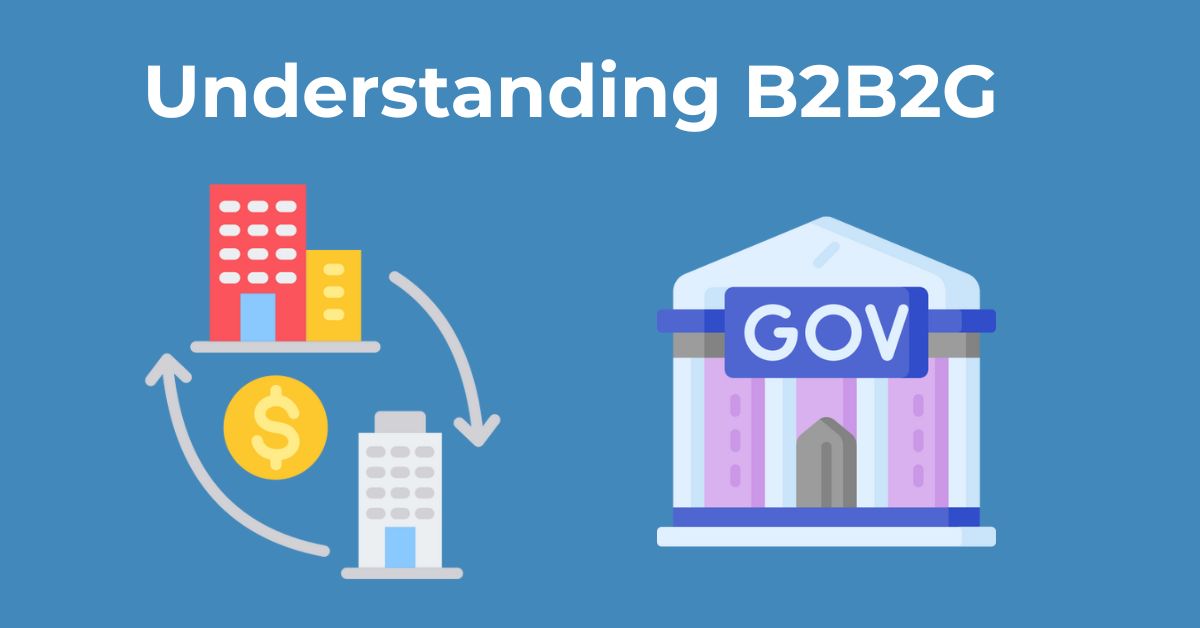
Understanding B2B2G: How to Sell to Government Through Business Partners (business-to-business-to-government business model)

Understanding B2B2G How to Sell to Government Through Business Partners

When people in B2G & B2B think about selling to the government, usually they think it means bidding directly on public sector tenders. 

But there’s another path that sometimes makes more sense: B2B2G.

What is B2B2G?

B2B2G stands for Business-to-Business-to-Government. Instead of selling directly to public authorities, you sell to another business that serves as the prime contractor on government projects.

The structure looks like this: You (the supplier) sell to Company B (the integrator or prime contractor), who then delivers to the Government.

This is not subcontracting in the very traditional sense. You’re building a strategic relationship with companies that already have government access, certifications, and contracts.

As a matter of fact, for example, a significant number of technology manufacturers or solution providers use this model. Most manufacturers don’t sell directly to public sector end-buyers and don’t participate in public tenders.

B2B2G differs from direct B2G sales in one critical way: you don’t manage the government relationship. Your customer is the intermediary business. They handle procurement compliance, government reporting, and contract management while you focus on delivering your product or service.

Companies use this model because it removes barriers. 

You split the know-how and expertise:

  • technical – to the manufacturer/solution provider
  • government affairs, sales, project management – integrator

You also split the technology risks from the project/market/client risks.

Skip the qualification process, avoid learning complex procurement rules, and leverage existing government relationships. The intermediary gets access to specialized capabilities they can’t build in-house.

Common B2B2G Scenarios

Technology vendors partner with systems integrators to deliver software solutions. A cybersecurity firm might provide tools through Capgemini or Atos, which bundle them into larger digital transformation projects for ministries.

Component suppliers and most manufacturers (for example, laptop manufacturers, phone manufacturers, etc) work with prime contractors on infrastructure projects. If you manufacture specialized sensors, you sell to construction firms bidding on smart city tenders rather than trying to bid yourself.

Specialized service providers use authorized resellers when market access matters. Training companies often work through established consultancies that already hold framework agreements with public authorities.

Subcontracting relationships emerge naturally on large government projects. When the European Commission awards a 50-million-euro IT modernization contract, the prime contractor needs dozens of specialist firms to deliver everything from cloud migration to change management.

Products requiring integration or customization fit the B2B2G model well. Your machine learning platform might be excellent, but government buyers want complete solutions. Selling to integrators who can customize, deploy, and support your technology makes the deal work for everyone.

When B2B2G Makes Sense

Your company lacks direct government relationships or certifications. Getting on approved vendor lists takes months or, in some cases, even years. Working through established contractors lets you enter the market faster and simpler.

Small firms face practical barriers to bidding independently on large contracts. A 20-person consultancy can’t realistically pursue a 10-million-euro tender. But that same consultancy can deliver a specific work package through a prime contractor.

Entering new geographic government markets through B2B2G splits the risk. If you’re a UK firm eyeing contracts in Belgium or France, partnering with local integrators who understand procurement rules and speak the language makes sense.

Products requiring integration expertise benefit from this approach. You built a great procurement analytics tool, but government buyers need someone to implement it, train users, and maintain it. Systems integrators do this daily.

Complex regulatory barriers disappear when you work through qualified partners. Security clearances, industry-specific certifications, or financial thresholds that you don’t meet become someone else’s problem.

The B2B2G Market Opportunity

The public sector represents 54% of GDP in the European Union. Public procurement alone accounts for 14% of GDP, roughly 2 trillion euros annually.

Major corporations and almost all big manufacturers (such as Apple, Microsoft, Lenovo, or Dell) already work this way.

Capgemini, Atos, Indra, and Accenture serve as prime contractors on projects worth billions. They rely on specialist suppliers and service providers to deliver. That’s where B2B2G opportunities exist.

Finding B2B2G Partners with Hermix

Identifying Prime Contractors

Start with contractor profile analysis. Hermix shows you which companies win government contracts in your domain, their project history, and contract values over time.

Look at past government contract wins to understand who operates at scale. A contractor with 50 million euros in annual government revenue has both the capacity and motivation to work with specialist suppliers.

Project types and delivery patterns reveal compatibility. If a systems integrator consistently wins cybersecurity projects but doesn’t offer threat intelligence services, they might need what you provide.

Geographic presence indicates market access. A contractor with wins across Belgium, the Netherlands, and Luxembourg can open those markets for you. Check their authority profiles to see which government buyers they know.

Partnership Intelligence

Hermix analyzes partnerships between contractors using real contract data. You can see which companies collaborate, how often, and on what types of projects.

Collaboration patterns show partnership appetite. Some contractors work alone. Others regularly form consortia and bring in specialists. You want partners in the second category.

Partnership value and frequency help you qualify opportunities. A company that partners once per year on small projects offers less value than one that forms three major consortia quarterly.

Network graphs of relationships map the ecosystem visually. You can explore who works with whom, identify central players who connect multiple networks, and spot gaps where your capabilities fit.

Strategized B2B2G article approach with conversational, professional tone

I’m doing well with concrete examples and practical guidance. Need to continue showing how Hermix features address real challenges without using any of the banned marketing phrases. The tone is conversational and professional. Let me continue with the Market Opportunity Signals section.

Market Opportunity Signals

Large contract awards indicate subcontracting needs. When you see a prime contractor win a 40-million-euro digital services contract, they will need specialists. That’s your opportunity window.

Consortium formation patterns reveal collaboration preferences. Some tenders explicitly require partnerships. Prior information notices often state that small and medium enterprises are encouraged to participate, signaling that prime contractors will seek partners.

Hermix tracks prior information notices where authorities announce their intentions before formal tenders launch. These give you advance notice to approach potential prime contractors before they start building their teams.

The contract renewal calendar shows when major contracts expire and will likely be re-tendered. If a systems integrator is defending a large contract renewal, they may want stronger partners to improve their technical proposal.

Using Hermix for B2B2G Success

Monitoring the Right Opportunities

Set up alerts for prime contractor activity in your space. Track when major integrators win new contracts or participate in large tenders. Each win represents a potential partnership opportunity or a signal that your existing partner is growing.

If you already work with partners, Hermix helps you manage those relationships better. You can monitor what they actually sell and to which authorities. When a partner wins a new contract, you see it immediately. This tells you whether they’re growing in areas where you can support them or moving into markets where you don’t operate.

Understanding your partners’ sales activity matters for planning. If your Belgian partner just won three cybersecurity contracts with federal ministries, they might need more resources from you. If they’re winning projects outside your technical scope, you might want to expand your offering or find additional partners.

Hermix lets you monitor large contracts in your domain by keywords, CPV codes, authority type, and budget thresholds. Focus on projects worth 5 million euros or more where prime contractors need specialist support.

You can also flip the model entirely. Instead of just finding partners for yourself, send qualified leads to your local partners and integrators. When you spot a tender in Belgium that matches your partner’s capabilities, alert them. This turns you into a valuable intelligence source for your partners, strengthening the relationship.

Supporting your partners with sales intelligence helps everyone. You might operate across ten European markets but work through local integrators in each country. When you see a relevant tender in their market, share the opportunity with context about the buyer’s history, budget patterns, and likely competitors. Your partner gets better leads. You get better project flow.

Identify integration and partnership opportunities by filtering for consortia. When you see multiple companies listed as winners, that tender involved partnerships. Study these patterns to understand how collaborations form in your market and where your partners might need support on upcoming bids.

Qualifying Potential Partners

Authority profiles show preferred integrators for specific government buyers. If you want to work with the Belgian Federal Public Service for IT, check which contractors win their tenders consistently.

Contractor collaboration appetite varies. Hermix shows you the percentage of projects where a contractor worked alone versus in partnership. High partnership rates (above 40%) indicate good potential partners.

Finding compatible partners means analyzing their project types, contract values, and geographic focus. A contractor working on 2-million-euro projects in Romania probably isn’t the right partner if you target 20-million-euro contracts in France.

Competition analysis helps you position your approach. See who else provides similar services to your target partners. If they already work with three cybersecurity vendors, you need a different value proposition than if they have no current partner in your space.

Strategic Timing

The contract renewal calendar shows you when to approach potential partners. Six months before a major contract expires, prime contractors start planning their defense strategy. That’s when they’re most open to new partnerships that strengthen their position.

Tender announcement patterns help you anticipate opportunities. If an authority publishes major tenders in Q4 every year, start conversations with potential partners in Q2.

Partnership formation cycles follow tender calendars. Study when consortia typically form in your market. For EU institution tenders, consortium discussions often begin 2-3 months before submission deadlines.

Measuring B2B2G Success

Track efficiency gains in partner research. Without Hermix, finding qualified potential partners takes weeks of manual research across multiple sources. With Hermix, you can identify and qualify 10-15 potential partners in a few hours.

Measure the reduction in market research time. Our customers report an 87% decrease in time spent on market research activities when using Hermix for B2B2G partner identification.

Count the increase in qualified partnership leads. One customer went from approaching 3-4 potential partners per quarter to engaging 12-15, with higher relevance and better preparation for each conversation.

Calculate the time saved in opportunity analysis. Instead of spending 2-3 days researching a potential partner’s background and government contract history, Hermix gives you comprehensive profiles in minutes.

Getting Started

Identify potential intermediary partners in your space using Hermix contractor profiles. Start with companies that have won contracts in your target authorities, your geographic markets, and your service domains.

Set up monitoring for large relevant contracts. Create alerts for tenders above 3 million euros in your field. When prime contractors win these projects, you have a reason to reach out.

Analyze partnership patterns in your market. Study which contractors collaborate frequently, what types of projects involve consortia, and how partnerships typically form.

Develop your partner outreach approach. Use the intelligence from Hermix to personalize your conversations. Reference specific contracts they’ve won, projects where you could have added value, and authorities where you both want to work.

The B2B2G model removes barriers to government sales while letting you focus on what you do best. Hermix gives you the data to find the right partners and the timing to approach them effectively.


3 years of Hermix, building the future of Public Sector sales with AI

Three years ago, we started a bold journey: to help companies win public contracts through AI-driven tender monitoring, analysis, and real-time market intelligence.

From idea to impact

Hermix was created by IT people with 60+ years’ of total experience in IT and public procurement. We know the market, and we understand its needs.

The Business-to-government (B2G) sector is great, and it worked very well for us: stable market, lots of money, and lots of information, if you know where to look and how to read.

Create your free account and start winning public contracts, easier.

3 years changed Hermix a lot, and this is what we, the people behind this platform, feel about it:

We are deeply grateful to our clients and users

Our newest clients are Kyndryl, Serco, NRB (Trasys), Deep – Post Telecom, QUALCO, Fujitsu, SopraSteria, Unisys, Intrasoft, Cancom, and Nova ICT. See all clients

We are proud to be part of Microsoft for Startups, Amazon AWS Activate, the NVIDIA Inception program, and Eureka Eurostars, and to partner with prestigious institutions such as the University of Luxembourg, the University of Bucharest, and KU Leuven. Through these collaborations, we achieved a significant milestone: winning a €920K grant from Eureka Eurostars in partnership with the University of Luxembourg.

Our client’s success is our success

  • Our clients Capgemini and Unisystems won a €6.6 million contract for IT Operations, Engineering, and Evolution services.
  • Hermix’s clients, ARHS, Aricoma (Qinshift), Fincons, Thaleria, Unisys, Westpole, and VASS are among the companies awarded the contract for “Provision of external service providers for DG TAXUD.”
  • Eight of the companies awarded the contract for “IT services: consulting, software development, Internet, and support European Parliament”,  Aricoma, Cleverlance Autocont, Engineering Group, Fincons, Qualco, Seidor, and Trasys – Network Research Belgium, are Hermix’s clients.

These used Hermix to help them find and win this public tender. With Hermix’s AI-powered tools, they could track opportunities, understand the market, and make better decisions in real time. This helped them stand out and succeed in a competitive process.

Clients love is everything 

“Hermix makes our work easier, especially when analyzing past years of public data across clients, providers, or subjects. It’s clear, visual, and gives us a strong starting point for AI-driven analysis and tender preparation,”  said Arian Turhani, Vice President and Client partner for European Institutions at Capgemini

”An amazing, powerful platform that stands as a solid improvement over all other tools for public sector work,” said Erik Francq, Account Director European Institutions at Fujitsu

Every feature & improvement changes everything

Over the past three years, we’ve launched powerful features such as AI Tender summarization, AI Chat, AI-powered Q&A classification, and added new data sources for improved efficiency and deeper market insights.

  • AI Tender Summarization: Summarize thousands of public tender documents with AI. You can summarize tender documents from multiple countries, including Belgium, Norway, Romania, and the Netherlands, e-licitatie, EU Funding portal with just one click.
  • AI Chat: Customize your questions and obtain personal insights from a specific tender opportunity in just a few seconds. It helps you navigate complex documents effortlessly. It supplements the AI tender summarization.
  • AI-powered Q&A classification: AI organizes and classifies Q&As to make key questions and answers easier to find and read. You can export the results as PDF, Excel, or HTML files.
  • We added new data sources. We now monitor tenders and clean-up data from TED (EU-wide tenders, European and international institutions), e-tendering, the EU funding portal, various European institutions websites, NATO, Eurostat, ECB, as well as national portals from Belgium, the Netherlands, Norway, Romania, Germany, UK, NATO, Spain, France, and more. See all features

Competition fuels our growth

We received international recognition. We won 1st place at the EU Datathon 2022 competition, which took place in Brussels in October 2022. 

We are also happy that our work was awarded three times in a row by Deloitte & Google: Deloitte’s Impact Star award in November 2022 & Deloitte’s CE Tech Rocketship in November 2023 and 2024.

Collaboration is key

Year after year, we value our team and meetings more and more, as they help us better understand each other’s perspectives and contribute together to Hermix’s innovation.

To many more years of Hermix!

Sign up now  to Test Hermix for free: https://hermix.com/sign-up/

Hermix teambuilding 2025

Create your free account and start winning public contracts, easier.


How to Find the Right Consortium Partner for a Public Tender

Public tenders often require a wide range of expertise, financial capacity, and proven experience. Many companies join forces in consortia to increase their chances of winning. But not every partnership is a good fit. Choosing the right consortium partner can make the difference between a winning bid and a missed opportunity.

Below are the key criteria to consider when evaluating potential partners:

  1. Good relation with the customer: Ideally, your partner already has a trusted relationship with the contracting authority. Previous project references with the same buyer are especially valuable, as they demonstrate proven credibility.
  2. Price flexibility: This matters most in tenders for commodities, where multiple bidders offer very similar products. A partner who can adapt pricing strategies helps you stay competitive. Example: In web development tenders, where many firms offer comparable services, price often becomes the key differentiator.
  3. Complementary capacity: Public buyers often require strict minimum thresholds. A partner who brings financial strength, relevant technologies, project references, or expert CVs can make the consortium eligible and more attractive.
  4. Capacity to write the technical proposal: Winning tenders requires more than ticking boxes. Look for a partner who not only has the skills but is also ready to invest effort and resources into proposal writing. This is especially crucial for complex or niche products and services.
  5. Capacity to execute the contract: Submitting a strong proposal is only half the challenge. A partner with proven manpower, technical skills, relevant references, and geographical coverage ensures you can deliver what you promise.
  6. Track record and reputation of successful collaborations: Trust is built over time. Partners you’ve successfully worked with before and who enjoy a solid reputation in the market reduce uncertainty and increase efficiency during both the bidding and delivery phases.
  7. Avoid direct competitors if possible: Partnering with a company that directly competes with you in core areas can create conflicts of interest and weaken your negotiating position. Where possible, aim for partners whose strengths complement yours instead of overlap.

Create your free account and start winning public contracts, easier.

Additional Criteria to Strengthen Your Selection

  1. Shared strategic interest: The partnership works best when all parties genuinely benefit, not just financially but also strategically (e.g., entering a new market, building references).
  2. Aligned work culture: A consortium is not just a legal arrangement, it’s a team effort. Compatibility in communication, decision-making style, and professional standards prevents friction later on.
  3. Clear division of roles: Successful bids usually result from clear responsibilities. Partners who accept defined roles, whether technical, financial, or administrative help avoid duplication and conflict.
  4. Commitment to compliance: Public procurement comes with strict legal, financial, and ethical rules. A reliable partner must be fully compliant with regulations and transparent in operations.

Conclusion

Finding the right consortium partner is about much more than filling gaps in capacity. It’s about creating a credible, competitive, and trustworthy team that can win tenders and deliver contracts. Evaluate potential partners against the criteria above, and you’ll increase both your chances of success and the quality of the collaboration.

Sign up for free and see how Hermix helps you Win more public tenders: https://hermix.com/sign-up/

How to Find the Right Consortium Partner for a Public Tender - Knowledge base

AI for Public Sector Sales Automation and Analytics: Insights from Industry Experts

AI for public sector sales automation and analytics - insight

The integration of artificial intelligence (AI) and advanced data analytics into public sector sales and procurement is reshaping how companies interact with complex tendering processes. This transformation is not just about automation but about leveraging smart technology to gain competitive advantages in a market traditionally marked by intricate regulations, voluminous documentation, and high-stakes decision-making. 

Beyond automation and efficiency, a growing debate is emerging: Is generative AI the beginning of the end or the dawn of a new era in the way we work? While some envision a utopia of effortless productivity, others fear a dystopian world where AI replaces human judgment. For public sector professionals, the truth likely lies in between navigating risks while embracing extraordinary opportunities.

In this comprehensive article, we take a closer look at a recent live webinar hosted by Hermix, a leader in public sector sales analytics, with Rudolf de Schipper, General Manager at Unisys Belgium, and Stefan Morcov, CEO of Hermix. Together, they discuss how AI-driven tools are revolutionizing tender analysis, bid automation, market intelligence, and proposal writing in public procurement.

Drawing on decades of combined expertise in public procurement, software development, project management, and sales, Stefan and Rudolf provide practical insights into the current capabilities, challenges, and future directions of AI in this specialized field. Whether you are a business leader, a sales professional, or a public procurement specialist, this article will help you understand how to harness AI for smarter decision-making and enhanced efficiency in public sector sales.

Table of Contents

  1. Understanding the Impact of AI in Public Sector Procurement and Sales
  2. Data-Driven Analytics: Big Data and Machine Learning in Tender Analysis
  3. GPT and Large Language Models for Tender Document Analysis and Proposal Writing
  4. Practical Applications and Real-World Examples from Hermix
  5. Challenges and Limitations in AI Adoption
  6. Future Trends and Ethical Considerations in AI for Public Procurement
  7. Frequently Asked Questions
  8. Conclusion

About speakers

Rudolf de Schipper

General Manager at Unisys Belgium has extensive experience managing European and international public sector business.

Stefan Morcov

CEO of Hermix, with over 20 years of experience in complex IT projects for EU institutions across Europe.

Create your free account and start winning public contracts, easier.

Understanding the Impact of AI in Public Sector Procurement and Sales

Artificial intelligence is no longer a futuristic concept limited to research labs or science fiction. It is actively transforming industries worldwide, and public sector procurement is no exception. AI and related technologies are reshaping how companies identify tender opportunities, analyze market data, qualify bids, and even write proposals.

This transformative power of AI can be compared to historic technological shifts such as the replacement of horses by the Ford Model T or the evolution from paper-based communication to instant digital messaging. Just like Excel revolutionized spreadsheets, or the iPhone changed how we work on the go, AI is enhancing how sales teams handle complexity and volume.

While AI is gaining attention, it is still challenging to predict its long-term impact. The technology is evolving fast, and the industry is in a phase of exploration, balancing enthusiasm with caution. The human element continues to play a crucial role, particularly in framing the right questions for AI systems and validating their outputs.

The Dual Role of AI: Automation and Augmentation

A key theme is the dual role of AI in public sector sales: automating repetitive tasks and enhancing human decision-making. AI can automate tender monitoring, data cleanup, and initial qualification, saving valuable time for sales teams to focus on strategy and relationship-building. At the same time, AI augments human capabilities by providing deep insights into market trends, competitor behavior, and partner networks.

Public sector sales involve answering two fundamental questions:

  • Do I want to pursue this tender? (Qualification)
  • How should I approach this tender? (Strategy and execution)

AI tools assist in answering these questions by analyzing vast datasets, summarizing complex tender documents, and providing competitive intelligence. This blend of automation and augmentation is critical to navigating the complexity and volume of public procurement opportunities.

Utopias, Dystopias, and Practical Realities

While the benefits of AI are clear, so are the concerns. Two opposing narratives dominate public discussion: the utopian view of AI as a liberator from boring work, and the dystopian fear of AI as a savior or destroyer, like Messiah vs Skynet; Terminator or Matrix. Technologically plausible? Yes. Desirable or fair? Not necessarily. This underlines the importance of human oversight and ethical frameworks.

Imagine a world where:

  • Authorities write RFPs with AI
  • Companies write proposals with AI
  • Evaluations are done by AI
  • Winners are picked based on price alone

In public procurement, the practical reality is somewhere in the middle. AI helps us do a significantly smarter work, more efficiently, and increase our win-rate.

Data-Driven Analytics: Big Data and Machine Learning in Tender Analysis

At the core of the AI revolution in public sector sales is the use of big data and machine learning to analyze procurement markets. With Hermix providing access to a clean dataset of over eight million public contracts across Europe, along with detailed company profiles and authority records, it becomes possible to perform advanced analyses that were once either impossible or far too time-consuming.

Key Data Analytics Capabilities

Some of the core data-driven analytics capabilities include:

  • Smart Tender Matching: Identifying tenders that closely align with a company’s capabilities and strategic goals.
  • Market Intelligence: Assessing the size, value, and trends within specific markets or sectors, such as IT contracts in Luxembourg.
  • Competition Analysis: Profiling competitors by analyzing their past contract awards, partnership histories, and geographic footprints.
  • Partner Identification: Discovering and evaluating potential consortium partners based on historical collaboration data.
  • Price Analysis: Evaluating pricing trends and benchmarking offers, although limited by confidentiality constraints on financial data.

Graph Analysis and Network Mapping

Graph analysis is an emerging technique used to model relationships between clients, suppliers, and contracts in public procurement. By representing entities as nodes and contracts as links, Hermix is able to detect subgraphs, identify frequent partnerships, and uncover anomalies. This approach provides a visual and quantitative understanding of market ecosystems, helping companies optimize their consortium strategies and competitive positioning.

Although the underlying data is publicly available, the true value lies in how it is cleaned, structured, and analyzed to generate actionable insights. Additionally, a new discipline is gaining importance: prompt engineering. Crafting precise questions for AI systems is becoming a key skill for extracting relevant and meaningful information from complex datasets.

GPT and Large Language Models for Tender Document Analysis and Proposal Writing

One of the most exciting developments in AI for public sector sales is the application of large language models (LLMs) like GPT for analyzing tender documents and assisting with proposal writing. These AI models can process complex, multi-page tender documents to generate concise summaries, answer specific questions, and even produce draft proposal content.

Automated Tender Summarization and Chat

Hermix includes an AI-powered tender summarization feature that extracts key information such as objectives, budget, award criteria, deliverables, and eligibility requirements. This helps sales teams quickly assess whether a tender is worth pursuing, without the need to manually read through hundreds of pages.

Additionally, Hermix offers an AI tender chat function that allows users to ask natural language questions about specific tender requirements. For example, users can inquire about expert qualifications, work package details, or financial thresholds and receive instant, accurate responses. This interactive tool enhances understanding and speeds up decision-making.

Proposal Writing and Bid Automation

AI has the potential to assist in writing proposals by generating coherent and well-structured text. However, AI-generated content should not be blindly trusted. The technology excels at compiling existing knowledge but lacks true creativity and contextual understanding.

AI-generated tender abstracts can be compared to book summaries, helpful for a quick overview, but not sufficient for deep analysis. Final proposal documents still require human review, interpretation, and original input to ensure quality, compliance, and clear differentiation.

Create your free account and start winning public contracts, easier.

Practical Applications and Real-World Examples from Hermix

Before diving into specific use cases, it’s important to understand what Hermix brings to the table.  Built for public sector sales and bid teams, Hermix combines AI and data analytics to simplify the complexities of public procurement. It helps teams track tenders across Europe, analyze markets, understand competitors, and make informed decisions quickly and confidently. 

The platform is already used by leading companies across multiple countries and industries, like Fujitsu, Capgemini, Indra, Atos-Eviden, Publicis-Sapient,  Intellera (formerly PwC, currently Accenture), Unisys, Technopolis, Kyndryl, Mindit, and more, helping them win more by working smarter.

Hermix has clients from Belgium, Luxembourg, Italy, Germany, UK, Spain, Greece, Portugal, France, US, India, Netherlands, Sweden, Romania, Poland, Czechia.

It provides clear examples of how AI and data analytics help public sector sales professionals in their daily work. These include:

Strategic Planning & Market Intelligence

This typically involves defining annual market strategies, building long-term pipelines, and analyzing large datasets of procurement activity. This task is done yearly and updated quarterly, in slides, spreadsheets, and diagramming applications. The market research requires 2-3 weeks of effort per year. The process relies on heavy data processing, analysis, and interpretation, suitable for data engineering and data science tools, especially based on AI/ML.

Tender Monitoring and Qualification

Hermix continuously downloads, indexes, and analyzes tender notices from multiple European portals, including TED (Tenders Electronic Daily), EU funding portals, e-tendering, EC, Eurostat, ECB, national portals: Belgium, Netherlands, Norway, Romania, Spain, France, Luxembourg, Germany, UK (Gov.UK – Contracts finder, Find a tender; Scottish Government; Sell2Wales), and NATO public procurement. Users receive alerts for new tenders that match their criteria and can quickly qualify opportunities based on AI-generated summaries and commercial intelligence.

Market and Competition Analysis

Using cleaned and comprehensive datasets, Hermix visualizes market trends, contract volumes, and values by country and sector. The platform also profiles competitors, showing their contract histories, geographic presence, and partnership networks. This enables users to identify “blue ocean” opportunities with high budgets and low competition.

Commercial qualification of tenders

This is performed daily and leads to a bid or no-bid decision. The process usually takes about 30 minutes but involves 4-5 days of manual effort per tender. It relies on analyzing large amounts of historical data, as well as client and company profiles. Smart tools are needed for intelligent technical and commercial analysis. New technologies like AI/ML, graph analysis, and anomaly detection are very useful for handling this kind of data processing.

Consortium and Partnership Insights

Hermix displays detailed partnership histories, allowing companies to evaluate potential consortium members. Users can view the number and value of contracts won together, the nature of collaborations, and graphical representations of partnership networks. This information helps in forming winning consortia tailored to specific tenders.

Price Analysis

Price analysis is based on historical data about budgets, competition, and pricing, along with a 100% financial evaluation using Taxud/Timea. 

Hermix already covers tender commercial context, client and company profiles, and market analysis. It uses analytics, data cleanup, graph analysis, predictive analysis, anomaly detection, machine learning, and GPT. There is a lot of data, and it’s not easy to find. Hermix shows where the money is, who is buying and selling, when, and how.

Technical qualification

It requires reading and understanding hundreds or even thousands of pages of specifications and technical annexes. This process can take anywhere from 30 minutes to 3 or 4 days per tender. However, the task can be significantly simplified with AI, especially with tools like LLMs and GPT.

Proposal automation and generation

This is a heavy task that involves preparing hundreds or even thousands of forms, such as CVs and references, along with detailed technical proposals, budgets, and project plans. For each tender, this effort can add up to hundreds or thousands of workdays. AI tools like GPT are extremely useful for automating forms, checking style, spelling, and formatting, and generating summaries, images, and diagrams such as Gantt charts, organizational charts, company profiles, and expert lists. 

However, current GPT tools do not generate original ideas and may miss contextual information, so human supervision remains critical. Hermix already provides tender summaries and Tender Chat using LLM/GPT tools. The approach is pragmatic: automate the critical repetitive tasks.

Challenges and Limitations in AI Adoption

AI brings important advantages, but it also comes with clear limitations and challenges, especially for public sector sales professionals:

Lack of Trust and Validation

One of the biggest barriers to AI adoption is skepticism about the accuracy and reliability of AI outputs.  For example, GitHub Copilot generated incorrect code 40% of the time, highlighting the need for human validation. In public procurement, where errors can jeopardize multi-million-euro contracts, trust in AI is paramount.

Contextual Understanding and Creativity

AI struggles with complex contextual nuances that are often critical in tender analysis and proposal writing. While AI can summarize requirements, understanding broader strategic implications or crafting innovative solutions remains a human domain. AI is a tool to assist, not replace, human creativity and judgment.

Data Confidentiality and Completeness

Public procurement data is extensive but incomplete, especially regarding unsuccessful bids and financial proposals. This limits AI’s ability to provide a full picture, particularly in price analysis and competitive intelligence.

Fragmented AI Ecosystem

AI landscape consists of multiple specialized tools rather than a single comprehensive solution. Organizations must integrate various AI applications, such as summarization, chatbots, and data analytics, to create effective workflows. This piecemeal approach requires careful orchestration and expertise.

Ethical and Regulatory Considerations

The webinar briefly touches on concerns about whether AI-generated proposals are acceptable within public procurement rules. While no widespread bans exist, the lack of clear policies creates uncertainty. Organizations must navigate evolving regulations and societal expectations regarding AI use.

Future Trends and Ethical Considerations in AI for Public Procurement

AI is expected to further transform public sector sales and procurement by enabling smarter automation, deeper insights, and more strategic, data-driven decision-making.

AI-Generated RFPs and Bid Evaluations

AI not only assists in responding to requests for proposals (RFPs) but also creates them. This could build a circular ecosystem where AI tools generate RFPs, bids, and evaluations. While intriguing, this raises questions about fairness, transparency, and the human role in procurement processes.

Price-Only Evaluations and Market Impacts

There is a growing trend toward price-only tender evaluations for standard goods and services. While efficient, this approach risks undermining quality and innovation, particularly for complex or creative projects. AI might exacerbate this by standardizing proposals, making differentiation more challenging.

Human-AI Collaboration and the Role of Creativity

Human skills like human creativity, strategic thinking, and domain expertise remain irreplaceable. AI should be seen as an enabler that automates routine tasks and enhances decision-making, but does not supplant the unique contributions of skilled professionals.

Industry Adoption and Societal Acceptance

Public sector organizations vary in their readiness to embrace AI. Early adopters like the Publications Office of the European Union are integrating AI to improve service efficiency. Wider acceptance will depend on demonstrating trust, transparency, and tangible benefits.

Frequently Asked Questions

Is AI currently allowed in public sector proposal writing?

There is no general prohibition against using AI in proposal writing for public tenders. However, organizations should be mindful of transparency and ensure that AI-generated content is reviewed and validated by humans.

Can AI analyze all tender documents, including confidential ones?

Most AI tools currently focus on publicly published tenders. Confidential documents, such as second-stage procedures or internal requests, require different handling and are often not accessible for AI analysis.

How accurate are AI-generated tender summaries?

AI tender summarization tools like those used by Hermix achieve high accuracy rates (around 98-99%) for extracting key information. Nonetheless, final decisions should always involve human verification.

Can AI help with pricing strategies in tenders?

AI can provide price trend analysis based on available data, but it is limited by the confidentiality of financial proposals. Pricing decisions should consider market intelligence alongside human judgment.

What is prompt engineering, and why is it important?

Prompt engineering involves crafting precise and effective questions or commands to AI systems to get accurate and useful responses. It is an emerging skill critical to maximizing AI’s value in public sector sales.

Are there risks of AI replacing jobs in the public sector sales?

AI automates routine tasks but is unlikely to replace roles that require creativity, strategic thinking, and human judgment. Instead, it enables professionals to focus on higher-value activities.

What if everyone starts using AI? Won’t all proposals look the same?

That’s a valid concern. Generic tools may produce similar outputs. The difference lies in how tools are used and how human experts personalize and strategize on top of AI-generated content.

What about AI hallucinations? Can we trust the outputs?

Hermix has performed extensive testing and validation. In our experience, hallucinations are nearly non-existent, with accuracy rates of 95–98%. Still, we always recommend a human-in-the-loop approach.

How do you differentiate from general tools like ChatGPT?

Hermix combines cutting-edge AI with domain specific expertise in public procurement. While general purpose tools lack business context, Hermix is built specifically for sales and bid professionals.

Conclusion

The integration of artificial intelligence into public sector sales and procurement represents a profound shift in how companies approach tendering and contract management. As demonstrated by the insightful discussion between Stefan Morcov and Rudolf de Schipper, AI-powered tools are already enabling faster, smarter, and more strategic decision-making. From big data analytics and graph-based market intelligence to GPT-driven document summarization and bid assistance, the capabilities are advancing fast.

While AI is powerful, it is not a silver bullet. Winning public tenders still requires strategic planning, creativity, and deep understanding of both the client and the market. AI can generate a good proposal, but not a winning one,  that remains a human achievement.

At Hermix, we take a pragmatic approach: combining advanced AI and LLM tools with deep public sector sales experience. Our goal is not to replace professionals, but to help them work faster, better, and smarter and ultimately, to help companies win more public contracts.

For those interested in exploring these technologies further, Hermix offers free trial accounts and personalized demonstrations, inviting companies to experience firsthand the power of AI in public procurement analytics and automation.

This article was created following the AI for public sector sales automation and analytics live webinar, hosted by Rudolf de Schipper and Stefan Morcov. 

AI for Public Sector and Sales automation and analytics


How to win public sector contracts using Hermix

How-to-win-public-sector-contracts-using-Hermix - Insight

Winning public sector contracts can be a game-changer for companies looking to expand their business, especially in Europe’s vast and growing public sector market. However, navigating this complex market requires more than just submitting a bid, it demands a strategic approach, building a brand, understanding the market, deep market insight, and the intelligent use of data and technology. In this comprehensive guide, we explore the unique characteristics of public tenders, best practices for success, and how artificial intelligence (AI) is revolutionizing the way companies monitor, qualify, and win these contracts. 

This article draws on insights from Stefan Morcov, an experienced software engineer, public sector expert, and founder of Hermix, a pioneering data-driven platform designed to help companies win public sector contracts. With decades of experience in complex IT projects and public sector sales, Stefan shares his expertise on market dynamics, strategic tendering, and the transformative impact of AI-enabled tools on public procurement.

Understanding the Public Sector Market

The public sector is unique and distinct from other markets like retail or business-to-business (B2B). Governments continue to invest in essential services and infrastructure regardless of economic downturns. This makes the public sector a stable and recession-resilient market. They also operate with a societal mission that extends beyond pure economic goals. This social dimension shapes the way public tenders are issued, evaluated, and awarded.

The scale and stability of Public Sector spending

One of the most striking features of the public sector market is its sheer size and stability. Public spending covers a wide range of essential infrastructure and services, including airports, hospitals, schools, research institutions, and more. Almost everything that impacts daily life in a community is, in some way, connected to public sector contracts.

Despite occasional economic downturns, public sector budgets tend to grow steadily over time. For example, the European Commission’s budget has expanded from 11 billion euros per year 20 years ago to around 200 billion euros today. Even during crises such as the 2009-2010 financial downturn or the COVID-19 pandemic, public spending often increases as governments inject funds to stabilize and stimulate the economy.

This stability and growth make the public sector an attractive market for companies seeking reliable, long-term contracts. Unlike private sector markets where competition can be fierce and volatile, public tenders often feature fewer competitors, typically two to three bids per project, even for contracts worth hundreds of millions of euros.

The complexity and regulations of Public Tenders

Public tenders operate under strict regulations designed to ensure transparency, fairness, and competition. These rules can create barriers to entry, especially for smaller companies unfamiliar with the tendering process. The effort required to prepare a competitive bid is significant, often involving months of work by large teams and costs that can reach hundreds of thousands of euros. They have to create a consistent strategy, determine a price, identify the partners they need, and write the tender.

In addition to the high stakes, tender documents are frequently complex and voluminous. They include detailed technical specifications, legal requirements, evaluation criteria, and contract conditions. Understanding and responding accurately to these requirements is crucial for success.

Create your free account and start winning public contracts, easier.

The Role of SMEs and Emerging Trends

Public policies increasingly encourage the participation of small and medium-sized enterprises (SMEs) to enhance competition and innovation. Transparency and data availability have improved markedly, making it easier for new entrants to identify opportunities and understand market dynamics.

Moreover, with the rise of digital platforms and data analytics, there is a growing revolution underway in how public tenders are monitored and managed. This shift presents exciting opportunities for companies that leverage technology to gain a competitive edge.

Best Practices for Winning Public Tenders

Winning a public tender is much more than submitting the lowest bid. It requires a well-thought-out strategy that combines market knowledge, tactical execution, and meticulous proposal preparation.

Adopt a Strategic Approach

Before diving into tender opportunities, companies should adopt a strategic mindset. This involves:

  • Market understanding: Identify which public sector markets and segments align with your company’s strengths, capabilities, and growth ambitions. For example, IT equipment for schools in Northern Europe or health equipment machinery in Belgium are distinct markets with their dynamics.
  • Brand positioning: Build a strong reputation and brand presence in chosen markets. Public sector buyers value reliability, past performance, and proven expertise.
  • Partnerships and consortia: Evaluate potential partners to form consortia that can strengthen your bid. Collaborative approaches often increase the chances of winning large contracts.
  • Delivery strategy: Decide on the delivery model, including where and how services or goods will be provided. This can influence pricing, timelines, and compliance.

Strategic planning involves analyzing historical data, market trends, and customer needs. However, doing this manually through spreadsheets and fragmented data sources is time-consuming and prone to errors.

Monitor and Qualify Tender Opportunities Daily

On the tactical level, success depends on vigilant monitoring of tender portals and public procurement platforms. Key steps include:

  • Daily monitoring: Keep track of new tenders published across relevant platforms to avoid missing opportunities.
  • Qualification: Assess whether a tender is a good fit based on your company’s capabilities, strategic goals, and resource availability.
  • Bid preparation: Organize the tender response, including compiling technical documents, financial data, CVs, certifications, and compliance information.

Given the complexity and volume of information, this process can take months and involves significant resource investment. Therefore, companies must focus their efforts on tenders with the highest potential for success and profitability.

Develop a Winning Proposal

A winning proposal must address all requirements precisely while demonstrating value beyond price. Essential elements include:

  • Understanding award criteria: Price, technical merit, experience, and financial capacity often weigh differently in evaluations. Tailor your proposal accordingly.
  • Clear structuring: Present information logically and clearly, making it easy for evaluators to assess your bid.
  • Compliance: Ensure all mandatory requirements such as certifications, legal documents, and deliverables are included.
  • Quality and innovation: Highlight how your solution meets or exceeds expectations and offers innovative benefits.

Because writing proposals is resource-intensive, increasing efficiency and accuracy is critical. This is where technology and AI-enabled tools become invaluable.

The role of Data and Technology in Tendering

Public procurement generates vast amounts of data, like tender notices, contract awards, supplier information, budgets, technical specifications, and more. However, this data is often scattered across multiple sources, inconsistent, and unstructured.

Data as a Strategic Asset

Harnessing data effectively can transform how companies identify opportunities, understand competitors, and prepare bids. Key advantages include:

  • Market intelligence: Analyze historical contract awards, typical suppliers, and partnership patterns to inform strategic decisions.
  • Trend analysis: Monitor market size, growth, and budget trends to prioritize efforts.
  • Bid qualification: Use data to quickly assess whether a tender matches your capabilities and strategic goals.
  • Competitive insights: Understand who the main competitors are, their strengths, and how to differentiate your offer.

Create your free account and start winning public contracts, easier.

Challenges of Manual Data Handling

Traditionally, companies rely heavily on manual processes like Excel spreadsheets to gather and analyze tender data. This approach has many drawbacks:

  • Time-consuming and labor-intensive
  • High risk of errors and inconsistencies
  • Lack of real-time updates and alerts
  • Difficulty in integrating data with CRM and project management tools

Therefore, there is a strong need for automated, intelligent platforms that can aggregate, clean, and analyze procurement data efficiently.

Hermix: A Data-Driven Solution

Hermix is a pioneering platform designed to address these challenges. It systematically collects and curates tender data across Europe, covering:

  • European Union procurement portals, e-tendering, EC, Eurostat, ECB. National portals: Belgium, Netherlands, Norway, Romania, Germany, UK (Gov.UK – Contracts finder, Find a tender; Scottish Government; Sell2Wales), and NATO public procurement.
  • Contract award notices
  • Supplier profiles and market segmentation
  • Historical spending and project outcomes

Hermix cleans and organizes this data to provide actionable insights, such as:

  • Which tenders are a good fit for your company
  • Typical award criteria and scoring breakdowns
  • Previous suppliers and their winning strategies
  • Market size and growth trends in specific sectors and countries
  • Partner and competitor analysis

By leveraging this platform, companies can make informed decisions, focus resources on the most promising tenders, and prepare more competitive proposals.

AI and Its Impact on Public Sector Tendering

Artificial intelligence tools are transforming how tenders are discovered, written, and submitted. While data science and analytics have been evolving for years, recent advances in AI, particularly machine learning and large language models like GPT, are accelerating innovation.

From Data Cleanup to Intelligent Analysis

AI enables more than just data aggregation; it transforms raw, messy data into meaningful intelligence. Key AI-enabled capabilities include:

  • Automated data cleaning: Correcting errors, standardizing formats, and validating supplier information.
  • Natural language processing (NLP): Parsing complex tender documents to extract requirements, award criteria, deliverables, and timelines.
  • Contextual understanding: Linking tenders to previous contracts, suppliers, and market conditions to provide a holistic view.
  • Recommendation engines: Suggesting whether to bid on a tender, potential partners to include, and optimal pricing strategies.

AI-Powered Proposal Assistance

Preparing a tender proposal is a monumental task involving multiple documents, teams, and deadlines. AI tools can:

  • Structure and organize proposal content based on tender requirements.
  • Provide instant answers to complex questions such as “Do I need a data science expert?” or “What certifications are mandatory?”
  • Assist with drafting and editing proposal text for clarity and compliance.
  • Track progress and manage tasks through integrated project management features like Kanban boards.

This assistance reduces the manual burden on bid teams, enhances accuracy, and increases the likelihood of submitting winning proposals on time.

Hermix helps companies win public contracts with AI-powered tender insights and market intelligence

Hermix brings smart data and intelligent insights to public procurement with powerful AI tools. With AI Tender Summarization and AI Tender Chat, you can quickly understand the key points of any tender, such as project details, who can apply, and how bids are evaluated. This saves hours of work for presales teams. The AI Tender Chat provides fast and clear answers about a specific tender, helping you find what you need in complex documents within seconds. Hermix also improved tender automation and generation with AI to make it easier to create proposals, stay consistent, and increase your chances of winning. In addition, you can upload your own documents for custom AI analysis using our built-in summarization and chat features to get clear and helpful insights.

Balancing Innovation and Precision

While AI offers tremendous potential, caution is essential, especially given the high stakes in public tenders. Large contracts worth millions require absolute precision, security, and trust in the data and recommendations provided.
Therefore, AI implementations in this space focus on rigorous data validation, transparent algorithms, and human oversight to ensure reliability and compliance.

Future Trends and Opportunities in Public Sector Projects

The public procurement landscape is evolving rapidly, shaped by economic, technological, and policy factors.

Economic Cycles and Government Spending

Historically, governments increase public spending during economic downturns to stimulate growth and provide stability. For example, following the 2008 financial crisis and the recent COVID-19 pandemic, public sector budgets expanded significantly with initiatives like the European recovery and resilience plan.

This counter-cyclical nature of public spending makes the sector particularly attractive during uncertain economic times, as companies can rely on government contracts when private sector demand may falter.

New Market Relationships and Geographic Expansion

Globalization and shifting economic dynamics are prompting companies to explore new markets and partnerships. Public sector buyers are also seeking suppliers with diverse geographic footprints and specialized expertise.

For companies engaged in import-export or cross-border trade, understanding which public sector markets to enter and how to position themselves strategically is crucial. Tools that provide detailed market intelligence and competitor analysis are invaluable in this process.

Integration of Advanced Technologies

The integration of AI, machine learning, and cloud computing will continue to disrupt traditional procurement processes. The future may see:

  • Fully automated tender monitoring and qualification systems
  • AI-driven proposal writing assistants capable of generating tailored responses
  • Enhanced collaboration platforms for bid teams with real-time data and insights
  • Greater transparency and accessibility for SMEs and new entrants

How to get started and leverage technology for success

For companies looking to break into or strengthen their position in the public sector tender market, the journey begins with informed decisions and smart use of technology.

Steps to Take:

  1. Understand your market: Use data and market intelligence tools to identify where your company can compete effectively.
  2. Monitor tenders daily: Stay informed about new opportunities and quickly qualify them based on fit and potential.
  3. Build strategic partnerships: Collaborate with other companies to enhance your offering and increase chances of success.
  4. Invest in technology: Adopt platforms that automate data collection, analysis, and proposal management to reduce manual workload and improve accuracy.
  5. Leverage AI tools: Use AI-enabled assistants to understand tender requirements, manage workflows, and draft winning proposals.
  6. Focus on quality and compliance: Ensure your bids meet all technical, financial, and legal criteria to avoid disqualification.

Reaching Out for Support

Platforms like Hermix offer tailored solutions for companies at different stages of their public procurement journey. It provides transparent access to market data, tutorials, and support, enabling businesses to sign up and start exploring opportunities immediately.

Engaging with such tools and experts can dramatically increase the odds of winning public contracts and help companies navigate the complexities of this specialized market.

Conclusion

The public sector market in Europe and beyond offers immense opportunities for companies willing to invest the time and resources to understand its unique dynamics. With stable and growing budgets, fewer competitors per tender, and increasing transparency, it is an attractive environment for sustainable business growth.

However, the complexity and effort involved in winning tenders require a strategic approach combined with tactical excellence. Leveraging data and technology, particularly AI-enabled tools, is no longer optional but essential to staying competitive.

By adopting platforms like Hermix, companies can transform raw, fragmented procurement data into actionable market intelligence, automate tedious processes, and focus their energies on crafting winning proposals. The future of public tendering lies at the intersection of human expertise and cutting-edge technology, a synergy that can unlock unprecedented success in this vital sector.

For companies ready to explore these opportunities, embracing innovation and strategic planning is the key to turning public tenders into growth engines for their business.

This article was created following the podcast hosted by Thomas Wittig and Stefan Morcov.


B2B vs B2G: Key Differences Between B2B and B2G Sales Models

B2B vs B2G Key Differences Between B2B and B2G Sales Models - Insight

Understanding the difference between B2B and B2G sales is important for companies looking to win more contracts in the EU government markets, simpler and faster. While both business models involve selling products or services to organizations, the B2G market operates under fundamentally different rules than traditional B2B sales. This comprehensive guide explores the key differences between B2B and B2G approaches, helping you navigate the unique challenges and opportunities that come with selling to government entities.

Whether you’re a experienced B2B sales professional considering government contracts or a growth team evaluating new business models, this article provides some insights into procurement processes, sales cycles, tactics, and strategic approaches that define success in both markets.

To start simpler, the fundamental difference between B2B and B2G lies in the nature of the buyer and their objectives.

In B2B sales, you’re dealing with private companies focused on ROI, efficiency, and competitive advantage. These business-to-business transactions often involve flexible negotiation processes where both parties share decision-making power. Companies can pivot quickly, make purchasing decisions based on immediate needs, and prioritize solutions that directly impact their bottom line.

B2G transactions, however, involve government entities that operate under entirely different constraints and motivations. Government agencies must follow strict procurement processes designed for transparency and public accountability. Unlike B2B buyers who focus on profit margins, government decision-makers prioritize public benefit, compliance with regulations, and long-term sustainability. This creates a highly regulated environment where every purchasing decision must be justified to taxpayers and oversight bodies.

The scale difference between these business models is important. While B2B deals can range from small software subscriptions to enterprise-wide implementations, B2G contracts often involve massive projects, multi-year service agreements, and budgets that can reach hundreds of millions. At Hermix, we’ve observed that government contracts often require 50% more preparation time than comparable B2B deals, but they also offer substantially larger contract values and longer-term stability.

Create your free account and start winning public contracts, easier.

How Do B2B Sales Cycles Compare to B2G Sales Processes?

The sales cycle represents one of the most dramatic differences between B2G and B2B approaches.

B2B sales typically follow shorter sales cycles, ranging from weeks to several months, and in rare ocasions, for high-value projects can take 12+months, depending on complexity. Decision-makers can move quicker, especially when they see clear value propositions that address immediate business needs and challenges they are facing. The sales process allows for relationship building, demonstrations, and iterative negotiations that can accelerate deal closure.

B2G sales cycles, in contrast, operate on entirely different timelines. Government procurement can extend from six months to years, with formal stages that cannot be rushed or bypassed. The longer sales cycle come from mandatory approval processes, budget planning cycles, and the need for competitive bidding. Unlike B2B sales where you might influence the buying process through relationship building, B2G requires early engagement before RFPs are even published.

What makes B2G sales cycles particularly challenging is their structured nature. Government agencies follow formal tender processes with specific deadlines, evaluation criteria, and documentation requirements. This means companies must invest significant resources upfront without guarantee of success.

At Hermix, we help companies navigate these longer sales cycles by providing market intelligence that identifies opportunities months before they become public, allowing for strategic positioning and relationship building with key stakeholders.

What Makes the B2G Market Unique Compared to B2B?

The B2G market operates as a distinct ecosystem with characteristics that set it apart from both B2B and B2C markets. Government agencies represent some of the largest buyers in any economy, with public spending at 53-54% of the GDP, and public procurement at 14-20% of GDP, in most developed countries. This creates opportunities for massive contracts, but also intense competition and complex entry requirements.
Unlike B2B markets where companies can target numerous potential customers, the B2G market involves fewer buyers but significantly larger individual opportunities. This concentration means that winning a single government contract can transform a company’s revenue profile, but losing one can have equally dramatic negative impacts. The “black swan” nature of government projects means companies must prepare for rare but extremely valuable opportunities that can disrupt entire market segments.
Government entities also exhibit different buying behaviors compared to B2B customers. They prioritize long-term partnerships over short-term cost savings, value proven track records more heavily than innovative features, and require extensive documentation of past performance. This creates barriers to entry for newer companies but offers significant advantages for established government contractors. Through our work at Hermix, we’ve seen how companies that successfully establish relationships with government agencies often enjoy decades-long partnerships that provide stable revenue streams.

Why Do Government Procurement Processes Differ from B2B Sales?

Government procurement processes are fundamentally designed around transparency, fairness, and public accountability, principles that don’t always or fully apply to private B2B transactions. While B2B buyers can make purchasing decisions based on personal relationships, gut feelings, or informal evaluations, government agencies must follow formal procedures that can be audited and defended publicly.
The procurement process typically begins with detailed requirements gathering, followed by public announcements through official channels like TED (Tenders Electronic Daily) or national procurement portals. Companies must respond to specific RFPs with comprehensive proposals that address every requirement explicitly. This contrasts sharply with B2B sales, where proposals can be more flexible and tailored to ongoing conversations with prospects.
Competitive bidding represents another major departure from B2B practices. Government agencies often evaluate proposals based on predetermined criteria, with limited room for negotiation after submission. Technical specifications, pricing structures, and delivery timelines must be detailed upfront, and changes require formal amendments that can delay projects significantly.
At Hermix, our AI-powered tender analysis helps companies understand these complex requirements quickly, replacing hours of manual document review with automated summaries that highlight key decision factors.

How Should Your Strategy Adapt for B2G vs B2B?

Digital marketing approaches must be fundamentally reconsidered when transitioning from B2B to B2G markets. Traditional B2B marketing relies heavily on marketing, relationship and network building, lead generation, nurturing campaigns, and conversion optimization focused on driving immediate sales actions. B2G marketing, however, operates on longer time horizons with different success metrics and stakeholder considerations.

Selling and communicating with government audiences requires a more educational and authoritative approach. Government decision-makers need detailed case studies, compliance documentation, and proof of past performance with similar agencies. Unlike B2B content that can focus on innovation and competitive advantages, B2G sales documentation must emphasize stability, reliability, and adherence to regulations. White papers, technical specifications, and detailed capability statements become more valuable than flashy product demos or emotional appeals.

The target audience in B2G marketing is also more complex. While B2B marketers typically focus on individual decision-makers or small buying committees, government procurement involves multiple stakeholders including technical evaluators, procurement officers, financial analysts, and political appointees. Marketing efforts must address the concerns of each group while maintaining consistent messaging.

What Role Does LinkedIn Play in B2B vs B2G Relationship Building?

LinkedIn serves different strategic purposes in B2B versus B2G relationship building, reflecting the distinct professional cultures and networking patterns in each sector. In B2B environments, LinkedIn functions as a primary tool for prospecting, relationship building, and thought leadership. Sales professionals use the platform to identify decision-makers, engage with content, and initiate conversations that can lead directly to sales opportunities.

For B2G relationship building, LinkedIn takes on a more nuanced role. Government employees are typically more cautious about engaging with vendors on social platforms due to ethics rules and transparency requirements. However, LinkedIn remains valuable for understanding the professional backgrounds of procurement officials, tracking career movements within agencies, and staying informed about policy changes that might affect future opportunities.

The content strategy on LinkedIn must also adapt for B2G audiences. While B2B professionals might share industry insights, product updates, or competitive analyses, companies targeting government markets need to focus on policy implications, regulatory compliance, and public sector trends. Building thought leadership in the B2G space requires demonstrating deep understanding of government challenges rather than promoting specific products or services. At Hermix, we’ve observed that the most successful government contractors use LinkedIn to share insights about public sector innovation and digital transformation rather than direct sales messaging.

How Do Stakeholder Dynamics Change Between B2B and B2G Sales?

Stakeholder complexity represents one of the most challenging differences between B2G and B2B sales processes. B2B sales typically involve a relatively small number of stakeholders, perhaps a department head, IT manager, procurement officer, and C-level executive. These individuals often work together regularly and can make decisions relatively quickly once consensus is reached.

B2G stakeholder maps, however, can involve dozens of individuals across multiple organizational layers. A typical government procurement might include technical evaluators, procurement specialists, financial analysts, legal counsel, program managers, political appointees, and external oversight bodies. Each stakeholder group has different priorities, evaluation criteria, and decision-making buyer, making the sales process exponentially more complex.

The decision-maker hierarchy in government also differs significantly from private sector organizations. While B2B sales often identify a primary decision-maker who can authorize purchases, government procurement distributes decision-making buyer across multiple roles. Technical teams evaluate capabilities, procurement officers ensure compliance with regulations, and financial analysts verify budget availability. This distributed buyer means that companies must satisfy multiple stakeholder groups simultaneously, with failure to address any group’s concerns potentially eliminating the opportunity entirely.

What Compliance Requirements Set B2G Apart from Traditional B2B Sales?

Compliance requirements represent perhaps the steepest learning curve for companies transitioning from B2B to B2G markets. While B2B transactions may involve standard commercial terms and industry-specific regulations, government contracts require adherence to extensive federal, state, and local compliance frameworks that can vary dramatically by agency and project type.

Security clearances and certifications create immediate barriers to entry that don’t exist in most B2B markets. Companies seeking government contracts often need certifications like FedRAMP for cloud services, CMMI for software development, or ISO standards for quality management. These certifications require significant time and financial investment but are non-negotiable requirements for many government opportunities. The certification process alone can take 6-18 months, requiring companies to plan their B2G entry strategies well in advance.

Financial disclosure requirements also exceed typical B2B standards. Government contractors must often provide detailed financial statements, undergo background checks, maintain specific insurance levels, and comply with socioeconomic requirements such as small business set-aside programs. At Hermix, we help companies understand these compliance landscapes by providing detailed buyer profiles that highlight specific requirements for different government agencies, enabling better qualification of opportunities before significant proposal investment.

Create your free account and start winning public contracts, easier.

How Do Pricing and Bidding Strategies Differ in B2G Contracts Compared to B2B?

Pricing strategies in B2G markets operate under fundamentally different principles than B2B sales. While B2B pricing can be flexible, relationship-based, and adjusted through negotiation, government pricing must be transparent, defensible, and often based on predetermined methodologies. Many government agencies require cost-plus pricing models, fixed-price contracts, or pricing that aligns with established rate schedules.

Competitive bidding processes also create unique pricing pressures not found in most B2B environments. Government agencies often evaluate proposals based on weighted criteria that balance technical merit with price considerations. This means companies must optimize their pricing not just for profitability, but for competitive positioning within formal evaluation frameworks. Understanding the evaluation methodology becomes crucial for pricing decisions.

The bidding process itself requires different strategic thinking than B2B negotiations. Companies must submit their best and final pricing upfront, with limited opportunities for adjustment during the evaluation process. This removes the iterative negotiation that characterizes many B2B deals and places premium value on accurate cost estimation and competitive intelligence. Through our market analysis capabilities at Hermix, we help companies understand pricing patterns for similar government contracts, enabling more strategic bidding decisions that balance competitiveness with profitability.

What Long-term Partnership Approaches Work Best in Each Market?

Long-term partnerships in B2B and B2G markets require different strategic approaches reflecting the distinct operational environments and relationship dynamics. B2B partnerships often evolve organically through repeated successful transactions, expanding scopes of work, and deepening integration between organizations. These relationships can be formalized through preferred vendor agreements, strategic partnerships, or even acquisition discussions.

B2G partnerships, while potentially longer-lasting, operate within more structured frameworks. Government agencies typically can’t grant preferential treatment to specific vendors without competitive justification, meaning that even strong partnerships must be renewed through formal procurement processes. However, incumbent contractors often enjoy significant advantages in rebid situations due to their demonstrated performance and deep understanding of agency requirements.

Customer relationship management in the public sector also differs from B2B approaches. Government relationships must be managed more carefully due to ethics requirements and transparency obligations. However, successful long-term partnerships with government agencies often prove more stable than B2B relationships, as government agencies tend to value continuity and proven performance over constant vendor switching. The key to successful services to government agencies lies in building institutional knowledge, maintaining compliance standards, and consistently delivering measurable outcomes that align with public policy objectives.

Key Takeaways for B2B vs B2G Success

Sales cycles:

B2G sales cycles are 3-5x longer than B2B, requiring different resource allocation and patience for results

Market size:

Individual B2G opportunities are typically much larger than B2B deals, but there are fewer total opportunities

Procurement:

Government procurement processes are highly regulated and transparent, unlike flexible B2B negotiations

Compliance:

B2G markets require extensive certifications and compliance frameworks that don’t apply to most B2B sales

Stakeholders:

Government procurement involves more complex stakeholder networks with distributed decision-making buyer

Pricing:

Government pricing strategies require transparency and competitive positioning within formal evaluation criteria

B2G vs B2B Marketing:

B2G marketing must focus on education, compliance, and public sector outcomes rather than competitive differentiation

Digital marketing strategy:

Content marketing for government audiences requires more authoritative, educational approaches than typical B2B campaigns

Partnership value:

Successful B2G partnerships often provide more stable, long-term revenue streams than B2B relationships, justifying the higher entry barriers and longer development timelines

Start a free trial at hermix.com/sign-up if you want to follow along.

IT Services: Steady Growth in Digital Infrastructure

IT services and telecommunication charges grew by €108 million, from €1.099 billion to €1.207 billion, representing a 9.8% increase. While less dramatic than other categories, this growth continues a consistent upward trend that began in 2019.

The spending reflects the EU’s ongoing digital transformation efforts, including cybersecurity improvements, data management systems, and digital service delivery platforms. The steady growth pattern suggests reliable opportunities for IT service providers.

Historical analysis shows IT spending has grown consistently from €787.6 million in 2019 to €1.207 billion in 2024, representing a 53% increase over five years. This consistent growth makes IT services one of the most predictable opportunity areas for companies targeting EU contracts.

The contracts span cloud services, cybersecurity solutions, software development, and digital infrastructure management. Companies with experience in government IT projects should expect continued growth in this sector through 2025.

Strategic Implications for Business Development

The data reveals three critical insights for companies targeting EU procurement:

Pivot from declining sectors: Action Grants, while still the largest category, are declining. Companies heavily dependent on these grants should diversify into growth sectors immediately.

Focus on infrastructure and innovation: The combined growth in construction, R&D, and IT services represents over €1 billion in new opportunities. These sectors align with long-term EU strategic priorities.

Prepare for sustained growth: Unlike previous spending spikes driven by crisis response, the 2024 patterns suggest structural changes that will persist through the current budget cycle.

Market Intelligence Advantage

This analysis aims to show what Hermix provides to business development teams: real-time insights into where European Commission spending is shifting, helping clients identify emerging opportunities before competitors recognize the trends.

The €1 billion in combined growth across construction, R&D, and operating grants represents concrete targets for procurement strategies. Companies using this intelligence can adjust their business development focus months ahead of competitors still chasing declining opportunities.

Ready to see the full breakdown? All this data is live in Hermix, updated with 2024 figures. You can filter by sector, track yearly trends, and identify exactly where opportunities are growing.

Apply for your trial account right now: https://hermix.com/sign-up/