Insights

Follow us and subscribe to our newsletter to keep in touch

Market Intelligence for Public Procurement: How Intelligence Tools Give You a Competitive Advantage

Understanding market intelligence in B2G transforms how you approach government contracts. Instead of responding reactively to tenders, a market intelligence tool provides the data and insights you need to identify opportunities early, qualify them effectively, and win more. The right market intelligence gives you competitive advantage by revealing patterns your competitors miss.

This article explains what market intelligence means for companies selling to the public sector, the different types of market intelligence you need, and how Hermix delivers actionable insights that improve your win rates. You’ll learn how to gather market intelligence efficiently, use it for better business decisions, and build an intelligence strategy that increases your success in government tenders.

Create your free account and start winning public contracts, easier.

What is Market Intelligence in Public Procurement?

Market intelligence in B2G refers to gathering and analyzing data about the public sector market to make informed decisions about which opportunities to pursue and how to win them. The definition of market intelligence for government contracts includes data about contracting authorities, competitor intelligence showing who wins what tenders, market data about contract values and pricing benchmarks, and trends in procurement patterns. This intelligence helps you understand who’s buying what, when, for how much, and from whom.

Market intelligence differs from general business intelligence by focusing specifically on actionable insights for bid decisions. When you know that a ministry typically awards IT contracts worth €2-5 million and favors suppliers with government experience, you can assess whether an opportunity fits before investing in a proposal. When you understand that your competitor has won 12 similar contracts, you know what you’re up against. Market intelligence provides the foundation for strategic decisions in B2G sales.

How Does Market Intelligence and Market Research Differ?

The difference between market intelligence and market research lies in scope and application. Market research typically involves studying specific questions through surveys or analysis of market segments. It’s project-based, answering questions like “What’s the market size?” or “What do customers want?” Market research informs one-time strategic choices about which markets to enter.

Market intelligence is continuous and operational. It’s the ongoing collection and analysis of data about the market environment you compete in daily. Rather than answering strategic questions, market intelligence supports tactical decisions: Should we bid this tender? Who are we competing against? What should we price? When will contracts renew? In B2G, market intelligence and market research serve complementary purposes—research decides which markets to enter, intelligence helps you win within those markets.

What Are the Types of Market Intelligence for B2G Success?

Different types of market intelligence serve specific needs in public sector sales. Competitor intelligence focuses on understanding who you’re competing against—their win rates, typical pricing, authorities they work with, and partnerships. In public procurement, competitor analysis is particularly accessible because contract awards are published, showing exactly who won what for what price.

Product intelligence means understanding what solutions authorities are buying and how requirements evolve. This involves tracking procurement trends, identifying emerging technologies in government contracts, and understanding which specifications appear most frequently. Product intelligence helps you align offerings with market demand and identify market opportunities where your capabilities provide advantage.

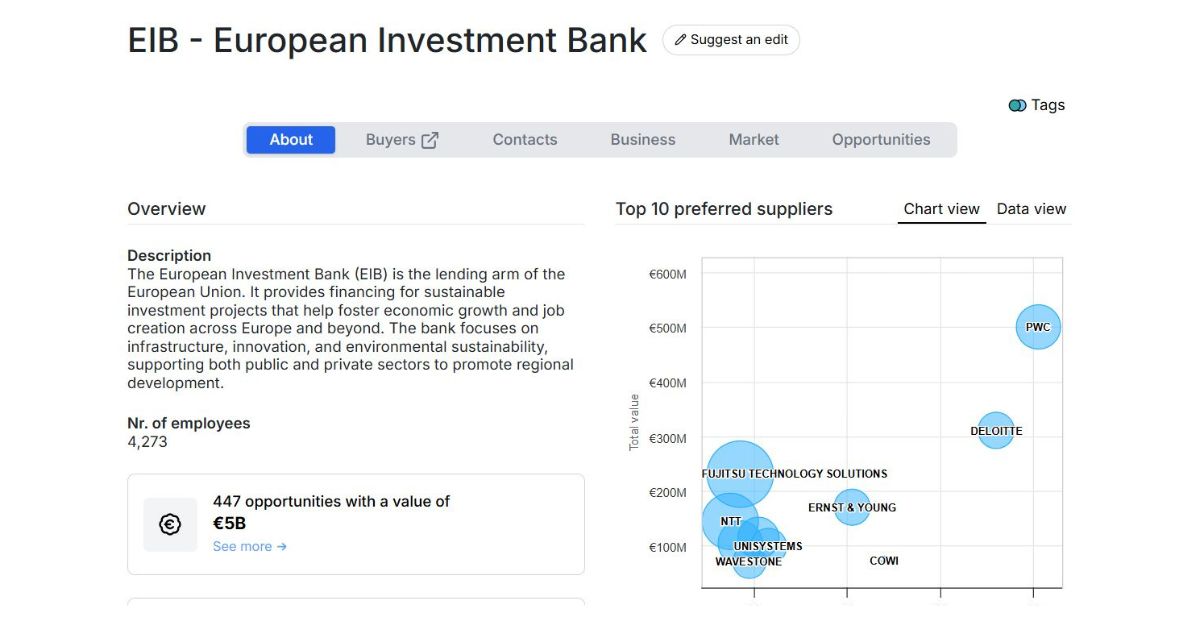
Buyer intelligence focuses on understanding contracting authorities themselves—procurement history, spending patterns, preferred suppliers, and contract renewal cycles. Hermix provides detailed authority profiles consolidating this intelligence, showing everything an organization has procured, which suppliers they favor, and when contracts expire. This helps you target business development toward authorities likely to need your solutions.

Pricing intelligence includes market intelligence data about what authorities actually pay for similar scope. Understanding contract values helps you price competitively. In Hermix, you analyze historical values for comparable projects, see pricing ranges across regions, and understand whether you’re bidding in line with market conditions or pricing yourself out of competition.

How Can You Gather Market Intelligence in Public Procurement?

Collecting market intelligence starts with monitoring official data sources where contracts are published. Government tender portals publish opportunities and awards, but manually checking these across multiple countries becomes impractical. A market intelligence platform like Hermix automates this monitoring, ensuring comprehensive coverage without dedicating full-time resources to manual portal checking.

Hermix gathers market intelligence by monitoring tender notices from major European procurement portals continuously. The platform indexes millions of contracts, creating a comprehensive database of public sector activity. Rather than searching dozens of websites, you access aggregated intelligence through one platform. This data collection ensures you capture relevant market data consistently.

Intelligence gathering extends beyond collecting notices. Effective market intelligence requires analyzing patterns: which suppliers win most in your sector, what authorities spend on your solutions, how values trend over time. Hermix transforms raw procurement data into actionable intelligence through analytics revealing these patterns. You understand market dynamics that inform your intelligence strategy, not just individual awards.

The most valuable intelligence often comes from analyzing relationships within the market. Hermix’s partnership analysis and competition graphs visualize these relationships, helping you understand not just who competitors are, but who they work with, which authorities favor them, and where gaps exist. This relational intelligence provides insights that individual contract data cannot reveal.

Why is a Market Intelligence Tool Critical for Winning Tenders?

A market intelligence tool addresses the fundamental problem that manually gathering procurement data at scale is impossible. The European public sector publishes thousands of tender notices weekly across hundreds of portals. Without automation through an intelligence tool, you miss opportunities, lack context about competition and pricing, and make bid decisions without adequate intelligence.

Market intelligence can help you avoid wasting resources on low-probability opportunities. When Hermix shows that an authority awarded 15 consecutive similar contracts to large multinationals and you’re a small consultancy, that intelligence suggests bidding may not be worthwhile. When analysis reveals your competitor won 80% of tenders in this segment, you understand the competitive challenge. Use market intelligence to focus limited bid resources where you’re genuinely competitive.

Understanding market through tools like Hermix reveals opportunities you wouldn’t find otherwise. Contract renewal forecasting identifies when existing contracts expire, signaling upcoming recompetitions before formal tenders publish. This advance visibility gives you months to prepare instead of the typical 60-day response window. You research the authority, analyze what the incumbent delivered, and develop your approach before competitors who only react when tenders appear.

Market intelligence solutions provide the data foundation for measuring and improving performance. Track which opportunity types you win versus lose, analyze patterns in successful bids, and identify market segments where you’re strongest. This intelligence helps you refine business strategies continuously. Companies using market intelligence platforms systematically report win rates 25-30% higher than those bidding without intelligence.

How Does Hermix Provide Market Intelligence for B2G Success?

Hermix delivers comprehensive market intelligence specifically for companies selling to the public sector. The platform monitors tender opportunities across European procurement portals, providing automated alerts for relevant opportunities matching your criteria. This opportunity intelligence ensures you never miss tenders in your target market while eliminating hours of manual checking.

Authority intelligence in Hermix includes detailed profiles showing complete procurement history. For any government organization, you see all past tenders and awards, understand what they procure, identify preferred suppliers, analyze spending patterns, view typical contract values, and track renewal cycles. This buyer intelligence helps you target development toward authorities that regularly procure what you offer.

Competitive intelligence through Hermix reveals who you’re competing against and how they perform. Contractor profiles show each competitor’s win history, authorities they work with, typical values, geographic focus, and partnership networks. You conduct competitor analysis to understand which companies dominate which segments, see emerging competitors, and identify where competitors are vulnerable. Market intelligence helps inform both positioning and opportunity selection.

Market intelligence data in Hermix includes pricing benchmarks, value trends, and spending analytics across the public sector. You see what authorities typically pay for similar scope, understand how values vary by region, track whether spending in your sector grows or declines, and identify the largest opportunities. The platform transforms millions of data points into actionable insights improving your strategic decision about where and how to compete.

How Can You Use Market Intelligence for Better Bid Decisions?

Using market intelligence effectively starts with rigorous qualification. When a tender appears relevant, use Hermix to analyze the authority’s profile immediately. Review past awards for similar contracts to see what they buy, who they award to, and what they pay. If patterns show they consistently select large integrators and you’re a small specialist, intelligence suggests low win probability. This qualification prevents wasting 100+ hours on proposals you’re unlikely to win.

Market intelligence can help businesses assess competition before committing. Use Hermix’s analysis to see who else is active in this segment and authority. If the platform shows 5-6 capable competitors all pursuing similar opportunities with this buyer, you face significant competition. If analysis reveals only 2-3 active suppliers, the landscape is more favorable. Intelligence-based assessment of competitive position improves selection dramatically.

Pricing decisions benefit from market intelligence about historical values. Before finalizing your price, review comparable contracts in Hermix to understand norms. If similar scope typically costs €400-600K and you’re proposing €800K, you need strong justification. Market intelligence grounds pricing in reality, helping you balance competitiveness with profitability while gaining a competitive advantage.

Strategic decisions about which markets to enter should be driven by market intelligence showing where opportunity exists. Use Hermix’s market analytics to identify which segments are growing, where the largest contracts are awarded, and which authority types procure most in your domain. This intelligence helps you allocate resources strategically to key market segments where data shows greatest opportunity aligned with your capabilities.

What Role Does Understanding Market Dynamics Play in Strategy?

Understanding market dynamics in public procurement means recognizing patterns in how authorities buy and when cycles occur. Public sector procurement follows patterns: budget cycles influence when authorities publish tenders, contract terms typically run 2-5 years creating predictable renewals, and authorities often procure similar requirements repeatedly. Recognizing these market trends allows you to anticipate opportunity rather than just react.

The changing market environment creates both opportunities and risks. Budget constraints, political priorities, and regulatory changes influence what authorities buy. Increased focus on digital transformation drives IT procurement. Sustainability priorities change criteria. Intelligence about these shifts helps you align offerings with evolving priorities and stay ahead of market penetration opportunities.

Hermix provides intelligence about market dynamics through trend analysis across procurement data. You see how spending in particular domains evolved, identify new authorities entering your market, spot emerging requirements, and track how criteria shift. This view of the market helps you understand not just current market conditions but where things are heading, allowing you to position advantageously before opportunities fully materialize.

Understanding of the market also means recognizing supply-side dynamics: how competitors position, where partnerships form, and how the vendor landscape evolves. Hermix’s partnership analysis shows how competitors collaborate, revealing potential partners or competitive threats. Market segmentation becomes clearer when you see which suppliers specialize in which authority types. This comprehensive market landscape intelligence informs decisions about positioning and differentiation.

How Do You Build an Effective Intelligence Strategy?

An intelligence strategy for B2G starts with defining what you need to know for better business decisions. Most companies need intelligence in several areas: upcoming opportunities in target markets, the competitive landscape, pricing benchmarks, preferred suppliers by authority, and contract renewal timing. Prioritize the actionable intelligence that most directly impacts bid decisions and win rates.

Marketing intelligence requires consistent collection processes. Hermix provides the technology platform for monitoring and data analysis, but you need internal processes for using intelligence effectively. Establish rhythms for reviewing market data: weekly review of new opportunities and competitor wins, monthly pipeline analysis, quarterly assessment of industry trends and strategy adjustments. Assign ownership for intelligence efforts so someone monitors, analyzes, and shares market insights with the sales team.

Intelligence and marketing should work together in your organization. Market intelligence about customer needs and buyer preferences should inform your marketing strategies and value proposition development. Insights into customer behavior should guide your marketing efforts and sales and marketing activities. Create feedback loops where sales data and market intelligence inform each other, continuously improving your understanding and customer preferences alignment.

The right market intelligence strategy evolves as you learn what works. Track which intelligence inputs most improve win rates. Is it competitor analysis that helps differentiate? Is it pricing benchmarks? Is it renewal forecasting? Double down on intelligence that delivers results. Similarly, identify intelligence you’re gathering but not acting on. Intelligence requires regularly assessing whether your strategy delivers the competitive advantage needed in your particular market.

Create your free account and start winning public contracts, easier.

Key Takeaways: Using Market Intelligence to Win Public Sector Contracts

  • Market intelligence in B2G means systematically gathering and analyzing data about government procurement patterns to inform which opportunities to pursue and how to win them
  • Market intelligence differs from market research by being continuous and operational, focused on tactical bid decisions rather than one-time strategic questions about market size or target audience
  • Types of market intelligence include competitor intelligence, buyer intelligence, product intelligence, and pricing data – all critical for different aspects of B2G success and business strategies
  • A market intelligence tool like Hermix automates monitoring across hundreds of procurement portals, making comprehensive intelligence gathering practical at scale with monitoring tools that track all relevant data sources
  • Hermix provides comprehensive B2G market intelligence including automated tender monitoring, detailed authority profiles, competitor analysis, pricing benchmarks, and contract renewal forecasting for the overall market
  • Market intelligence gives competitive advantage by providing information competitors lack, enabling better differentiation, optimal timing, and stronger positioning with the right market intelligence approach
  • Using market intelligence effectively requires rigorous qualification – analyze authority history, assess the market landscape, benchmark pricing, and prioritize high-probability opportunities within the market
  • Understanding market dynamics helps you anticipate opportunity rather than just react, positioning ahead of market shifts and staying competitive in a changing market environment
  • An effective intelligence strategy defines needed intelligence, establishes processes for consistent collection, and integrates market intelligence provides into decision-making across sales team and marketing campaigns
  • Market intelligence platforms should automate data collection and provide analytics revealing patterns, with tools like Hermix delivering comprehensive monitoring and actionable insights for new market entry
  • Companies using market intelligence report win rates 25-30% higher than those bidding without intelligence, because they pursue better opportunities and enter competitions better prepared to meet customer needs and market performance expectations


Market Intelligence for Public Procurement How Intelligence Tools Give You a Competitive Advantage

Public Sector Contracts and Tenders: Your Complete Guide to UK Government Procurement Opportunities

The UK public sector spends over £300 billion annually on goods and services, creating substantial opportunities for suppliers across all industries. Understanding how to find tenders, navigate the procurement process, and win government contracts can open up consistent revenue streams for your business.

This guide explains how public sector procurement works in the UK, where to find tender opportunities, and what you need to know about the Procurement Act 2023 and other regulations. You’ll learn how contracting authorities publish tenders, how to access platforms like Contracts Finder and Find a Tender service, and how market intelligence through Hermix helps you identify the right opportunities before investing in proposals. Whether you’re an SME trying to sell to the public sector for the first time or an established supplier looking to increase your win rate, this article provides practical insights for navigating government tenders.

Create your free account and start winning public contracts, easier.

What is Public Sector Procurement in the UK?

Public sector procurement refers to how government departments, local authorities, NHS trusts, and other public bodies purchase goods and services. This market spans central government ministries like the Ministry of Defence, devolved administrations in Scotland, Wales, and Northern Ireland, local councils, educational institutions, and healthcare providers. The UK public sector must follow strict procurement regulations designed to ensure transparency, competition, and value for money when spending public money.

The procurement process in the public sector differs from private purchasing in several important ways. Public bodies must advertise most contract opportunities publicly, allowing any qualified supplier to compete. They must evaluate bids against published criteria, documenting their decisions. This transparency creates opportunities for companies that might not have existing relationships with government buyers. If you can demonstrate capability and value through a well-structured tender response, you can win government contracts regardless of your size or previous experience.

Public sector procurement operates under specific regulations. The Public Contracts Regulations 2015 governed most UK procurement until recently. The new Procurement Act 2023 introduces significant changes designed to simplify the process, increase transparency, and create more opportunities for small and medium-sized enterprises (SMEs). Understanding these rules helps you navigate tender opportunities effectively. When you know what contracting authorities must do and how they evaluate submissions, you can position your response more strategically.

Where Can You Find Public Sector Tenders and Contract Opportunities?

Finding tender opportunities starts with knowing where public bodies publish them. Contracts Finder is the UK government’s primary platform for publishing contract opportunities and awards. All central government contracts worth over £12,000 must be published on Contracts Finder. Many local authorities and other public sector bodies also use the platform. The Find a Tender service replaced the EU’s TED (Tenders Electronic Daily) system for UK procurement after Brexit. This gov.uk service publishes notices for higher-value contracts that meet specific thresholds.

Beyond these central platforms, you’ll find additional tender sources across the public sector. Public Contracts Scotland operates a separate system for Scottish public procurement. The Welsh Government maintains its own procurement portal. Sell to the public sector resources on gov.uk provide links to various procurement platforms used by different public sector organisations. The NHS has specific procurement frameworks and platforms for healthcare-related goods and services. The Crown Commercial Service manages framework agreements that multiple public bodies can use.

Hermix is one of the best platforms for monitoring these opportunities efficiently. Rather than manually checking dozens of procurement portals daily, Hermix automatically monitors tenders from Contracts Finder, Find a Tender, TED, national procurement portals across Europe, and the EU Funding portal. You receive daily alerts for opportunities matching your criteria, delivered directly to your inbox. This automation ensures you never miss relevant public sector tenders while saving hours of manual search time.

For companies serious about government contracts, Hermix solves the critical problem of tender discovery. The platform aggregates tender notices from across the UK and Europe, allowing you to search once instead of checking dozens of websites. You can filter by country, industry, authority type, contract value, and keywords to find exactly the contract opportunities relevant to your business. For suppliers targeting public sector contract opportunities across multiple regions, Hermix provides the comprehensive monitoring that makes capturing opportunities early practical and efficient.

How Does the Procurement Act 2023 Change Public Sector Buying?

The Procurement Act 2023 represents the most significant reform of UK public procurement in decades. This new legislation consolidates and simplifies previous procurement regulations, with full implementation expected in late 2024. The Act aims to make procurement more accessible for SMEs, increase transparency throughout the procurement process, and give contracting authorities more flexibility in how they conduct competitions.

One major change is the introduction of a central digital platform that will eventually consolidate tender notices and contract award information. This platform will make it easier for suppliers to find opportunities and understand market patterns. The Act also mandates greater transparency around procurement pipelines, requiring public bodies to publish advance notice of upcoming contracts. For suppliers, this means better visibility into future opportunities, allowing you to prepare bids earlier and engage with buyers before formal tenders launch.

The new procurement regime emphasizes outcomes and value rather than just lowest price. Contracting authorities gain more flexibility to consider social value, environmental impact, and innovation alongside cost. The Act also simplifies the rules around framework agreements and dynamic purchasing systems, potentially making it easier for suppliers to access multiple contract opportunities through a single qualification process. For SMEs particularly, these changes reduce barriers to competing for government contracts.

Understanding the Procurement Act 2023 helps you anticipate how tender opportunities will evolve. While the core principles of transparency and competition remain, the specific procedures and platforms are changing. Hermix keeps pace with these regulatory changes, ensuring you have access to tenders published under both old and new regimes. As new procurement platforms launch under the Act, Hermix integrates them into its monitoring, so you don’t need to track which authorities use which systems.

What Types of Organisations Issue Public Sector Tenders?

Public sector tenders come from diverse organisations across the UK. Central government departments like the Home Office, Department for Education, and Ministry of Defence procure everything from IT systems to consulting services to facilities management. These departments often have substantial procurement budgets and complex requirements. Their tenders typically appear on both Contracts Finder and the Find a Tender service, depending on contract value.

Local authorities represent another significant source of tender opportunities. County councils, city councils, and borough councils procure services ranging from social care to waste management to highway maintenance. Local government procurement tends to be more accessible for regional suppliers and SMEs because authorities often value local presence and community impact. Each local authority may use Contracts Finder, regional procurement platforms, or their own websites to advertise opportunities.

The NHS and healthcare sector issues tenders for clinical equipment, pharmaceuticals, facilities management, IT systems, and support services. NHS trusts, clinical commissioning groups, and other healthcare bodies have specific procurement frameworks. Understanding healthcare procurement requirements and regulations is essential if you’re targeting this sector. The Crown Commercial Service manages several framework agreements specifically for NHS procurement, providing another route to market.

With Hermix, you can analyze which public sector organisations are most active in your market. The platform provides detailed authority profiles showing procurement history, spending patterns, preferred suppliers, and typical contract values. When you identify a relevant organisation, you can see all their past tenders and contracts, understand what they buy, and monitor them for future opportunities. This intelligence helps you target your business development efforts toward the public sector bodies most likely to need your goods or services.

How Can You Qualify Public Sector Tenders Before Bidding?

Qualifying tender opportunities before investing in a full response is critical for improving your win rate. Start by analyzing the contracting authority’s procurement history. What have they purchased before? Who won previous contracts? What were the contract values? This historical data reveals buyer patterns and preferences. If an authority consistently awards contracts to large multinational suppliers and you’re a small local company, your win probability may be lower.

Hermix makes this qualification process fast and data-driven. When you see a tender opportunity, you can immediately access the authority profile to view their procurement history. The platform shows who won similar contracts, what they charged, and which suppliers this buyer works with regularly. You can see if the current tender fits typical patterns or represents something unusual. This context helps you assess whether you’re competitive before investing 100+ hours in a response.

Examine the tender requirements carefully against your actual capabilities. Public sector buyers specify mandatory requirements that you must meet to be considered. Look beyond the obvious technical specs to less visible requirements around insurance, financial stability, quality certifications, or security clearances. Hermix’s AI Tender Summarization extracts these key requirements from lengthy tender documents in minutes. Instead of spending 2-4 hours reading hundreds of pages to understand requirements, you get a clear summary highlighting mandatory criteria, evaluation criteria, budget, and deadlines.

Assess the competition and contract value relative to your capacity. Using Hermix, you can analyze similar past tenders to see how many bidders typically compete for this type of opportunity. If comparable tenders consistently attract 15+ bidders, you face significant competition. If they typically draw only 3-4 qualified responses, your odds improve. The platform’s competition analysis shows which companies are active in this market segment, helping you understand who you’re likely competing against. This intelligence lets you make informed go/no-go decisions based on realistic win probability rather than optimism.

What Role Does Market Intelligence Play in Winning Government Contracts?

Market intelligence transforms how you approach public sector procurement. Instead of responding reactively to tenders as they appear, intelligence allows strategic planning. By analyzing public expenditure patterns, you can identify which organisations spend significantly in your area and when their procurement cycles typically occur. This foresight helps you engage with buyers before formal tenders launch, positioning your solution and building awareness.

Hermix provides comprehensive market intelligence across the public sector. The platform’s market analytics show spending patterns by authority type, geography, and industry. You can identify which sectors are growing, which public sector bodies are increasing expenditure in your area, and where the largest contract opportunities exist. This strategic view helps you allocate business development resources toward the highest-potential markets rather than pursuing opportunities randomly.

Understanding competition through contract award analysis reveals who wins what types of tenders and why. When you see that a particular supplier has won 12 similar contracts across different government departments, you learn about their strengths and approach. Hermix’s contractor profiles show detailed histories of your competitors, including their win rates, typical contract values, geographic focus, and partnership patterns. This intelligence helps you differentiate your response. If your main competitor emphasizes low pricing, you might emphasize quality and service. If they focus on one methodology, you can highlight advantages of your different approach.

Historical contract values in Hermix provide pricing benchmarks that help you price competitively. The platform shows what buyers actually paid for similar scope, not what vendors hope to charge. If comparable contracts averaged £500K and you’re considering bidding £750K, you need strong justification for the premium. If you’re bidding £300K when the market pays £500K, buyers may question whether you understand the scope. Market intelligence grounds your pricing in reality, helping you find the right balance between competitiveness and profitability.

How Does Contract Renewal Forecasting Help You Win More Tenders?

Contract renewal forecasting identifies upcoming opportunities before tenders publish. Public sector contracts typically run for defined terms—2, 3, or 5 years. By analyzing when current contracts expire, you can predict when recompetitions will occur. This advance notice gives you months to prepare instead of the 60 days most tenders allow. You can research the buyer, understand what the incumbent delivered, identify improvement opportunities, and develop your technical approach before the formal procurement begins.

Hermix’s contract renewal calendar provides this strategic visibility. The platform tracks contract expiration dates and forecasts when authorities will likely retender. You see a visual timeline of upcoming opportunities in your target markets, allowing you to plan resource allocation and prioritize pursuit efforts months in advance. Instead of scrambling to respond when a tender appears, you’ve already prepared your approach and engaged with stakeholders.

This advance intelligence is particularly valuable for displacing incumbents. When you know a contract is coming up for renewal, you can analyze what the current supplier delivered, where gaps might exist, and how you could improve on their solution. Hermix shows you the complete history of previous contract awards with that buyer, including scope, pricing, and contract terms. You can see if the incumbent won through competitive tender or contract extension, giving insight into their relationship with the buyer.

Companies using renewal forecasting report significantly higher win rates because they invest time strategically in high-probability opportunities. Rather than bidding everything that appears, you focus on upcoming recompetitions where you have genuine advantages. You enter the process informed about buyer history, competitive landscape, and market pricing. This preparation time is the difference between generic proposals and targeted responses that demonstrate deep understanding of the buyer’s needs and context.

How Does Hermix’s AI Help You Respond to Tenders Faster?

Responding to public sector tenders requires analyzing lengthy documents to understand requirements, then preparing detailed proposals that address each criterion. The average tender document runs 100-300 pages, including technical specifications, terms and conditions, evaluation criteria, and various annexes. Reading and analyzing these documents takes 2-4 hours for each opportunity, and that’s before you even start writing your response.

Hermix’s AI Tender Summarization cuts this analysis time dramatically. Upload any tender document and the AI extracts key information in minutes: what they’re buying, budget, mandatory requirements, evaluation criteria with weightings, deadlines, and submission requirements. You get a structured summary that highlights exactly what matters for your bid decision. This allows you to screen 5-10 opportunities in the time it previously took to analyze one, improving your ability to identify and pursue the best contracts.

Beyond summarization, Hermix’s AI Chat feature lets you ask specific questions about tender requirements. Instead of searching through 300 pages to find information about required certifications or team qualifications, you simply ask the AI. “What certifications are mandatory?” “How many similar projects must we demonstrate?” “What’s the evaluation weighting for pricing?” You get instant, specific answers extracted from the tender documents, saving hours of manual reading while ensuring you don’t miss critical requirements.

This AI capability is particularly valuable for SMEs with limited bid resources. When you can only afford to pursue 3-4 tenders per quarter, you need to choose wisely. Hermix’s AI helps you qualify more opportunities faster, ensuring you invest your 100-200 hours of proposal effort in the tenders you’re most likely to win. The time saved on analysis gets redirected to crafting stronger technical proposals and more compelling differentiation—the activities that actually win contracts.

What Challenges Do SMEs Face Selling to the Public Sector and How Does Hermix Help?

Small and medium-sized enterprises often struggle to access government contracts despite public sector commitments to increase SME participation. One barrier is simply finding relevant tender opportunities. With contracts published across multiple platforms and websites, SMEs without dedicated bid teams miss opportunities. By the time they discover a relevant tender, the deadline may be too close for a quality response.

Hermix solves this discovery problem by monitoring all major procurement portals automatically. Instead of checking 20+ websites daily, you receive morning alerts showing all new tenders matching your criteria. This ensures you find opportunities within hours of publication, giving you maximum time to prepare responses. For SMEs, this automated monitoring effectively provides the tender discovery capability of a full-time bid manager at a fraction of the cost.

Resource constraints make responding to tenders challenging for SMEs. Government tender documents can run hundreds of pages, requiring substantial time to read and understand. Preparing a compliant response takes 100-200 hours for complex opportunities. Small companies competing with established suppliers must invest scarce resources into bids without guaranteed return.

Hermix addresses this resource challenge through AI-powered analysis and reusable intelligence. The AI Tender Summarization reduces document analysis time from hours to minutes. The market intelligence showing past winners, pricing benchmarks, and buyer preferences helps you write targeted responses faster because you understand context. The platform’s ability to shortlist opportunities based on fit means SMEs can focus their limited resources on the 3-4 tenders per quarter where they’re genuinely competitive, rather than spreading effort across 10-15 opportunities with low win probability.

Qualification requirements sometimes create unnecessary barriers. While public bodies need assurance suppliers can deliver, requirements around turnover thresholds, insurance levels, or past contract values can automatically exclude capable SMEs. Hermix helps SMEs navigate this by showing which authorities are SME-friendly. The platform’s authority profiles reveal patterns in who they award contracts to, typical contract sizes, and whether they split large contracts into smaller lots accessible to smaller suppliers. This intelligence helps SMEs target procurement opportunities where they’re more likely to qualify.

How Can You Use Hermix to Improve Your Public Sector Tender Success Rate?

Improving success starts with better qualification of which tenders to pursue. Hermix provides the data to make informed bid/no-bid decisions. Before investing in a response, check the authority profile to see who won similar contracts. If they consistently award to large multinationals and you’re a small consultancy, reconsider. Review the typical contract values they award in your sector. If this tender is 3x their normal size, they may be uncomfortable with the scale.

Use Hermix’s competition analysis to understand who you’re bidding against. The contractor profiles show which companies are active in this market segment, their win rates with this authority, and their typical offerings. If you see that your main competitor has won 8 of the last 10 similar tenders with this buyer, you need exceptional differentiation to win. If the analysis shows no dominant player and diverse winners, the competition is more open.

Leverage Hermix’s pricing intelligence to position your bid competitively. The platform shows what this authority paid for comparable contracts in the past. You can see the range of contract values for similar scope, helping you avoid pricing that’s dramatically out of line with market norms. This doesn’t mean always bidding lowest—particularly when evaluation criteria weight quality heavily—but it does mean understanding what represents competitive pricing versus premium pricing in this specific market.

Track your performance using Hermix’s opportunity management features. Flag tenders you’re pursuing, assign them to team members, track your qualification status through the kanban board, and maintain notes on each opportunity. After outcomes, record which you won and lost, noting factors that influenced results. Over time, you’ll identify patterns: perhaps you win 60% of local authority tenders but only 20% with central government, or you succeed with competitive procurements but struggle with framework agreements. These insights help you focus pursuit efforts where you’re naturally strong.

Companies using Hermix report win rate improvements of 25-30% because they make smarter decisions about where to invest proposal effort. The combination of comprehensive opportunity discovery, AI-powered qualification, detailed market intelligence, and contract renewal forecasting means you bid fewer opportunities but win more of them. For an SME that can afford to pursue 10 serious tenders per year, improving win rate from 15% to 40% means moving from 1-2 contract wins annually to 3-4 wins—potentially doubling revenue from public sector contracts.

Create your free account and start winning public contracts, easier.

Key Takeaways: Winning UK Public Sector Contracts with Better Intelligence

  • The UK public sector spends over £300 billion annually on goods or services, creating substantial contract opportunities for suppliers of all sizes across all industries
  • Tenders are published across multiple platforms including Contracts Finder, Find a Tender service, Public Contracts Scotland, and various authority-specific portals
  • Hermix monitors all major procurement portals automatically, delivering daily alerts for relevant opportunities and saving hours of manual searching across multiple websites
  • The Procurement Act 2023 introduces significant reforms designed to increase transparency, simplify processes, and create more opportunities for SMEs selling to the public sector
  • Contract qualification before bidding is essential – analyze authority procurement history, competitive landscape, and your fit against requirements before investing 100+ hours in responses
  • Hermix provides detailed authority profiles showing procurement history, spending patterns, preferred suppliers, and typical contract values to inform qualification decisions
  • AI Tender Summarization in Hermix extracts key information from hundreds of pages in minutes, reducing document analysis time from 2-4 hours to 5 minutes per opportunity
  • Market intelligence about past contract awards and pricing benchmarks helps you position proposals competitively and price appropriately for each tender
  • Contract renewal forecasting shows when existing contracts expire, giving you months to prepare for recompetitions rather than the typical 60-day tender response window
  • SMEs face specific challenges in public sector procurement including resource constraints, discovery problems, and qualification barriers that market intelligence helps overcome
  • Companies using Hermix report win rates of 40-60% versus 15-20% without market intelligence, because they pursue fewer, higher-probability opportunities and enter competitions better prepared
  • Success in government contracts requires systematic approach – monitoring opportunities comprehensively, qualifying rigorously, preparing strategically, and learning from outcomes to improve continuously

Public Sector Contracts and Tenders Your Complete Guide to UK Government Procurement Opportunities

The Hermix’s Guide to RFP, RFQ, and RFI in Public Procurement

Creating requests for proposal, quotations, and information is central to public sector buying. Get these procurement documents right and you attract qualified suppliers who understand your needs. Get them wrong and you waste months evaluating proposals that miss the mark.

This guide shows procurement professionals how to use RFPs, RFQs, and RFIs effectively in government tendering. You’ll learn when to use each document type, how to structure them for better responses, and what evaluation criteria actually work. We’ll cover the complete RFP process from defining requirements through vendor selection, with specific examples from public sector procurement. Whether you’re issuing your first tender or refining your approach, these insights help you buy better.

Create your free account and start winning public contracts, easier.

What is the RFP Process in Public Procurement and Why Does It Matter?

The RFP process is how government organizations solicit proposals for complex purchases where the solution approach matters as much as pricing. Unlike simple purchases where you know exactly what you want, an RFP invites suppliers to propose how they’ll meet your requirements. This process allows you to evaluate different approaches and select the vendor or supplier whose proposal best satisfies your needs.

In public procurement, the RFP process follows a structured path. First, your procurement team defines requirements by working with internal stakeholders to document what you need. Next, you prepare the RFP document that specifies project scope, evaluation criteria, timeline, and submission requirements. After publishing the tender on official procurement portals, you answer supplier questions, receive proposals, evaluate submissions against published criteria, and make your final selection. This entire cycle typically takes 3-6 months depending on project complexity.

The RFP process allows transparency and fair competition while giving you flexibility to consider innovative approaches. When you issue an RFP, you’re not just asking “how much does this cost?” You’re asking “how will you deliver this, and why is your approach better?” This matters for complex technology implementations, consulting services, or any situation where methodology and capability differentiate vendors. The structured evaluation ensures you can defend your selection decision with documented evidence.

When Should Buyers Use RFQ vs RFI vs RFP in Government Procurement?

Understanding when to use each procurement document type saves time and gets better results. An RFI (request for information) comes first when you need market intelligence. Issue an RFI when you’re exploring what solutions exist but haven’t finalized requirements. Suppliers respond with information about their capabilities, products and services, and approaches without providing formal pricing. RFIs help you understand the market before committing to a specific procurement path.

An RFQ (request for quotation) works when you know exactly what you want and just need pricing. Use RFQs for purchasing well-defined goods or services with clear specifications. For example, if you need 500 laptops with specific technical specs, an RFQ asks vendors to quote their price for exactly what you specified. RFQs create straightforward price comparisons because every vendor quotes on identical requirements. The evaluation focuses primarily on price, delivery terms, and warranty rather than on solution approach.

A request for proposal applies when the purchase involves complexity, customization, or when vendor methodology matters. RFPs work for IT system implementations, facilities management, consulting projects, or any situation where you want vendors to propose their approach. You provide requirements and evaluation criteria, then evaluate how well each proposal addresses your needs. Public sector buyers often issue RFPs for services contracts where technical approach, team qualifications, and delivery methodology carry significant weight alongside pricing.

Some organizations use RFx as shorthand for this family of procurement documents. You might also encounter ITT (invitation to tender) which functions similarly to an RFP, or EOI (expression of interest) which resembles an RFI. The specific terminology varies by country and sector, but the underlying purpose remains consistent. Choosing the right document type based on what you’re buying and how much you know about the solution prevents wasted effort.

How Do You Create an Effective RFP Document for Government Contracts?

Creating an effective RFP document starts with a clear outline of what you’re buying and why. Begin with an executive summary that explains your organisation, the project background, and objectives. This section gives potential vendors context about your needs and goals. Specify the problem you’re solving or the capability you’re building. When vendors understand your “why,” they can propose solutions aligned with your actual needs rather than just responding mechanically to requirements.

The scope of work section forms the heart of your RFP. Here you specify exactly what you need the vendor to deliver. For services procurement, outline the deliverables, performance standards, and service levels required. For complex projects, break the scope into phases or work packages. Include enough detail that vendors understand requirements, but avoid being so prescriptive that you eliminate innovative approaches. Well-crafted RFP documents balance clarity with flexibility, defining outcomes you need while allowing vendors to propose how they’ll achieve them.

Evaluation criteria must be explicit and measurable. Specify what criteria you’ll use to evaluate proposals and how much weight each carries. Common criteria include technical approach (30-40%), relevant experience (20-30%), team qualifications (15-20%), and pricing (20-30%). Make the evaluation criteria transparent so vendors know what matters most. When suppliers understand how you’ll evaluate their proposal, they can tailor responses to address your priorities. Clear criteria also make your evaluation process more efficient because reviewers know exactly what to assess.

Additional sections should cover submission requirements, timeline with all key dates, terms and conditions, compliance requirements, and contact information for questions. Specify format requirements clearly: page limits, required sections, document formats, and how to submit. Include a detailed timeline showing when you’ll answer questions, when proposals are due, evaluation period, and expected contract award date. These details help potential suppliers plan their response and ensure consistency across all submissions.

What Makes a Successful RFP in Government Tendering?

A successful RFP attracts multiple qualified proposals that genuinely meet your needs. Success starts with requirement definition. Before drafting your RFP, invest time understanding your organisation’s needs. Engage stakeholders who will use the product or service. Document their requirements clearly. Too often, procurement teams rush RFP drafting without fully clarifying what they’re buying, resulting in proposals that don’t satisfy actual business requirements.

Clarity throughout the document prevents misaligned proposals. Use plain language without jargon. When technical terms are necessary, define them. Structure the document logically with clear headings, numbered sections, and consistent formatting. Many suppliers respond to RFPs from multiple government agencies. If your document is confusing or poorly organized, vendors waste time seeking clarification instead of crafting strong proposals. Clear RFP documents get better responses because suppliers can focus on demonstrating their capabilities rather than deciphering your requirements.

Realistic timelines and reasonable evaluation criteria mark successful RFPs. If you compress the response timeline too much, you may lose qualified vendors who need adequate time to prepare thoughtful proposals. If your evaluation criteria overweight factors like local presence or specific certifications, you may artificially limit your vendor pool. The best RFPs balance thoroughness with accessibility, attracting a competitive field of capable suppliers without creating unnecessary barriers. We’ve seen that successful RFPs in public procurement typically receive 4-8 qualified proposals, suggesting the requirement definition and evaluation approach resonate with the market.

How Can Procurement Teams Make the RFP Process More Efficient?

Making the procurement process more efficient starts with preparation before you issue RFPs. Conduct market research upfront to understand what solutions exist and typical pricing ranges. This intelligence helps you set realistic budgets and timelines. When you publish an RFP with a budget that’s 50% below market rates, you waste everyone’s time. Similarly, if you specify requirements that only one vendor can meet, the competitive process becomes meaningless. Understanding market realities before drafting saves months of iteration.

Templates and standardized components speed RFP drafting while ensuring consistency. Develop templates for common procurement types: IT services, facilities management, consulting, equipment purchases. Include standard sections for terms and conditions, submission requirements, and evaluation criteria. When you issue a new RFP, you can use the template as a foundation and customize the technical requirements. This approach ensures you don’t forget critical sections while reducing the time to prepare each new procurement document.

Collaborative tools help internal stakeholders contribute efficiently. Modern procurement software allows multiple team members to review and comment on draft RFPs simultaneously. Subject matter experts can review technical requirements without waiting for sequential document circulation. Project management platforms track who needs to review which sections and by when. This collaborative approach reduces the RFP development cycle from months to weeks while improving quality through broader input. The time saved on document preparation can be redirected toward better requirement definition and vendor engagement.

Clear processes for handling vendor questions reduce back-and-forth during the response period. Establish upfront that all questions must be submitted in writing by a specific deadline. Publish answers to all vendors simultaneously, maintaining fairness. Some procurement teams hold bidder conferences where vendors can ask clarification questions directly. Whether you use written Q&A, conferences, or both, structured clarification processes ensure all potential suppliers have equal access to information. This reduces protests and challenges after contract award.

What Are the Best Practices for RFP Drafting in Public Sector Procurement?

Best practices for RFP drafting begin with focusing on outcomes rather than prescribing specific solutions. Instead of specifying exact technologies or methodologies, describe the results you need to achieve. This approach invites innovation while ensuring proposals remain relevant to your goals. For example, rather than requiring a specific software platform, specify the functional capabilities and performance requirements the system must deliver. Vendors can then propose various solutions that meet your needs, potentially offering approaches you hadn’t considered.

Involve stakeholders early and continuously throughout RFP development. The people who will use the product or service understand requirements better than procurement teams working in isolation. Schedule workshops with end users, technical staff, and management to gather their input. Document their needs systematically. After drafting the RFP, have stakeholders review it to confirm the requirements accurately reflect their needs. This investment upfront prevents costly misalignment later when the selected vendor delivers something that doesn’t satisfy your actual requirements.

Balance detail with flexibility in your specifications. Provide enough detail that vendors understand what you need without being so prescriptive that you eliminate competitive proposals. In technical specifications, distinguish between mandatory requirements (must-haves) and preferred features (nice-to-haves). This distinction helps vendors understand what’s negotiable and where they must comply fully. Clear specification of mandatory vs. preferred requirements also protects you during evaluation because you can eliminate non-compliant proposals early while considering trade-offs among qualified submissions.

Align evaluation criteria with your actual priorities. If service quality matters more than price, weight technical evaluation heavily. If you need proven capability with similar projects, make relevant experience a significant factor. Many public sector RFPs default to 50/50 technical/financial splits without considering whether that weighting reflects true priorities. We’ve analyzed thousands of government contracts and found that when buyers weight criteria according to what actually matters for project success, they report higher satisfaction with selected vendors.

How Do RFIs Help Shape Better RFPs in Government Procurement?

RFIs provide valuable market intelligence before you commit to a specific procurement approach. Issue a request for information when you’re exploring options but haven’t finalized requirements. RFIs ask suppliers to describe their capabilities, explain their approach to problems like yours, and provide examples of similar work. Because RFIs don’t commit you to a purchase, vendors often share more information about their solutions than they would in a formal proposal.

The responses you receive from an RFI help you shape requirements for the subsequent RFP. If your RFI responses show that most vendors use a particular technical approach, you can evaluate whether to specify that approach or remain technology-neutral. If responses reveal capabilities you didn’t know existed, you might expand your requirements. If all vendors identify specific challenges you hadn’t considered, you can address those in your RFP. RFIs essentially crowdsource market expertise, helping you draft better procurement documents.

Using RFIs before RFPs also helps you identify the vendor pool for your needs. If you receive 15 RFI responses from qualified suppliers, you know there’s healthy market competition. If only 2-3 vendors respond, you might need to reconsider your requirements or budget. This intelligence prevents you from issuing an RFP that attracts insufficient competition. Some procurement teams even use RFIs to shortlist vendors before issuing a formal tender, though this approach must comply with public procurement regulations about fair competition.

The timeframe for RFIs is typically shorter than RFPs since vendors provide general information rather than detailed proposals. Allow 3-4 weeks for responses. Make clear that the RFI doesn’t commit you to a purchase and that you may issue an RFP later. Some vendors invest significant effort in RFI responses hoping to influence the eventual procurement in their favor. While you should welcome detailed information, ensure your final RFP remains fair to all potential bidders based on insights gathered from the entire RFI process.

What Should Your RFP Timeline Include for Realistic Public Procurement?

Your RFP timeline needs to balance thoroughness with efficiency. Start by allocating adequate time for requirement definition and document drafting before publication. We’ve seen procurement teams rush this phase, publishing RFPs with unclear requirements that generate dozens of clarification questions. Spending an extra 2-4 weeks upfront to get requirements right saves months of rework later. Include time for internal stakeholder review and approval before publishing.

After publication, allow sufficient response time for vendors to prepare quality proposals. Simple procurements might need 30 days. Complex services contracts often require 60-90 days. Consider the level of effort required to respond. If you’re asking for detailed technical proposals, team CVs, past performance references, and pricing for multiple scenarios, vendors need time to assemble this information. Compressed timelines favor larger vendors with dedicated bid teams and disadvantage smaller suppliers who might offer innovative solutions but lack resources for rapid response.

Build in time for the question and answer period. Specify a deadline for vendor questions, typically 1-2 weeks before the proposal due date. This gives you time to compile questions, prepare answers, and publish them while vendors still have time to incorporate clarifications into their proposals. Some procurement teams hold bidder conferences 1-2 weeks after publication, providing another opportunity for clarification. Factor these events into your overall timeline.

The evaluation phase requires adequate time for thorough review. For complex procurements, allow 4-6 weeks for proposal evaluation. Evaluators need time to read submissions carefully, score them against criteria, discuss their assessments, and reach consensus. If you plan to conduct negotiations with top-ranked vendors or request a best and final offer, add another 2-4 weeks. After final selection, factor in time for contract negotiation and approvals before award. A realistic timeline for a complex public sector RFP from publication to contract award typically spans 4-6 months.

How Do You Evaluate Proposals Effectively Using Clear Criteria?

Effective proposal evaluation starts with the evaluation criteria published in your RFP. These criteria must be specific enough that different evaluators assessing the same proposal reach similar scores. Vague criteria like “demonstrates experience” allow too much subjective interpretation. Better criteria specify exactly what you’re assessing: “describes at least three similar projects completed in the last five years, with government agencies of comparable size, showing measurable outcomes.”

Assemble an evaluation team with relevant expertise before proposals arrive. For technical procurements, include technical staff who understand the requirements. For services contracts, include people who will work with the selected vendor. Provide evaluators with clear guidance on how to score each criterion. Many public sector procurement teams use numerical scoring (1-5 or 1-10 scales) with descriptions of what each score means. This structure helps ensure consistency across evaluators and provides clear documentation of your selection rationale.

Evaluate all proposals independently before meeting as a group. Each team member should review all submissions and complete individual scoring sheets. This prevents groupthink and ensures every evaluator engages deeply with the proposals. After independent review, convene the evaluation team to discuss scores and resolve any significant discrepancies. The goal isn’t necessarily consensus on every score but understanding why evaluators see proposals differently and ensuring scores reflect considered judgment.

Document your evaluation thoroughly. For each proposal, record scores on each criterion with brief explanations of why that score was assigned. Note any areas where the proposal excelled or fell short. This documentation serves multiple purposes: it helps you explain your selection decision to stakeholders, provides feedback to unsuccessful vendors, and protects you if your decision is challenged. We’ve seen cases where well-documented evaluations withstood legal challenge while poorly documented evaluations created significant problems for procurement teams even when they made the right selection.

What Common Mistakes Should Procurement Teams Avoid?

One frequent mistake is being too prescriptive about the solution. When you specify exactly how vendors must deliver rather than what outcomes you need, you limit innovation and potentially favor incumbent suppliers who know your current approach. This happens especially in recompetitions where procurement teams essentially write an RFP for the current vendor’s solution. Better practice is focusing requirements on business outcomes and letting vendors propose their methodology. You might be surprised by approaches that achieve your goals more efficiently than your predetermined solution.

Unrealistic budgets undermine procurement success. If you publish an RFP with a budget significantly below market rates, qualified vendors may not respond. Those who do respond may propose scaled-down solutions that don’t meet your needs. Conduct market research before finalizing your budget. Understand typical pricing for similar projects. If your budget is constrained, consider reducing scope rather than expecting vendors to deliver the full scope at below-market rates. Mismatched budgets and scope waste everyone’s time and rarely lead to successful outcomes.

Unclear or contradictory requirements generate confusion and weak proposals. We’ve reviewed RFP documents where section 3 required approach A while section 7 required approach B, with A and B being incompatible. Or where the technical requirements specified one timeline but the project management section assumed a different timeline. These inconsistencies force vendors to make assumptions, and their assumptions may not match yours. Before publication, have someone uninvolved in drafting review the entire RFP document specifically looking for contradictions and ambiguities.

Changing requirements during the response period creates unfairness and delays. If you publish significant amendments or clarifications late in the response period, you must extend the deadline to give all vendors equal opportunity to adjust their proposals. Some procurement teams try to avoid extensions by publishing vague initial documents and relying on the Q&A process to clarify. This approach favors vendors who ask the right questions. Better practice is investing time upfront to create a clear, complete RFP document that requires minimal clarification.

How Does Procurement Intelligence Improve Your RFP Outcomes?

Procurement intelligence helps you make informed decisions before issuing your RFP. Understanding what similar organisations have purchased, what they paid, and which vendors won provides context for your own procurement. This intelligence helps you set realistic budgets, understand typical timelines for implementation, and identify potential suppliers you might not have considered. When you know that similar projects typically cost €500K-700K and take 12-18 months, you can plan accordingly rather than guessing.

Analyzing past contract awards reveals patterns about vendor capabilities and pricing. If a particular supplier has won 10 similar contracts across different government agencies, they likely have strong relevant experience. If contract values for similar scope cluster around certain ranges, you understand market pricing. This data-driven approach to budget-setting and vendor qualification produces better RFP outcomes than relying solely on internal assumptions. We’ve seen procurement teams avoid issuing RFPs that would have failed because market intelligence revealed their budget was 40% below typical pricing.

Market intelligence also helps you evaluate proposals more effectively. When a vendor claims their approach is “innovative” or “best practice,” you can verify those claims against what other organisations have purchased. If their pricing is significantly higher or lower than market norms, you can explore why during evaluation. This context helps you distinguish genuinely superior proposals from those that simply claim superiority. Reducing the risk of selecting a vendor whose proposal sounds good but doesn’t reflect real capability or realistic pricing.

Using platforms that aggregate public procurement data gives you this intelligence without manual research. Instead of spending weeks searching individual authority websites and reading tender documents, you can analyze thousands of contracts in hours. This capability matters because procurement teams rarely have time for extensive market research before each RFP. Tools that automatically surface relevant contract awards, supplier performance patterns, and pricing benchmarks make market intelligence practical rather than aspirational. The result is RFPs that reflect market reality and attract proposals that genuinely meet your needs.

Create your free account and start winning public contracts, easier.

Key Takeaways: Creating Better RFPs, RFQs, and RFIs in Public Procurement

  • Use the right document type for your needs – RFIs gather market intelligence, RFQs get pricing for defined requirements, RFPs solicit proposals for complex projects where approach matters
  • The RFP process requires 4-6 months, typically from requirement definition through contract award, and rushing any phase usually creates problems later
  • Clear requirements and evaluation criteria produce better proposals – specify outcomes you need rather than prescribing solutions, and make evaluation criteria measurable and aligned with actual priorities
  • RFIs conducted before RFPs help shape better requirements by providing market intelligence about available solutions, typical approaches, and potential suppliers
  • Realistic timelines allow vendors adequate time to respond – 60-90 days for complex proposals ensures you attract qualified suppliers who can prepare thoughtful submissions
  • Effective evaluation requires clear criteria, independent scoring, and thorough documentation to ensure fair selection and defensible decisions
  • Common mistakes include being too prescriptive, setting unrealistic budgets, publishing unclear requirements, and changing specifications during the response period
  • Stakeholder involvement throughout RFP development ensures requirements reflect actual needs and prevents costly misalignment after contract award
  • Templates and collaborative tools make the process more efficient by standardizing common sections while allowing customization for specific procurements
  • Procurement intelligence about past contract awards, pricing patterns, and vendor performance helps you set realistic budgets and evaluate proposals with market context
  • Well-crafted RFP documents balance clarity with flexibility – provide enough detail that vendors understand requirements without eliminating innovative approaches
  • Success means attracting multiple qualified proposals that genuinely satisfy your needs – typically 4-8 competitive submissions from vendors with relevant capability

Demystify public procurement! This guide outlines the RFP, RFQ, and RFI processes. Learn how to issue RFPs, evaluate responses, and ensure a successful project.

Request for Proposal in Public Procurement: RFP Meaning, Process, and How to Win Government Contracts

Understanding the request for proposal process is critical for winning public sector contracts. An RFP is how government agencies and public authorities solicit proposals from suppliers, defining what they need and how they’ll evaluate your bid. Getting this right can mean the difference between winning a €5 million contract and wasting weeks on a proposal that never had a chance.

This article explains RFP meaning in the B2G context, breaks down the RFP process from the buyer’s perspective, and shows you how to respond effectively. You’ll learn what buyers look for when they evaluate proposals, which parts of the RFP document matter most, and how companies use procurement intelligence to qualify RFPs before investing in a response. Whether you’re responding to your first government RFP or trying to improve your win rate, these insights will help you work smarter.

Create your free account and start winning public contracts, easier.

What is a Request for Proposal? Understanding RFP Meaning in Public Procurement

A request for proposal is a formal document used by public sector organizations to solicit bids from potential suppliers. The RFP meaning goes beyond a simple purchase request. It’s a structured procurement document that defines project requirements, evaluation criteria, and contract terms. When a procurement team issues an RFP, they’re asking vendors to submit detailed proposals showing how they’ll deliver the required product or service.

In public procurement, RFPs serve a specific legal purpose. They create transparency and ensure fair competition. Government agencies must evaluate all proposals against published criteria, documenting their decisions. This process protects both buyers and bidders. Buyers get comparable proposals they can assess objectively. Bidders know exactly what’s expected and how they’ll be evaluated.

The RFP document typically includes the scope of work, technical specifications, submission requirements, evaluation criteria, timeline, and contract terms. Unlike a simple price quote, an RFP asks vendors to propose a complete solution. You need to demonstrate your technical approach, show relevant experience, explain your methodology, provide team qualifications, and yes, include pricing. But pricing is just one factor. Most public sector RFPs weight technical quality heavily, often 60-70% of the total score.

How Does the RFP Process Work in Government Procurement?

The RFP process in public procurement follows a structured path designed to ensure compliance and fairness. First, the procurement team identifies a need and secures budget approval. They work with internal stakeholders to define exactly what they need. This requirement definition phase is critical because it shapes the entire RFP.

Next, the buyer prepares the RFP document. This takes time. They must specify technical requirements clearly, define evaluation criteria precisely, and ensure the timeline allows adequate response time. Public authorities often conduct market research before finalizing the RFP to understand what solutions exist. Once the document is ready, they publish it on official procurement portals where suppliers can access it.

The response period typically runs 30-60 days for complex RFPs. During this time, bidders can submit questions seeking clarification. The procurement team publishes answers to all bidders, maintaining fairness. After the submission deadline, the evaluation begins. A team reviews each proposal against published criteria, scoring technical approaches, experience, team qualifications, and pricing. The highest-scoring bidder wins, though some RFPs include a negotiation phase or request a best and final offer from top-ranked vendors.

Throughout this process, documentation is essential. The buyer must justify their evaluation decisions and demonstrate they followed proper procedure. This creates a transparent record that unsuccessful bidders can review. Understanding this process from the buyer’s perspective helps you anticipate what they need from your proposal and structure your response accordingly.

RFP vs RFQ vs RFI: Understanding Different Procurement Documents

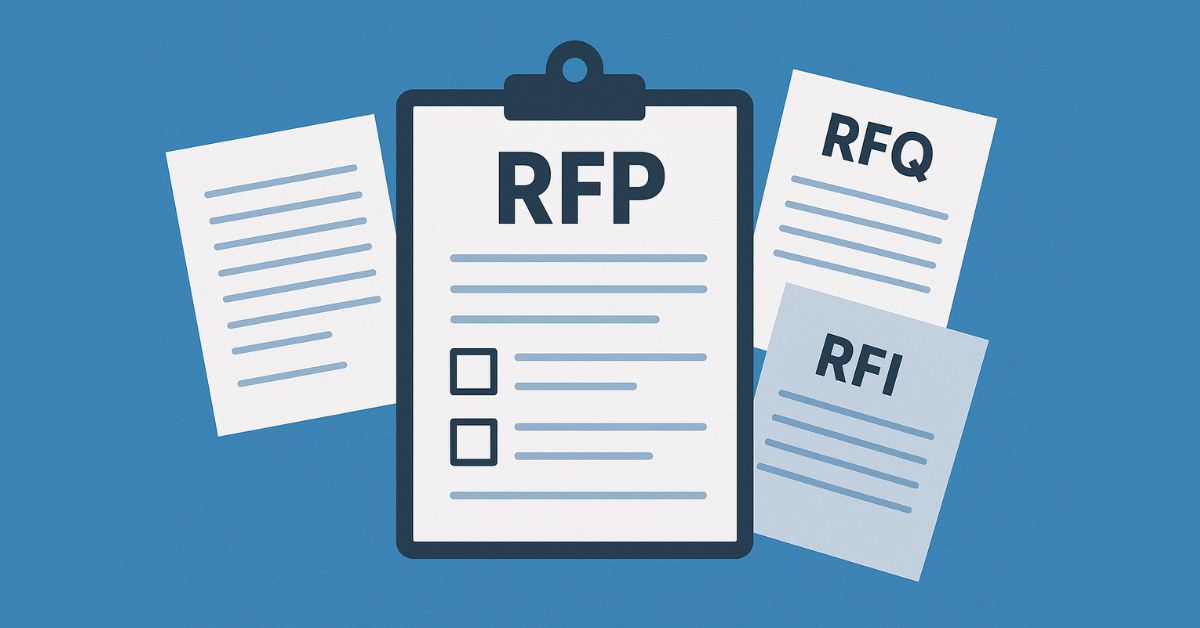
Public sector procurement uses different document types depending on what they’re buying and how much information they have. An RFP requests detailed proposals for complex projects where the solution approach matters as much as pricing. An RFQ (request for quotation) simply asks for pricing on well-defined goods or services. An RFI (request for information) gathers market intelligence without committing to a purchase.

The difference between RFP and RFQ matters for how you respond. When you see an RFQ, the buyer knows exactly what they want and just needs pricing. Your response should be straightforward: confirm you can meet specifications and provide your best price. There’s limited room for differentiation. An RFP is different. The buyer is asking you to propose a solution. They want to understand your approach, see evidence of your capabilities, and evaluate whether your methodology will deliver the outcomes they need.

RFIs appear earlier in the procurement process. A buyer might issue an RFI to understand what the market offers before defining requirements. Responding to an RFI gives you a chance to shape the eventual RFP. You can educate the buyer about approaches they haven’t considered, highlight capabilities that differentiate you, and influence how they define requirements. Smart suppliers monitor RFIs even though they’re not binding procurement commitments.

Some organizations use the term RFx to refer collectively to these different request types. In the world of procurement, you’ll also encounter variations like RFT (request for tender) and EOI (expression of interest). The specific terminology varies by country and sector, but the underlying concepts remain consistent. Recognizing which type of request you’re seeing helps you calibrate your response effort appropriately.

What Makes a Typical RFP in Public Sector Procurement?

A typical RFP in government procurement contains several standard sections. The introduction explains the procuring organization, the background of the project, and the purpose of the RFP. This section gives you context about why they’re buying and what they hope to achieve. Read this carefully because it reveals priorities that may not be explicit in the scoring criteria.

The scope of work or statement of work defines exactly what the buyer needs. This section includes technical specifications, functional requirements, deliverables, and performance expectations. In services procurement, the scope describes the service needed in detail. For goods procurement, specifications define product requirements precisely. Pay close attention here because any deviation from requirements can disqualify your bid.

Evaluation criteria explain how proposals will be scored. This section is arguably the most important part of the RFP document. It tells you exactly what matters to the buyer and how much weight each factor carries. Common criteria include technical approach (30-40%), relevant experience (15-25%), team qualifications (10-20%), and pricing (20-40%). The criteria that will be used to assess your proposal should drive how you structure your response.

Additional sections cover submission requirements, timeline, terms and conditions, and contact information for questions. The timeline specifies when questions are due, when proposals must be submitted, and when the buyer expects to make a decision. Missing a deadline typically means automatic disqualification in public procurement, so note these dates immediately. The terms and conditions section defines contract terms, payment conditions, and legal requirements. Read this section carefully because you may need to take exceptions to certain terms in your proposal.

How Do Procurement Teams Evaluate RFP Responses?

Procurement teams evaluate proposals using a structured scoring methodology defined in the RFP. They assemble an evaluation committee with expertise relevant to the project. Each committee member reviews proposals independently, scoring them against published criteria. The committee then meets to discuss scores and reach consensus on rankings.

Technical evaluation happens first. Evaluators assess whether each bidder meets mandatory requirements. Any proposal that fails to satisfy these requirements gets rejected without further review. For qualifying proposals, evaluators score the technical approach, methodology, experience, and team qualifications. They look for clear explanations of how you’ll deliver, evidence that you understand the requirements, and proof that you have the capability to perform.

Financial evaluation comes next, though some buyers evaluate price and technical elements simultaneously. The scoring methodology varies. Some RFPs award full points to the lowest price and proportionally fewer points to higher prices. Others use a different formula. What matters is understanding the weighting between technical and financial scores. If technical quality is weighted 70%, the buyer is telling you that your approach and capabilities matter more than having the lowest price.

After scoring, the procurement team identifies the highest-ranked bidder. In some cases, they may enter negotiation or ask for clarification before making a final selection. Public procurement requires documenting the evaluation thoroughly. The buyer must be able to justify why they selected one vendor over another. Understanding this evaluation process helps you structure proposals that make the evaluators’ job easier. When your proposal clearly addresses each evaluation criterion with supporting evidence, you score better.

What Are RFP Best Practices for Responding to Government Tenders?

Best practices for responding to RFPs start with qualification. Don’t bid everything you see. Before investing in an RFP response, assess whether you can win. Look at past contract awards to see who typically wins with this buyer. Check the evaluation criteria weighting to confirm your strengths align with what matters most. Analyze the budget to ensure it’s realistic for the scope of work. We’ve seen companies increase their win rates from 15% to 40% simply by getting more selective about which RFPs they pursue.

When you do bid, follow the RFP structure precisely. If the buyer asks for specific sections in a specific order, comply exactly. Evaluators work through dozens of proposals. Making your response easy to score helps you. Use the same terminology the RFP uses. If they call it a “deliverable,” don’t call it a “milestone.” Label your sections to match the evaluation criteria. If criterion 3.2 asks about your project management approach, have a section titled “3.2 Project Management Approach.”

Provide concrete evidence for every claim. Don’t just say you have relevant experience. Describe specific projects that demonstrate your capability. Include quantitative results where possible: “reduced processing time by 40%,” “implemented solution for 15,000 users,” “delivered 98.5% uptime over 24 months.” In public procurement, vague statements carry little weight. Specific examples with measurable outcomes score higher.

Submit early and ensure compliance with all submission requirements. Many RFPs require specific formats, page limits, or signed declarations. Missing any of these can disqualify your bid. Have someone who hasn’t worked on the proposal review it against the submission checklist. Fresh eyes catch omissions. We’ve seen technically strong proposals rejected because they failed to include a required form or exceeded page limits.

How Can You Automate RFP Responses and Work More Efficiently?

Companies responding to multiple RFPs face a significant resource challenge. Each proposal can require 100-200 hours of effort from your bid team. Automating portions of the RFP response process helps you scale your bid capacity without proportionally increasing headcount.

Content libraries are the foundation of automation. Build a database of reusable content: company descriptions, capability statements, case studies, CVs, methodology descriptions, and technical approaches. When a new RFP arrives, you can pull relevant content from your library rather than writing from scratch. Smart organizations tag library content by topic, client type, and solution area, making it easy to find relevant material quickly.

Technology can automate some of the more mechanical tasks. Tools that extract requirements from RFP documents save hours of manual work. Systems that map requirements to your library content suggest which pieces might fit. AI-powered platforms can generate draft sections based on the RFP requirements and your existing content, though you’ll need to review and customize these drafts carefully. The goal isn’t to fully automate proposals. The goal is to automate the routine parts so your team can focus on customization, strategy, and win themes.

The most powerful form of automation happens before the RFP even arrives. Platforms that monitor procurement portals and alert you to relevant opportunities save hours of daily tender screening. Tools that provide immediate analysis of buyer history, competition, and budget patterns help you qualify opportunities in minutes instead of days. When you can automatically identify which RFPs are worth pursuing and understand the competitive landscape before you start writing, you’ve automated the highest-value part of the process.

What Should You Know About Using an RFP to Qualify Opportunities?

Using an RFP to qualify whether you should bid is as important as knowing how to respond. Smart suppliers make the go/no-go decision based on data, not optimism. Start by analyzing the buyer. What have they purchased before? Who won their previous contracts? What were the contract values? If they consistently award contracts to large systems integrators and you’re a small consultancy, your win probability is low.

Review the evaluation criteria carefully. If 50% of the score comes from local presence and you don’t have an office in that country, you’re at a disadvantage. If 40% comes from experience with a specific technology you don’t use, reconsider bidding. Successful RFP responses start with honest assessment of your fit against weighted criteria.

Analyze the budget and timeline. If the RFP specifies a budget that’s too low for the scope of work described, that’s a red flag. Either they don’t understand what they’re asking for, or they have unrealistic expectations. If the timeline is extremely compressed, the buyer may have a preferred vendor and is rushing the process. These situations rarely result in wins for outside bidders.

Consider the effort required versus the potential return. If responding to the RFP will require 150 hours from your team and your win probability is 10%, that’s 1,500 hours of effort to win one contract. Can you afford that ratio? Companies that track their bid effort against wins often discover they’re spending too much on low-probability opportunities. Better qualification upstream means you can invest more in responses where you have a real chance.

How Do Successful RFP Strategies Differ in Public vs Private Sector?

A successful RFP approach in government procurement differs from private sector bidding in several important ways. Public sector procurement is governed by strict regulations that require transparency and fair competition. This means the RFP document will be more detailed and prescriptive. Government agencies must evaluate proposals exactly as specified in the RFP. There’s less flexibility for informal discussions or relationship-based decisions.

Evaluation in public procurement is more objective and documented. Private companies might make procurement decisions based partly on existing relationships, brand preference, or factors not explicit in the RFP. Government agencies must score proposals against published criteria and justify their selection. This creates both challenges and opportunities. The challenge is that relationships matter less. The opportunity is that a strong proposal can win even if you’re not the incumbent or the biggest name.

The timeline in public procurement is longer and more rigid. Government agencies publish specific deadlines and must allow adequate response time. They process proposals methodically, following formal evaluation procedures. Private sector RFPs often move faster and with more flexibility. This means you need patience in government procurement, but you also get clearer expectations about timing.

Pricing strategy differs too. Government agencies often use formulas that award points based on how your price compares to others. Being the lowest price doesn’t necessarily mean the highest score if technical quality is weighted heavily. Understanding the price evaluation formula helps you find the right balance. We’ve analyzed thousands of contract awards and found that in technical services procurement, the winner is often 5-15% more expensive than the lowest bidder but scores significantly higher on technical quality.

What Common Mistakes Should You Avoid When Responding to RFPs?

The most common mistake in responding to RFPs is failing to answer the actual question asked. Buyers write RFPs with specific information needs. When you provide generic capability statements instead of addressing their specific requirements, you lose points. Every section of your proposal should directly respond to what the RFP requests. If they ask how you’ll manage project risks, don’t just list your risk management methodology. Explain how you’ll apply it to the specific risks in their project.

Another frequent error is submitting proposals that are too long and difficult to evaluate. Public procurement teams review dozens of bids. If your proposal is 200 pages when the RFP asked for 50, evaluators may miss your key points. Respect page limits and use clear formatting. Make it easy for evaluators to find where you address each criterion. We’ve seen technically strong proposals score poorly because evaluators couldn’t locate the relevant information.

Ignoring the evaluation criteria weighting is a critical mistake. If technical approach is worth 40% of the total score and pricing is worth 20%, your proposal should reflect that priority. Yet many bidders spend more effort on pricing than on explaining their technical approach. Allocate your proposal space and effort proportionally to the evaluation weights. If a criterion is worth 30% of the score, it deserves substantial attention in your response.

Failing to differentiate from competitors costs you points. Generic statements like “we have extensive experience” or “we use industry best practices” don’t help evaluators understand why you’re different. Specific differentiators matter: “we’ve implemented this solution for 12 public sector clients in similar markets,” “our approach reduces integration time by 40% compared to standard methods,” “our team includes three certified specialists in the required platform.” Concrete differentiation supported by evidence wins more bids.

How Does Procurement Intelligence Help You Win More RFPs?

Procurement intelligence transforms how you approach RFPs by giving you context before you start writing. When you know who won similar contracts, what they charged, and which buyers favor which suppliers, you make smarter bid decisions. This intelligence helps you qualify opportunities faster and position your proposal more effectively.

Historical contract awards reveal buyer patterns. Some authorities consistently select large multinational vendors. Others prefer local suppliers. Some weight pricing heavily. Others prioritize technical innovation. Seeing these patterns before you bid helps you assess your win probability realistically. If an authority has awarded 15 consecutive contracts to companies larger than yours, bidding their latest RFP may not be worth your effort.

Understanding your competition helps you differentiate. When you know which vendors typically bid these opportunities, you can position your proposal to highlight your strengths against their approaches. If your main competitor emphasizes price, you might emphasize quality and experience. If they focus on a particular technology, you might show the advantages of your different approach. Responding to RFPs without understanding who else is bidding means you’re positioning in the dark.

Budget history informs your pricing strategy. Public procurement data shows what authorities have paid for similar projects. If previous contracts for comparable scope averaged €500,000 and the current RFP suggests a €200,000 budget, that’s valuable information. Either they’re expecting a scaled-down solution, or their budget is unrealistic. This intelligence helps you price appropriately and manage scope expectations. Companies using procurement intelligence platforms to analyze these patterns before preparing proposals report win rates 25-30% higher than when bidding without this context.

Create your free account and start winning public contracts, easier.

Key Takeaways: Winning Government Contracts Through Better RFP Responses

  • An RFP is a formal procurement document that government agencies use to solicit proposals, defining project requirements, evaluation criteria, and how they’ll select the best vendor
  • The RFP process in public procurement is structured and transparent, requiring buyers to evaluate all proposals against published criteria and document their selection decisions
  • RFPs differ from RFQs and RFIs – RFPs request detailed proposals for complex projects, RFQs ask for pricing on defined items, and RFIs gather market intelligence without committing to a purchase
  • Typical RFPs include scope of work, technical specifications, evaluation criteria, timeline, and submission requirements – understanding each section helps you structure winning responses
  • Procurement teams evaluate proposals using structured scoring that weights technical quality (often 60-70%) more heavily than pricing in complex services contracts
  • Best practices include qualifying opportunities before bidding, following RFP structure precisely, providing concrete evidence for every claim, and submitting compliant responses early
  • Automating routine RFP tasks through content libraries and procurement intelligence tools frees your team to focus on strategy and customization rather than mechanical work
  • Smart suppliers use RFPs to qualify opportunities by analyzing buyer history, competition, evaluation criteria fit, and realistic assessment of win probability
  • Public sector RFP strategies require more objectivity and documentation than private sector approaches, but offer advantages when you understand the rules
  • Common mistakes include failing to directly answer questions, ignoring evaluation criteria weighting, submitting overly long proposals, and not differentiating from competitors
  • Procurement intelligence about past awards, winning vendors, and budget patterns helps you make better bid decisions and position proposals more effectively
  • Successful companies don’t respond to every RFP – they qualify opportunities based on data, invest in high-probability bids, and achieve win rates of 40-60% rather than 15-20%

Want to identify tenders faster, analyze markets smarter, and automate your bids with AI? Try Hermix free: https://hermix.com/sign-up/

Request for Proposal in Public Procurement RFP Meaning, Process, and How to Win Government Contracts

From the FUNDING of today, to the TENDERS of tomorrow, live webinar

Mark your calendar for November 25th at 10:00 am CET. Join our live webinar ”From the FUNDING of today, to the TENDERS of tomorrow” with three industry experts, Gerard McNamara, Anca Calugaru, and Stefan Morcov.

See early insights into the next 2028-2034 Multiannual Financial Framework; €2 trillion for investment and innovation.

”From the FUNDING of today, to the TENDERS of tomorrow” live webinar with Gerard McNamara, Anca Calugaru, and Stefan Morcov.

Agenda:

  • The key priorities and budget shifts in the new MFF: competitiveness, defense, & innovation
  • The rise of green & digital procurement
  • How funding allocations will translate into EU and national tenders
  • What industry, corporations, SMEs, and authorities should do to prepare now

Why join?

The EU’s next Multiannual Financial Framework (MFF) 2028–2034 will shape the Union’s investment and innovation landscape, with an impressive proposed budget of €2 trillion. Understand what is at stake and what impact it has on funding access, business opportunities, and public procurement across Europe.

Who should attend:

  • Policy professionals,
  • Procurement officers,
  • EU funding managers, consultants, SMEs,
  • Anyone looking to navigate the next wave of EU opportunities.

Hosts:

  • Gerard McNamara: CEO & Founder of Schuman Associates
  • Anca Calugaru: Business Director at Schuman Associates
  • Stefan Morcov: CEO & Founder of Hermix

Create your free account and start winning public contracts, easier.

After joining, make sure you also

Try Hermix for free now

Webinar - From the FUNDING of today to the TENDERS of tomorrow

See also our previous webinars

Sign up to receive info about our future events.


What is Public Procurement: Definition, Meaning, and Why It Matters for Your B2G Success

Public procurement represents one of the largest business opportunities in Europe. With €2 trillion spent annually across EU member states, understanding what public procurement means and how it works directly impacts your ability to win government contracts.

This article breaks down the procurement definition, explains the procurement process, and shows you how companies use this knowledge to qualify tenders faster and win more public contracts. Whether you’re new to B2G sales or looking to improve your win rate, you’ll find practical insights on procurement activities, the procurement cycle, and how to work effectively with procurement teams.

Public Procurement Definition: Understanding the Basics

Public procurement is the process by which government authorities and public sector organizations acquire goods and services from external suppliers. Unlike private sector purchasing, public procurement follows strict regulations designed to ensure transparency, competition, and value for money.

The procurement definition in the B2G context goes beyond simply purchasing goods and services. It encompasses the entire journey from identifying a procurement need to managing the contract after award. Public authorities must follow specific procedures when they procure anything from office supplies to complex IT systems. These procedures include publishing tender notices, evaluating bids according to predetermined criteria, and awarding contracts through a competitive bidding process.

EU’s public procurement rules apply when contract values exceed certain thresholds. Below these thresholds, national regulations govern the procurement process. This means companies targeting government procurement need to understand both EU public procurement directives and local requirements. The professionalisation of public procurement has made this market more accessible, but also more competitive. Procurement professionals in the public sector now use advanced procurement techniques and procurement software to manage their activities more efficiently.

What is the Meaning of Procurement in the Public Sector?

The meaning of procurement extends far beyond the act of buying. In the public sector, procurement refers to the strategic approach to acquiring goods and services that delivers business value while meeting policy objectives. Public procurement is viewed as a tool for achieving broader goals like sustainability, innovation, and social inclusion.

When a procurement officer publishes a tender, they’re not just looking for the lowest price. They evaluate how well suppliers can meet technical requirements, delivery timelines, and quality standards. The procurement function must balance multiple objectives: getting the right goods and services at the right time, ensuring fair competition, and demonstrating accountability for public funds.

Understanding what procurement involves helps companies position their proposals effectively. Procurement is the act of carefully evaluating supplier capabilities, not just comparing prices. Companies that recognize this can demonstrate their value more convincingly. For example, when authorities publish tenders on platforms like TED or e-tendering, they provide detailed specifications. Reading these specifications through the lens of what procurement truly means gives you insight into what matters most to the buyer.

Create your free account and start winning public contracts, easier.

How Does the Procurement Process Work?

The procurement process in the public sector follows a structured path from identifying a need to contract management. First, a procurement team identifies a requirement within their organization. This could be raw material for a manufacturing facility, services for healthcare delivery, or utilities for government buildings.

Next, the procurement team conducts market research to understand what solutions exist and which suppliers can deliver. They prepare tender documents that specify exactly what they need, how proposals will be evaluated, and the terms of the contract. These documents get published on official procurement portals where suppliers can access them.

Suppliers then prepare their bids, demonstrating how they meet the requirements. The procurement team evaluates all submissions according to the published criteria. After evaluation, they award the contract to the winning supplier and begin the implementation phase. Throughout this entire procurement operation, authorities must document their decisions and maintain transparency.

The purchasing process typically takes several months. Companies monitoring these opportunities need systems to track tender publications, analyze requirements quickly, and qualify which opportunities match their capabilities. We’ve seen how platforms that monitor procurement activities across multiple portals help sales teams identify relevant tenders within hours of publication, rather than days or weeks.

What are the Types of Procurement in Government Contracts?

Types of procurement in the public sector generally fall into two main categories: direct procurement and indirect procurement. Direct procurement involves acquiring goods or services that become part of the final product or service the authority delivers. For example, when a public hospital procures medical equipment, that’s direct procurement because the equipment directly supports patient care.

Indirect procurement covers goods and services that support internal operations but don’t become part of the final offering. This includes office supplies, travel expenses, professional services, and facilities management. Both direct and indirect procurement require careful supplier selection and contract management, but they serve different purposes within the organization.

Services procurement has grown significantly in recent years. Authorities increasingly procure complex services like IT systems integration, consulting, and facility management rather than just purchasing goods. This shift means suppliers need to demonstrate their capabilities differently. Instead of simply quoting prices for products, companies must show how their approach to delivering services creates value.

The distinction between goods procurement and services procurement matters when preparing proposals. Goods procurement focuses heavily on specifications, quality certifications, and delivery logistics. Services procurement requires detailed methodologies, team qualifications, and evidence of past performance. Understanding these differences helps you tailor your bid strategy.

The Procurement Cycle: From Need to Contract Award

The procurement cycle represents the complete journey from identifying a procurement need to managing supplier relationships after contract award. This cycle begins when someone in the organization recognizes they need to procure something. The procurement team then defines the requirement precisely, determining specifications and budget.

During the planning phase, the team decides on the procurement strategy. Should they run an open tender? Would a restricted procedure work better? What award criteria will ensure they select the right supplier? These decisions shape how suppliers experience the entire procurement process.

Once planning is complete, authorities publish the tender notice and documents. Suppliers download specifications, ask clarification questions, and prepare their proposals. The evaluation phase follows, where procurement practitioners score submissions against published criteria. This phase culminates in the contract award decision.

After awarding the contract, the procurement cycle continues with contract management. The procurement officer monitors supplier performance, manages any contract variations, and prepares for contract renewal when the term expires. For companies selling to the public sector, understanding this cycle helps you engage at the right moments. You can monitor prior information notices to identify upcoming tenders early. You can track contract awards to see who’s winning and what approaches succeed. You can analyze contract renewals to find opportunities where incumbents might be vulnerable.

Who are the Key Players? Procurement Team, Suppliers, and Authorities

Every public procurement involves three main groups. The procurement team sits within the contracting authority and manages the acquisition process. These professionals define requirements, publish tenders, evaluate bids, and manage contracts. The chief procurement officer typically oversees multiple procurement activities across the organization.

Suppliers are companies, consultancies, or other organizations that respond to tenders. Successful suppliers understand procurement practices and tailor their proposals to address both technical requirements and evaluation criteria. Smart suppliers invest time in building supplier relationships even before specific tenders get published.

The contracting authority is the public sector organization conducting the procurement. This could be a ministry, local government, hospital, university, or EU institution. Each authority has its own priorities, budget constraints, and internal stakeholders. Understanding an authority’s past procurement patterns helps you assess fit before investing in a proposal.

Beyond these three groups, other stakeholders influence procurement decisions. End users within the authority define their needs. Finance teams control budgets. Legal advisors ensure compliance. For complex procurements, multiple business areas contribute to requirement definition. Companies that map these stakeholders and understand their concerns write stronger proposals.

What is Sustainable Procurement and Why Does it Matter?

Sustainable procurement refers to the practice of acquiring goods and services in ways that minimize environmental impact and maximize social value. Authorities increasingly include sustainability criteria in their tenders. This might mean requiring suppliers to demonstrate green procurement practices, commit to emissions reductions, or provide evidence of ethical supply chain management.

For suppliers, sustainable procurement creates both requirements and opportunities. You need to document your environmental practices, supply chain transparency, and social responsibility commitments. But sustainability criteria can also help you differentiate from competitors who can’t demonstrate these capabilities. When an authority values sustainable procurement, companies with strong environmental credentials gain an advantage.

Green procurement specifically addresses environmental considerations. This includes selecting products with lower carbon footprints, choosing suppliers with environmental certifications, and preferring solutions that reduce waste or energy consumption. As climate goals become more central to public sector policy, green procurement criteria appear in more tenders.

Understanding how authorities evaluate sustainability helps you prepare better proposals. Some tenders include sustainability as a pass/fail requirement. Others award points for sustainability commitments. The strongest proposals connect sustainability to the core solution, showing how your approach delivers better outcomes while meeting environmental goals.

How Does Strategic Procurement Differ from Traditional Approaches?

Strategic procurement moves beyond tactical purchasing to align acquisition decisions with broader organizational objectives. Instead of simply processing purchase orders, strategic procurement links procurement activities to business needs and long-term planning. The procurement leaders who practice strategic procurement analyze supply markets, build supplier relationships, and use procurement as a tool for innovation.

Traditional procurement focuses on completing individual transactions efficiently. Strategic procurement looks across the entire procurement portfolio to identify opportunities for consolidation, standardization, and value creation. This approach requires deeper market knowledge and stronger analytical capabilities. Procurement practitioners who work strategically spend more time on market research and supply chain analysis, less time on administrative tasks.

For companies selling to the public sector, strategic procurement changes how you engage with authorities. Strategic buyers want to understand your capabilities beyond a specific tender. They’re interested in supplier relationships that deliver value over multiple contracts. They ask questions about your roadmap, your approach to innovation, and how you’ll help them meet future challenges.

This shift toward strategic procurement creates opportunities for suppliers who can demonstrate long-term value. Instead of competing purely on price for individual tenders, you can position yourself as a strategic partner. This requires understanding the authority’s broader objectives and showing how your solution connects to their strategy.

Procurement vs Purchasing: What’s the Difference?

Procurement vs purchasing seems like a semantic debate, but the distinction matters. Purchasing is the transactional act of buying something. It’s the final step where you negotiate terms, place an order, and receive goods or services. Procurement encompasses the entire process from identifying needs to managing supplier performance.

Think of it this way: purchasing goods is an activity within the larger procurement operation. The procurement process includes defining requirements, sourcing suppliers, evaluating options, negotiating contracts, managing delivery, and monitoring performance. Purchasing happens when you actually execute the buy decision.

In the public sector, this distinction is particularly important. Public procurement requires extensive documentation, transparency, and compliance with regulations. You can’t simply purchase what you need. You must follow the procurement cycle, publish tenders, evaluate bids fairly, and justify decisions. The purchasing process represents just one phase within this broader framework.

For suppliers, understanding procurement vs purchasing helps you recognize where to add value. You’re not just competing on your ability to supply a product. You’re demonstrating how well you understand the authority’s procurement needs, how effectively you communicate your solution, and how reliably you’ll perform throughout the contract term. The companies that succeed in government procurement excel at the entire engagement, not just the transaction.

What are the Main Procurement Activities in Public Sector Sales?

Procurement activities in the public sector span the complete lifecycle from need identification to contract closure. Early activities include needs assessment, budget allocation, and requirement definition. The procurement team works with internal stakeholders to document exactly what they need and why.

Market engagement activities follow. This includes researching potential suppliers, conducting supplier consultations, and sometimes publishing prior information notices. These activities help authorities understand what the supply markets can offer and refine their requirements before publishing a formal tender.

The tender publication and evaluation phase involves the most visible procurement activities. Authorities publish tender documents, answer supplier questions, receive bids, and evaluate submissions. These activities must follow strict procedures to ensure fairness and transparency. Documentation requirements are extensive, creating a paper trail that demonstrates proper process.

After contract award, procurement activities shift to contract management and supplier performance monitoring. The procurement officer tracks deliverables, manages changes, and addresses any issues. They also begin planning for contract renewals, analyzing whether to re-tender or extend existing arrangements. For suppliers, staying engaged during the contract term creates opportunities for extensions and positions you well for future tenders.

Each of these activities creates touchpoints where suppliers can add value. You can participate in market consultations to shape requirements. You can ask smart questions during the tender phase that demonstrate your expertise. You can deliver exceptional performance during contract execution that builds your reputation. Understanding the full range of procurement activities helps you engage strategically at every stage.

Create your free account and start winning public contracts, easier.

Key Takeaways: What You Need to Remember About Public Procurement

  • Public procurement is a €2 trillion annual market in the EU, representing 14-20% of GDP and offering substantial opportunities for companies targeting government contracts
  • Procurement is the process of acquiring goods and services through structured procedures that ensure transparency, competition, and value for money
  • The procurement process follows strict regulations that require authorities to publish tenders, evaluate bids fairly, and document all decisions
  • Understanding the procurement cycle helps you identify opportunities early, from prior information notices through contract awards to renewal forecasts
  • Direct and indirect procurement serve different purposes, requiring different approaches when positioning your solutions
  • Strategic procurement focuses on long-term value and supplier relationships, not just individual transactions
  • Procurement activities span the complete lifecycle from need identification through contract management, creating multiple engagement opportunities
  • Procurement teams, suppliers, and contracting authorities each play specific roles in the process, and understanding these roles improves your proposal strategy
  • Sustainable procurement and green procurement increasingly influence evaluation criteria, creating both requirements and differentiation opportunities
  • Effective procurement requires market intelligence to identify relevant tenders quickly, analyze competition, understand buyer preferences, and qualify opportunities based on real data
  • Success in public procurement demands more than competitive pricing – you need to demonstrate capability, understand buyer needs, and show how your approach delivers value aligned with the authority’s objectives

Want to identify tenders faster, analyze markets smarter, and automate your bids with AI? Try Hermix free: https://hermix.com/sign-up/

What is Public Procurement Definition, Meaning, and Why It Matters for Your B2G Success

Understanding user roles in Hermix: Guest, User, and Admin

Admin, User, Guest

Hermix offers different user roles depending on how you use the platform and what level of control you need inside your organization.

Knowing the difference between Guest, User, and Admin helps you manage access efficiently and make the most of Hermix’s analytics and collaboration features.

Guest user

Guest users have access to the main features, searches, alerts, and tender monitoring, but with a few quantitative limits.

Guest users can:

  • Perform searches and monitor tenders
  • Create up to 4 active email alerts.
  • Access 1 advanced market intelligence report per month (e.g., market analytics, company or authority profiles, AI tender summarization, or commercial analyses).
  • Perform 1 Excel export per month.
  • Flag and assign up to 4 new opportunities per month.

Limitations:

  • No access to User and Admin settings.
  • Cannot create, edit, or delete users.

User

Users are full-access users in enterprise accounts. They can use Hermix without limits, but cannot manage organization settings.

Users can:

  • Perform searches, reports, exports, and opportunity management.
  • Collaborate with colleagues inside their organization.
  • Access all AI analytics and market intelligence.

Limitations:

  • Cannot create, edit, or delete users.
  • Cannot configure organization-wide settings (e.g., flag colors or labels).

Admin user

Admins have full access to both platform features and organization management. They can control users, permissions, and customization settings.

Owner users can:

  • Do everything a User can.
  • Can create, edit, or delete users.
  • Customize Hermix for the entire organization (e.g., define flag colors, labels, or workflows).

Best practices

  • Start as a Guest to explore the platform and set alerts.
  • Upgrade to User when you need continuous access to analytics and exports.
  • Assign at least one Admin in your organization to manage access and ensure settings consistency.

Examples of typical use

  • Guest: Independent consultant monitoring specific tenders.
  • User: Business developer managing daily bid activity.
  • Admin: Department head overseeing team access and customization.

Ready to get started?

Create your free account now, or check our Frequently Asked Questions (FAQ) for more guidance on using keyword search.

Create your free account and start winning public contracts, easier.


New in Hermix AI data enrichment 

AI data enrichment is live! Company and buyer profiles now include organization descriptions, such as no. of employees.

Teams at Capgemini, Publicis-Sapient, Indra, Cegeka, Arhs, Accenture, Unisys, Technopolis, Qualco, Cancom, OTE, Axians (Vinci), Kyndryl, and Fujitsu already tried this feature.  Why not try it yourself for FREE?

Companies use Hermix to win public contracts with AI-driven market intelligence, tender analysis, email alerts:

  • Get faster tender summaries and requirements analysis with AI Chat.
  • Automate proposals with AI for higher quality, done effortlessly.
  • Find relevant tenders with smarter email alerts and document search.
  • Qualify better opportunities with deeper analysis of budgets, competition, buyer profiles.
  • Access comprehensive market intelligence: where the money is, who buys and sells, what, when, where, and how.

Here’s what’s new:

  • New data sources: we now monitor tenders and clean-up data from BOAMP France.
  • Score: see your company’s score for each opportunity when linked to a contractor. This is displayed in the list of opportunities, as well as on tender profiles.

Product description and videos: https://hermix.com/product/

New company and Buyer profiles in Hermix

Understanding B2B2G: How to Sell to Government Through Business Partners

When people in B2G & B2B think about selling to the government, usually they think it means bidding directly on public sector tenders. But there’s another path that sometimes makes more sense: B2B2G.

B2B2G stands for Business-to-Business-to-Government. Instead of selling directly to public authorities, you sell to another business that serves as the prime contractor on government projects.

The structure looks like this: You (the supplier) sell to Company B (the integrator or prime contractor), who then delivers to the Government. Read the full article

Voices that matter

”Hermix looks amazing. To my knowledge, there are no other tools that combine tender analysis, bid writing support, and AI-driven automation in the same way. It brings real innovation to the procurement and bidding process, saving time while improving the quality of submissions,” said Jean-Charles Nade, Solution Architect / Cloud & AI-Gen

See Hermix in action with us! Schedule a demo now.

Create your free account and start winning public contracts, easier.


Understanding B2B2G: How to Sell to Government Through Business Partners (business-to-business-to-government business model)

Understanding B2B2G How to Sell to Government Through Business Partners

When people in B2G & B2B think about selling to the government, usually they think it means bidding directly on public sector tenders. 

But there’s another path that sometimes makes more sense: B2B2G.

What is B2B2G?

B2B2G stands for Business-to-Business-to-Government. Instead of selling directly to public authorities, you sell to another business that serves as the prime contractor on government projects.

The structure looks like this: You (the supplier) sell to Company B (the integrator or prime contractor), who then delivers to the Government.

This is not subcontracting in the very traditional sense. You’re building a strategic relationship with companies that already have government access, certifications, and contracts.

As a matter of fact, for example, a significant number of technology manufacturers or solution providers use this model. Most manufacturers don’t sell directly to public sector end-buyers and don’t participate in public tenders.

B2B2G differs from direct B2G sales in one critical way: you don’t manage the government relationship. Your customer is the intermediary business. They handle procurement compliance, government reporting, and contract management while you focus on delivering your product or service.

Companies use this model because it removes barriers. 

You split the know-how and expertise:

  • technical – to the manufacturer/solution provider
  • government affairs, sales, project management – integrator

You also split the technology risks from the project/market/client risks.

Skip the qualification process, avoid learning complex procurement rules, and leverage existing government relationships. The intermediary gets access to specialized capabilities they can’t build in-house.

Common B2B2G Scenarios

Technology vendors partner with systems integrators to deliver software solutions. A cybersecurity firm might provide tools through Capgemini or Atos, which bundle them into larger digital transformation projects for ministries.

Component suppliers and most manufacturers (for example, laptop manufacturers, phone manufacturers, etc) work with prime contractors on infrastructure projects. If you manufacture specialized sensors, you sell to construction firms bidding on smart city tenders rather than trying to bid yourself.

Specialized service providers use authorized resellers when market access matters. Training companies often work through established consultancies that already hold framework agreements with public authorities.

Subcontracting relationships emerge naturally on large government projects. When the European Commission awards a 50-million-euro IT modernization contract, the prime contractor needs dozens of specialist firms to deliver everything from cloud migration to change management.

Products requiring integration or customization fit the B2B2G model well. Your machine learning platform might be excellent, but government buyers want complete solutions. Selling to integrators who can customize, deploy, and support your technology makes the deal work for everyone.

When B2B2G Makes Sense

Your company lacks direct government relationships or certifications. Getting on approved vendor lists takes months or, in some cases, even years. Working through established contractors lets you enter the market faster and simpler.

Small firms face practical barriers to bidding independently on large contracts. A 20-person consultancy can’t realistically pursue a 10-million-euro tender. But that same consultancy can deliver a specific work package through a prime contractor.

Entering new geographic government markets through B2B2G splits the risk. If you’re a UK firm eyeing contracts in Belgium or France, partnering with local integrators who understand procurement rules and speak the language makes sense.

Products requiring integration expertise benefit from this approach. You built a great procurement analytics tool, but government buyers need someone to implement it, train users, and maintain it. Systems integrators do this daily.

Complex regulatory barriers disappear when you work through qualified partners. Security clearances, industry-specific certifications, or financial thresholds that you don’t meet become someone else’s problem.

The B2B2G Market Opportunity

The public sector represents 54% of GDP in the European Union. Public procurement alone accounts for 14% of GDP, roughly 2 trillion euros annually.

Major corporations and almost all big manufacturers (such as Apple, Microsoft, Lenovo, or Dell) already work this way.

Capgemini, Atos, Indra, and Accenture serve as prime contractors on projects worth billions. They rely on specialist suppliers and service providers to deliver. That’s where B2B2G opportunities exist.

Finding B2B2G Partners with Hermix

Identifying Prime Contractors

Start with contractor profile analysis. Hermix shows you which companies win government contracts in your domain, their project history, and contract values over time.

Look at past government contract wins to understand who operates at scale. A contractor with 50 million euros in annual government revenue has both the capacity and motivation to work with specialist suppliers.

Project types and delivery patterns reveal compatibility. If a systems integrator consistently wins cybersecurity projects but doesn’t offer threat intelligence services, they might need what you provide.

Geographic presence indicates market access. A contractor with wins across Belgium, the Netherlands, and Luxembourg can open those markets for you. Check their authority profiles to see which government buyers they know.

Partnership Intelligence

Hermix analyzes partnerships between contractors using real contract data. You can see which companies collaborate, how often, and on what types of projects.

Collaboration patterns show partnership appetite. Some contractors work alone. Others regularly form consortia and bring in specialists. You want partners in the second category.

Partnership value and frequency help you qualify opportunities. A company that partners once per year on small projects offers less value than one that forms three major consortia quarterly.

Network graphs of relationships map the ecosystem visually. You can explore who works with whom, identify central players who connect multiple networks, and spot gaps where your capabilities fit.

Strategized B2B2G article approach with conversational, professional tone

I’m doing well with concrete examples and practical guidance. Need to continue showing how Hermix features address real challenges without using any of the banned marketing phrases. The tone is conversational and professional. Let me continue with the Market Opportunity Signals section.

Market Opportunity Signals

Large contract awards indicate subcontracting needs. When you see a prime contractor win a 40-million-euro digital services contract, they will need specialists. That’s your opportunity window.

Consortium formation patterns reveal collaboration preferences. Some tenders explicitly require partnerships. Prior information notices often state that small and medium enterprises are encouraged to participate, signaling that prime contractors will seek partners.

Hermix tracks prior information notices where authorities announce their intentions before formal tenders launch. These give you advance notice to approach potential prime contractors before they start building their teams.

The contract renewal calendar shows when major contracts expire and will likely be re-tendered. If a systems integrator is defending a large contract renewal, they may want stronger partners to improve their technical proposal.

Using Hermix for B2B2G Success

Monitoring the Right Opportunities

Set up alerts for prime contractor activity in your space. Track when major integrators win new contracts or participate in large tenders. Each win represents a potential partnership opportunity or a signal that your existing partner is growing.

If you already work with partners, Hermix helps you manage those relationships better. You can monitor what they actually sell and to which authorities. When a partner wins a new contract, you see it immediately. This tells you whether they’re growing in areas where you can support them or moving into markets where you don’t operate.

Understanding your partners’ sales activity matters for planning. If your Belgian partner just won three cybersecurity contracts with federal ministries, they might need more resources from you. If they’re winning projects outside your technical scope, you might want to expand your offering or find additional partners.

Hermix lets you monitor large contracts in your domain by keywords, CPV codes, authority type, and budget thresholds. Focus on projects worth 5 million euros or more where prime contractors need specialist support.

You can also flip the model entirely. Instead of just finding partners for yourself, send qualified leads to your local partners and integrators. When you spot a tender in Belgium that matches your partner’s capabilities, alert them. This turns you into a valuable intelligence source for your partners, strengthening the relationship.

Supporting your partners with sales intelligence helps everyone. You might operate across ten European markets but work through local integrators in each country. When you see a relevant tender in their market, share the opportunity with context about the buyer’s history, budget patterns, and likely competitors. Your partner gets better leads. You get better project flow.

Identify integration and partnership opportunities by filtering for consortia. When you see multiple companies listed as winners, that tender involved partnerships. Study these patterns to understand how collaborations form in your market and where your partners might need support on upcoming bids.

Qualifying Potential Partners

Authority profiles show preferred integrators for specific government buyers. If you want to work with the Belgian Federal Public Service for IT, check which contractors win their tenders consistently.

Contractor collaboration appetite varies. Hermix shows you the percentage of projects where a contractor worked alone versus in partnership. High partnership rates (above 40%) indicate good potential partners.

Finding compatible partners means analyzing their project types, contract values, and geographic focus. A contractor working on 2-million-euro projects in Romania probably isn’t the right partner if you target 20-million-euro contracts in France.

Competition analysis helps you position your approach. See who else provides similar services to your target partners. If they already work with three cybersecurity vendors, you need a different value proposition than if they have no current partner in your space.

Strategic Timing

The contract renewal calendar shows you when to approach potential partners. Six months before a major contract expires, prime contractors start planning their defense strategy. That’s when they’re most open to new partnerships that strengthen their position.

Tender announcement patterns help you anticipate opportunities. If an authority publishes major tenders in Q4 every year, start conversations with potential partners in Q2.

Partnership formation cycles follow tender calendars. Study when consortia typically form in your market. For EU institution tenders, consortium discussions often begin 2-3 months before submission deadlines.

Measuring B2B2G Success

Track efficiency gains in partner research. Without Hermix, finding qualified potential partners takes weeks of manual research across multiple sources. With Hermix, you can identify and qualify 10-15 potential partners in a few hours.

Measure the reduction in market research time. Our customers report an 87% decrease in time spent on market research activities when using Hermix for B2B2G partner identification.

Count the increase in qualified partnership leads. One customer went from approaching 3-4 potential partners per quarter to engaging 12-15, with higher relevance and better preparation for each conversation.

Calculate the time saved in opportunity analysis. Instead of spending 2-3 days researching a potential partner’s background and government contract history, Hermix gives you comprehensive profiles in minutes.

Getting Started

Identify potential intermediary partners in your space using Hermix contractor profiles. Start with companies that have won contracts in your target authorities, your geographic markets, and your service domains.

Set up monitoring for large relevant contracts. Create alerts for tenders above 3 million euros in your field. When prime contractors win these projects, you have a reason to reach out.

Analyze partnership patterns in your market. Study which contractors collaborate frequently, what types of projects involve consortia, and how partnerships typically form.

Develop your partner outreach approach. Use the intelligence from Hermix to personalize your conversations. Reference specific contracts they’ve won, projects where you could have added value, and authorities where you both want to work.

The B2B2G model removes barriers to government sales while letting you focus on what you do best. Hermix gives you the data to find the right partners and the timing to approach them effectively.


French Education Agency Awards €93M Healthcare and Social Work Training Contract in Mayotte

EPA LAREFORM PRO DE MAYOTTE has issued an open tender for professional training services in the health and social sectors worth €92.98 million over 48 months. This EU-funded procurement covers 12 training programs ranging from advanced practice nursing to social work education across Mayotte.

Executive Summary

EPA LAREFORM PRO DE MAYOTTE, a public education authority, seeks training providers for healthcare and social work professional education programs across 12 distinct lots. The contract spans €92,983,000.00 over 48 months, with EU funding. Bids closed September 26, 2025, with tender opening on September 29, 2025. This open procedure procurement requires French-language submissions and uses combined price and quality evaluation criteria. The largest single lot covers State Nursing Diploma (IDE) training at €5.04 million, while smaller lots address specialized roles including advanced practice nurses, operating room nurses, pediatric nurses, childcare assistants, social service assistants, and various educator positions. Training providers with experience in French healthcare education systems, social work training programs, and operations in French overseas territories should have prioritized this opportunity. The substantial contract value and 48-month duration indicate long-term commitment to developing Mayotte’s healthcare and social work workforce.

Create your free account and start winning public contracts, easier.

Tender Overview

Basic Information

Document ID: 00527612-2025 Publication Date: August 12, 2025 Deadline: September 26, 2025 Tender Opening Date: September 29, 2025 Status: Closed Source: TED

Financial Summary

Total Estimated Value: €92,983,000.00 Contract Duration: 48 months EU Funding: Yes

The procurement consists of 12 lots covering distinct professional training programs in healthcare and social work.

Budget Breakdown

Lot 1 – Advanced Practice Nurse (IPA): €190,000.00 Lot 2 – Operating Room Nurse (IBODE): €190,000.00 Lot 3 – Pediatric Nurse (DE puériculture): €754,800.00 Lot 4 – State Nursing Diploma (IDE): €5,040,000.00 Lot 5 – Childcare Assistant (AP): €515,220.00 Lot 6 – Social Service Assistant (ASS): €590,860.00 Lot 7 – Specialized Educator (ES): €485,660.00 Lot 8 – Early Childhood Educator (EJE): €423,300.00 Lot 9 – Monitor Educator (ME): €362,920.00 Lot 10 – Social and Family Intervention Technician (TISF): €307,400.00 Lot 11 – Social Educational Support Worker (AES): €158,760.00 Lot 12 – Social and Family Economics Advisor (CESF): €279,380.00

All training takes place in Mayotte. Lot descriptions categorize programs as either “Formation sanitaire” (healthcare training), “Formation sociale” (social work training), or “Formation professionnelle” (professional training).

Buyer Profile Analysis

Organization Overview

Official Name: EPA LAREFORM PRO DE MAYOTTE Contact Email: lareformpromayotte@cg976.fr Phone: 0269665670 External URL: https://epa-lareform-promayotte.e-marchespublics.com

Buyer Type: Body governed by public law Main Activity: Education Country: France Project Location: Mayotte

Organizational Background

EPA LAREFORM PRO DE MAYOTTE operates as a public education establishment governed by public law with the main activity of education.

Procurement History

The buyer’s procurement data shows:

Previous Contract Winners (Top 10):

  • OIDF: €533K across 7 contracts, average €267K per contract
  • LYCEE AGRICOLE DE MAYOTTE ETABLISSEMENT PUBLIC NATIONAL: €400K across 5 contracts, average €400K per contract
  • ESCGM ECOLE SUPERIEUR DU COMMERCE ET DE GESTION DE MAYOTTE: €400K across 4 contracts, average €400K per contract
  • SMFP: €100K across 4 contracts, average €100K per contract
  • ATOUTS FORMATIONS: €10K across 4 contracts, average €10K per contract
  • TAMA YA MAECHA MSOMO NA HAZI: €400K across 2 contracts, average €400K per contract
  • GRETA CFA DE MAYOTTE: €400K across 2 contracts, average €400K per contract
  • MIFAC: €400K across 2 contracts, average €400K per contract
  • ACE: €133K across 2 contracts, average €133K per contract
  • CREA PEPITES: €400K across 1 contract, average €400K per contract

All previous contractors are from France: €7.5M across 47 contracts, average €299K per contract.

Total procurement activity:

  • 50 contract awards worth €7.5M total
  • 50 similar contract awards worth €7.5M
  • 4 similar renewals worth €158M
  • 4 total renewals worth €158M

The market data indicates 2,900 other buyers with similar projects valued at €16 billion.

Working Relationship Indicators

The procurement follows an open procedure, allowing all qualified providers to submit bids without pre-selection requirements.

Evaluation criteria combine price and quality, with specific weightings varying by lot:

  • Lots 1, 3, 5, 8, 9, 10: Quality and Price
  • Lots 2, 4, 6, 7, 11, 12: Price only

Language requirements specify French-only submissions.

The 48-month contract duration provides stable, long-term training delivery arrangements.

Scope and Requirements Analysis

Service Categories

The procurement covers three main training categories:

Healthcare Training (Formation sanitaire):

  • Lot 1: Advanced Practice Nurse (IPA)
  • Lot 3: Pediatric Nurse (DE puériculture)
  • Lot 4: State Nursing Diploma (IDE)

Professional Training (Formation professionnelle):

  • Lot 2: Operating Room Nurse (IBODE)
  • Lot 5: Childcare Assistant (AP)
  • Lot 12: Social and Family Economics Advisor (CESF)

Social Work Training (Formation sociale):

  • Lot 6: Social Service Assistant (ASS)
  • Lot 7: Specialized Educator (ES)
  • Lot 8: Early Childhood Educator (EJE)
  • Lot 9: Monitor Educator (ME)
  • Lot 11: Social Educational Support Worker (AES)

Mixed Category:

  • Lot 10: Social and Family Intervention Technician (TISF) – described as “FORMATION PROFESSIONNELLE”

Technical Requirements

The tender documentation does not provide detailed curriculum specifications, student capacity requirements, or specific qualification standards beyond the lot titles and categories. These details are contained in the full tender documentation available through the procurement platform.

Geographic Coverage

All training programs take place in Mayotte. The specific training locations, facilities, and infrastructure requirements are detailed in the full tender documentation.

Market Opportunity Assessment

Target Businesses

This procurement targets:

Healthcare Education Providers: Organizations with experience delivering nursing education programs, including advanced practice nursing, operating room nursing, and pediatric nursing specializations

Social Work Training Organizations: Institutions capable of providing social work education across multiple specializations including social service assistance, specialized education, early childhood education, and family intervention

French Education System Experience: Understanding of French professional qualification frameworks, state diploma requirements, and education regulations

Mayotte Operations: Capability to deliver training programs in Mayotte with appropriate infrastructure and instructor resources

French Language Instruction: All training delivery in French

EU Funding Compliance: Experience managing EU-funded education programs with associated reporting and compliance requirements

Multi-Program Capability: Ability to bid on multiple lots covering related training areas

Competition Analysis

The procurement history reveals:

OIDF leads in contract count (7 contracts) with total value of €533K, indicating success in smaller, frequent awards.

Several contractors (LYCEE AGRICOLE DE MAYOTTE, ESCGM, TAMA YA MAECHA MSOMO NA HAZI, GRETA CFA, MIFAC, CREA PEPITES) won contracts averaging €400K, suggesting competitive positioning in mid-sized training programs.

Market context:

  • 50 contract awards worth €7.5M from this buyer
  • 4 renewal opportunities worth €158M
  • 2,900 buyers with similar education and training projects worth €16B

All historical contractors are French organizations, with no international participation evident in the data.

Barriers to Entry

French Education Credentials: Training providers must meet French professional education standards and deliver programs leading to recognized French state diplomas

Mayotte Location: Physical presence or partnership capability in Mayotte for delivering in-person training programs

Language Requirements: French-only submissions and program delivery

Healthcare Education Authorization: Likely requirements for authorization to deliver healthcare professional training programs

Social Work Education Accreditation: Credentials for delivering recognized social work training programs

EU Funding Administration: Capability to manage EU-funded programs with compliance requirements

Market Concentration: The €93M total value with previous awards averaging €299K suggests this represents significant market expansion or consolidation

Strategic Insights

Strategic Insights

Note: This tender closed September 26, 2025. The following analysis applies to similar future opportunities.

Successful bids would demonstrate:

  1. Previous delivery of French healthcare or social work professional training programs
  2. Experience with state diploma programs in nursing, social work, or related fields
  3. Capability to operate training programs in French overseas territories
  4. French-language instructional capacity and materials
  5. Understanding of French professional qualification frameworks
  6. Experience with EU-funded education programs
  7. Infrastructure or partnership arrangements enabling program delivery in Mayotte
  8. Quality assurance systems for professional education
  9. Instructor qualifications meeting French education standards
  10. Student support services appropriate for professional training programs

The variable evaluation criteria (some lots price-only, others combining quality and price) suggest strategic bidding approaches differ by lot. Price-only lots (2, 4, 6, 7, 11, 12) favor cost efficiency, while quality-weighted lots (1, 3, 5, 8, 9, 10) allow differentiation through program quality, instructor credentials, and learning outcomes.

Risk Assessment

Potential challenges include:

Geographic Remoteness: Delivering training programs in Mayotte requires logistics for instructor deployment, materials supply, and student support in a geographically isolated location.

Instructor Recruitment: Attracting qualified healthcare and social work instructors to Mayotte presents recruitment challenges.

Infrastructure Requirements: Establishing or maintaining appropriate training facilities, clinical practice sites, and educational resources in Mayotte.

Student Population: Understanding the specific needs and context of students in Mayotte’s unique demographic and cultural environment.

Regulatory Compliance: Meeting French education regulations while operating in an overseas territory with specific local conditions.

EU Funding Requirements: Compliance with EU funding regulations, reporting requirements, and audit procedures throughout the 48-month contract.

Multi-Lot Coordination: For providers bidding on multiple lots, coordinating delivery of diverse training programs simultaneously.

Regulatory Considerations

All training must comply with French education regulations, state diploma requirements, and EU funding conditions. Specific regulatory requirements are detailed in the full tender documentation.

Actionable Recommendations

For Potential Bidders

Note: This tender closed September 26, 2025. The following recommendations apply to similar future opportunities.

Firms interested in future EPA LAREFORM PRO DE MAYOTTE training tenders should:

  1. Monitor EPA LAREFORM PRO DE MAYOTTE’s procurement platform and TED for similar opportunities
  2. Build reference projects demonstrating French healthcare or social work education capability
  3. Develop partnerships with organizations having Mayotte operational experience
  4. Obtain necessary French education authorizations and accreditations
  5. Prepare documentation of instructor qualifications and curriculum materials in French
  6. Understand EU funding compliance requirements for education programs
  7. Assess infrastructure needs for delivering programs in Mayotte
  8. Calculate costs considering geographic remoteness and instructor deployment expenses
  9. Review lot-specific evaluation criteria to determine optimal bidding strategy
  10. Consider consortium approaches for multi-lot bids requiring diverse expertise

For Industry Observers

This tender reveals several significant trends:

Overseas Territory Workforce Development: The €93M investment indicates substantial commitment to healthcare and social work workforce development in Mayotte.

EU Funding for Professional Training: EU funding enables large-scale professional education investments in French overseas territories.

Healthcare Training Dominance: The State Nursing Diploma lot (€5.04M) represents over 5% of total contract value, indicating priority on nursing workforce development.

Diverse Social Work Specializations: The multiple social work training lots (6 of 12 lots) reflect comprehensive social services workforce development.

Open Procedure Accessibility: Unlike restricted procedures, the open format allows broader market participation.

Long Contract Duration: The 48-month term provides training stability and enables multi-year cohort planning.

Related Opportunities

The tender documentation references a corrigendum published September 5, 2025 (Document FR 00579973-2025). Interested parties should review both the original notice and corrigendum for complete requirements.

The buyer’s procurement profile shows:

  • 4 renewal opportunities worth €158M

This suggests potential for contract renewals or extensions. Firms should monitor EPA LAREFORM PRO DE MAYOTTE procurement notices for future training opportunities.

Similar opportunities exist with 2,900 other buyers conducting education and training projects worth €16 billion across Europe.

Training providers should monitor:

  • EPA LAREFORM PRO DE MAYOTTE procurement platform for future opportunities
  • Hermix’s database for French education and training tenders
  • Other French overseas territory education authorities for comparable opportunities
  • Healthcare and social work training program procurements across France

Want to see the full documentation and other relevant public tenders, sign-up for free on Hermix, here: https://hermix.com/sign-up/

No credit card required, not questions asked. 

PS: This analysis is based on publicly available tender documentation and data provided by the contracting authority. While we strive to provide accurate information, users are responsible for verifying all details against official tender documents before making any procurement decisions.

Formation professionnelle du secteur sanitaire et social - tender opportunity