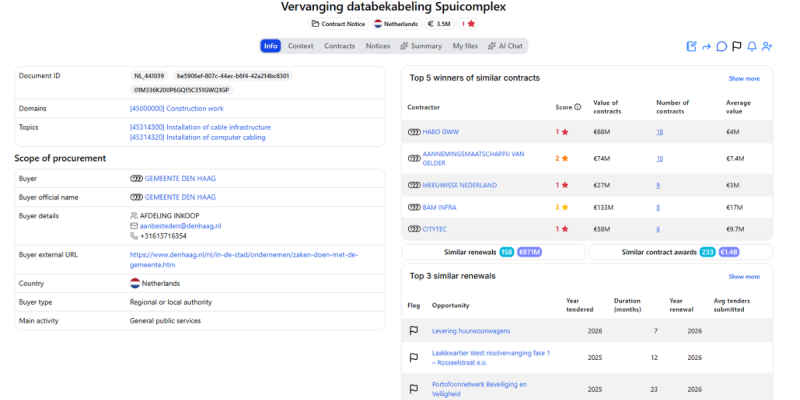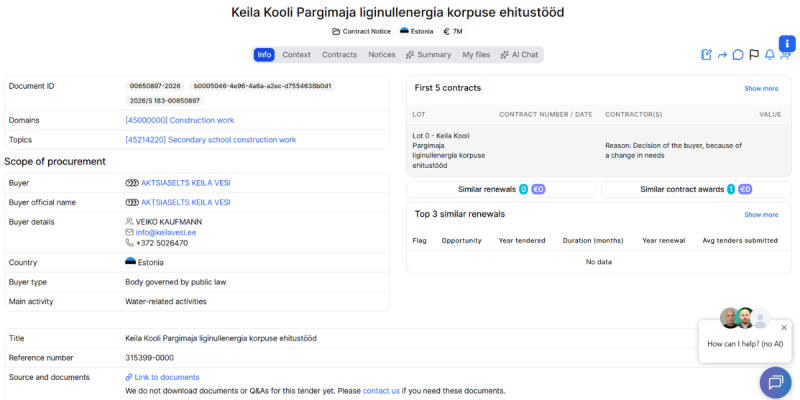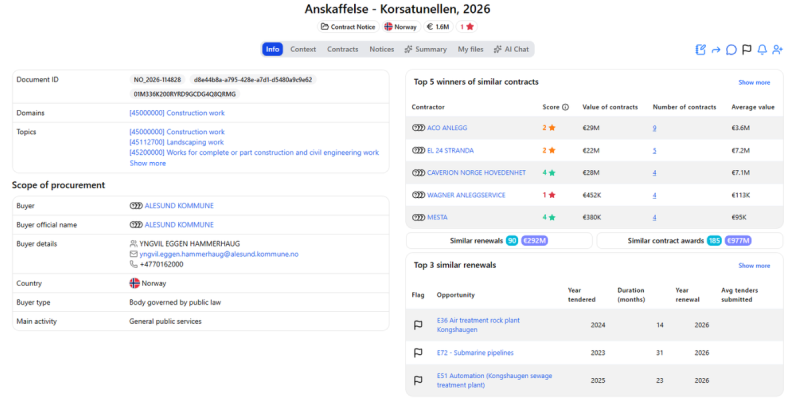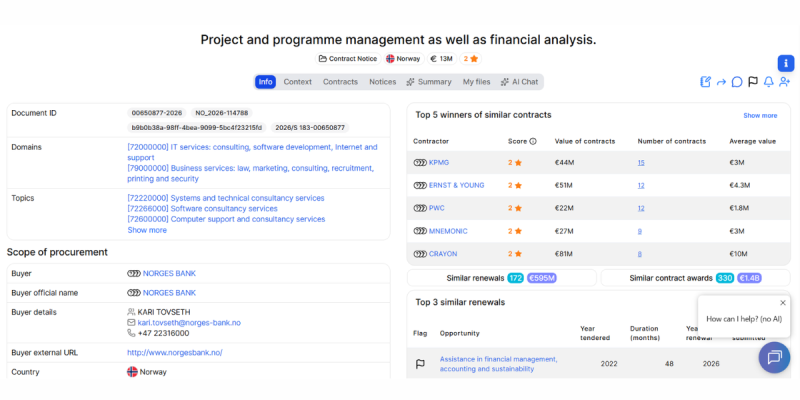
Het begrijpen van de woordenschat en terminologie van overheidsinkopen is essentieel om te gedijen in de B2G-sector en overheidscontracten binnen te slepen.
Deze woordenlijst definieert de belangrijkste termen die u zult tegenkomen bij verkoop aan de publieke sector, van aanbesteders en hoofdaannemers tot opdrachten en raamovereenkomsten. Elke term bevat de definitie, veelvoorkomende synoniemen en hoe Hermix deze concepten gebruikt om marktinformatie te verstrekken.
Met deze naslagwerken proberen we termen per categorie te ordenen voor een eenvoudigere navigatie, aangezien we weten hoe drukke tijden kunnen zijn.
Of u nu voor het eerst meedoet aan overheidsaanbestedingen of een ervaren inschrijver bent, deze verklarende woordenlijst helpt u de inkoopterminologie te begrijpen en te doorgronden hoe deze concepten met elkaar samenhangen in de B2G-markt.
Laten we beginnen...
Kernbegrippen van de B2G-markt
De aanbestedingsmarkt draait om drie fundamentele concepten:
Koper
Een overheidsinstantie die diensten, producten of werken inkoopt. Inkopers besteden geld voor allerlei soorten doeleinden op de Business-to-Government-markt.
- Europese Commissie, Europees Parlement, ministeries, gemeenteraden, NHS-trusts
- Ook genoemd: Autoriteit, opdrachtgever, donor, aanbestedende dienst, openbare organisatie, overheidsorgaan, openbaar bestuur, overheidsinstantie
- Hoe Hermix dit gebruikt: Gedetailleerde koperprofielen tonen aankoopgeschiedenis, bestedingspatronen, bevorzugde leveranciers en contractvernieuwingscycli
Aannemer
Winnaar van een aanbestedingsprocedure (kans). Leveranciers van diensten, producten of werken aan een koper. Soms is een aannemer uw concurrent, soms een potentiële partner.
- Kan een ngo, een privaat bedrijf of zelfs een andere overheidsopdrachtgever zijn die diensten levert aan andere opdrachtgevers
- Particuliere ondernemers hebben meestal een btw-nummer, geregistreerd adres, telefoonnummer en andere officiële gegevens
- Ook genoemd: Verkoper, leverancier (bij een gunning), inschrijver, deelnemer (bij een kans), begunstigde (van een subsidie)
- Hoe Hermix dit gebruikt: Aannemersprofielen onthullen winsthistorie, typische contractwaarden, geografische focus en samenwerkingsnetwerken
Aannemersgroep
Een groep aannemers die waarschijnlijk op een gecoördineerde manier zal optreden op de markt voor de overheidsopdrachten. Multinationale ondernemingen zijn hiervan het typische voorbeeld.
- IBM Groep bestaat uit honderden bedrijven en dochterondernemingen gevestigd in 177 landen
- Elke IBM-dochteronderneming is een individuele organisatie met specifieke adres- en registratiegegevens
- Alles uiteindelijk beheerd door één moedermaatschappij (International Business Machines Corporation, geregistreerd in New York)
- Groepsleden concurreren meestal niet met elkaar vanwege het interne beleid en formele aanbestedingsregels.
- Ook genoemd: Brand
- Hoe Hermix dit gebruikt: Groepen worden samengevoegd om het ware concurrentielandschap te tonen en te voorkomen dat concurrenten verkeerd worden geteld
Gelegenheid
Een zakelijke kans in de publieke sector. Meestal een aanbestedingsprocedure voor het inkopen van specifieke diensten of producten, maar kan ook een oproep tot het indienen van voorstellen, een oproep tot oplossingen of een subsidie zijn.
- Mogelijke toekomstige, the-past, mogelijke, open of gesloten aanbestedingen of andere inkoopprocedures
- Bevat één of meerdere kavels
- Kan resulteren in het niet toekennen van een opdracht of in één of meerdere opdrachttoewijzingen
- Ook wel genoemd: Aanbesteding, inkoopprocedure, onderhandelingsprocedure, zelden contract of project
- Hoe Hermix dit gebruikt: Geautomatiseerde monitoring waarschuwt je voor relevante kansen die aan je criteria voldoen op Europese portals
Inkoopdocumenttypes
Kennisgeving
Individueel stuk officiële informatie over overheidsopdrachten. Kan een aankondiging van een opdracht, een vooraankondiging, een aankondiging van een gegunde opdracht, betalingsinformatie, een rectificatie of een addendum bij een andere aankondiging zijn.
- Ook wel genoemd: Aankondiging van een opdracht, aanbestedingsbericht, contractaankondiging, gunningsbesluit
- Hoe Hermix dit gebruikt: Bewaakt aanbestedingen op meerdere portaalsites voor een uitgebreide dekking van kansen
Aankondiging van een opdracht
Officiële aankondiging van een aanbesteding met volledige aanbestedingsgegevens, vereisten, evaluatiecriteria en indieningstermijnen.
- Gepubliceerd op officiële aanbestedingsportals
- Signaleert de start van het competitieve inkoopproces
- Hoe Hermix dit gebruikt: Dagelijkse meldingen informeren u over nieuwe aanbestedingsnotificaties die overeenkomen met uw filters
Vooraankondiging
Voorafgaande kennisgeving van het voornemen van de koper om een toekomstige aanbesteding te starten. Biedt vroegtijdig inzicht in komende inkopen.
- Stelt leveranciers in staat zich voor te bereiden voordat de formele aanbesteding wordt gepubliceerd
- Geen bindende verbintenis tot aanschaf
- Hoe Hermix dit gebruikt: Gevolgd om een vroege waarschuwing te geven van komende kansen
Gunningsbericht
Bekendmaking van de winnaar(s) van de aanbestedingsprocedure. Toont welke aannemer heeft gewonnen, de contractwaarde, de looptijd en de belangrijkste voorwaarden.
- Gepubliceerd na ondertekening van het contract
- Biedt concurrentie-inlichtingen over marktresultaten
- Hoe Hermix dit gebruikt: Gunninggegevens onthullen prestaties van concurrenten, prijsbenchmarks en voorkeuren van kopers
Rectificatie
Officiële rectificatie of wijziging van een gepubliceerd aanbestedingsbericht. Wijzigt vereisten, termijnen of andere aanbestedingsvoorwaarden.
- Alle inschrijvers moeten op de hoogte worden gebracht van wijzigingen
- De inzendtermijn kan worden verlengd als de wijzigingen ingrijpend zijn
- Zorgt ervoor dat alle leveranciers toegang hebben tot correcte informatie
Inkoopstructuurvoorwaarden
Lot
Een aanbesteding kan uit verschillende percelen bestaan. Inschrijvers kunnen doorgaans op elk perceel afzonderlijk intekenen. Elk perceel wordt gegund aan een of meer inschrijvers of consortia.
- Scheid de vereisten en het budget voor elk perceel
- Stelt kleinere leveranciers in staat om te concurreren voor delen van grotere contracten
- Kopers reserveren kavels vaak specifiek voor het MKB
- Hoe Hermix dit gebruikt: Percelenstructuur getoond in opdrachtsdetails
Consortium
Een combinatie van contractanten die gezamenlijk deelnemen aan een aanbesteding om samen één enkele overeenkomst te ondertekenen met de aanbestedende dienst.
- Gevormd door verschillende aannemers, consortiumleden genaamd
- Eerste aannemer in een consortium doorgaans consortiumleider genoemd
- Combineert capaciteiten om te voldoen aan eisen waar geen enkel afzonderlijk bedrijf aan voldoet
- Ook wel genoemd: Groepering, associatie, partnerschap
- Hoe Hermix dit gebruikt: Partnerschapsanalyse laat zien welke bedrijven in consortia samenwerken
Gunning van de opdracht
Het resultaat van een aanbestedingsprocedure (gunning). Een contract wordt gegund door een aanbestedende dienst aan een of meer aannemers of combinaties bestaande uit meerdere aannemers.
- Specificeert contractwaarde, duur en belangrijke voorwaarden
- Meerdere gunningen mogelijk indien de aanbesteding uit meerdere percelen bestond
- Ook wel genaamd: Contract
- Hoe Hermix dit gebruikt: Historische gunningen bieden inzicht in het gedrag van kopers en de prestaties van concurrenten
Contract
Het resultaat van een gunning. In elk perceel is de volgorde van de contracten meestal belangrijk. De uitvoering verloopt doorgaans getrapt van het eerste contract naar het laatste.
- Definieert verplichtingen, te leveren prestaties, betalingsvoorwaarden en prestatie-eisen
- Kan een afzonderlijk contract zijn of deel uitmaken van een raamovereenkomst
- Volgorde is van belang wanneer meerdere contracten in hetzelfde perceel worden gegund
Raamovereenkomst
Een contract dat wordt uitgevoerd via verschillende afzonderlijke, onafhankelijke bestellingen of specifieke contracten.
- Stelt voorwaarden vast die van toepassing zijn op meerdere aankopen tijdens de contractperiode
- Loopt doorgaans 2-4 jaar met een geschatte totale waarde
- Individuele orders, specifieke contracten, afnames of inkooporders genoemd
- Ook wel genoemd: Raamovereenkomst
- Hoe Hermix dit gebruikt: Gepubliceerde raamovereenkomsten worden bijgehouden om patronen van markttoegang in kaart te brengen
Inkooporder
Onderdelen van een raamovereenkomst. Individuele orders geplaatst onder de raamvoorwaarden.
- Ook genoemd: Bestelling, specifiek contract, specifiek verzoek
- Maakt gebruik van termen die zijn vastgesteld in het moederraamwerk
- Kan een onderlinge competitie tussen raamleveranciers omvatten
Soorten aanbestedingsprocedures
Openbare aanbesteding
Een aanbestedingsprocedure waarbij elke gekwalificeerde leverancier een inschrijving kan indienen. Er is geen kwalificatiefase vooraf vereist.
- Meest transparante en concurrerende aanbestedingsvorm
- Alle evaluatiecriteria moeten vooraf worden gepubliceerd
- Gebruikelijk voor duidelijke, goed gedefinieerde vereisten
- Geschikt voor goederen en eenvoudige diensten.
- Hoe Hermix dit gebruikt: Het proceduretype wordt weergegeven in de details van de kans om u inzicht te geven in het concurrentieniveau.
Beperkte procedure
Een aanbestedingsproces in twee fasen. In de eerste fase worden leveranciers voorgekwalificeerd, in de tweede fase worden alleen de geselecteerde leveranciers uitgenodigd om een volledige offerte in te dienen.
- Fase 1: Leveranciers dienen een selectievragenlijst in waarin hun capaciteiten worden aangetoond.
- Fase 2: Geselecteerde leveranciers (doorgaans 3-5) worden uitgenodigd om een offerte in te dienen.
- Geschikt voor complexe toepassingen die aantoonbare capaciteit vereisen.
- Vermindert de beoordelingslast voor kopers.
- Hoe Hermix dit gebruikt: Historisch gebruik van beperkende procedures door de overheid wijst erop dat zij de voorkeur geven aan bewezen leveranciers.
Competitieve dialoog
Een iteratief inkoopproces voor complexe eisen waarbij de oplossing niet van tevoren vaststaat. De inkoper voert overleg met de geselecteerde leveranciers om oplossingen te ontwikkelen.
- Meerfasenproces met opeenvolgende rondes
- Maakt het mogelijk om de eisen te verfijnen door middel van dialoog.
- Gebruikt voor grote infrastructurele projecten en complexe IT-systemen.
- Dit leidt uiteindelijk tot een definitieve aanbesteding op basis van de ontwikkelde oplossing.
- Ook wel genoemd: Concurrentieprocedure met onderhandeling
Onderhandelingsprocedure
Een aanbestedingsprocedure waarbij de koper met een of meer leveranciers over de voorwaarden onderhandelt in plaats van vaste offertes te beoordelen.
- Kan met of zonder voorafgaande publicatie zijn.
- Gebruikt in specifieke omstandigheden (extreme urgentie, technische exclusiviteit, enz.)
- Minder gebruikelijk vanwege transparantievereisten
- Vaak is een rechtvaardiging voor het gebruik vereist.
Dynamisch inkoopsysteem (DPS)
Een elektronisch systeem voor veelgekochte artikelen dat gedurende de gehele looptijd open blijft staan voor nieuwe leveranciers.
- Leveranciers kunnen op elk moment tijdens de levensduur van het systeem deelnemen.
- Binnen de DPS worden individuele wedstrijden georganiseerd.
- Gebruikelijk voor IT-diensten, consultancy en kantoorartikelen.
- Verkort de inkooptijd voor herhaalaankopen.
- Ook wel genoemd: DPS
Uitnodiging tot inschrijving (ITT)
Een formele uitnodiging om een bod uit te brengen. In het Verenigd Koninkrijk is deze term grotendeels gelijk aan 'Request for Proposal'.
- Bevat de volledige aanbestedingsspecificaties en -vereisten.
- Inclusief evaluatiecriteria en weging.
- Specificeert de uiterste inleverdatum en het formaat.
- Ook wel genoemd: ITT
- Hoe Hermix dit gebruikt: ITT-documenten van het EU-financieringsportaal kunnen als ZIP-bestanden worden gedownload.
Termen met betrekking tot subsidies
Studiebeurs
Een geldbedrag dat door een overheid of andere organisatie voor een specifiek doel wordt gegeven.
- Een specifiek type kans, gericht op het voldoen aan de behoeften van de aannemer.
- Aannemers worden doorgaans begunstigden genoemd.
- Koper, ook wel schenker genoemd.
- De evaluatiecriteria verschillen van die van traditionele aanbestedingen.
- Hoe Hermix dit gebruikt: Subsidiemogelijkheden worden gemonitord naast traditionele aanbestedingen.
Begunstigde
In de context van een subsidie ontvangt de aannemer subsidiegeld. Hij realiseert de projectresultaten met behulp van dit subsidiegeld.
- Onderworpen aan rapportage- en nalevingsvereisten
- Het kan een ngo, een onderzoeksinstelling of een particulier bedrijf zijn.
Donor
In de context van een subsidie verstrekt de opdrachtgever de subsidie. Hij of zij stelt de prioriteiten en evaluatiecriteria voor de subsidie vast.
- Voorbeelden: onderzoeksprogramma's van de Europese Commissie, nationale innovatieagentschappen
Proefproject
Een gemengde projectmogelijkheid die kenmerken van zowel subsidies als aanbestedingen combineert. Financiert een particuliere entiteit om te voorzien in een algemeen maatschappelijk belang.
- Test innovatieve benaderingen voordat ze op grotere schaal worden geïmplementeerd.
- Kan leiden tot grotere inkoopmogelijkheden in de toekomst.
- Soms worden ze programma's genoemd als ze erg grootschalig zijn.
Classificatie- en categorisatietermen
Industrie
Het hoogste classificatieniveau voor diensten en producten die op de markt van de publieke sector worden ingekocht. Bevat domeinen en onderwerpen. Maakt deel uit van een hiërarchische classificatiestructuur.
- Voorbeelden: Bouw, IT
- Als een kans aan een specifiek onderwerp wordt gekoppeld, wordt deze automatisch aan het bovenliggende domein en de bovenliggende branche gekoppeld.
- Ook wel genoemd: Verticaal
- Hoe Hermix dit gebruikt: filter kansen op branche om relevante aanbestedingen te vinden.
Domein
Bevat een groepering van onderwerpen (CPV-codes) zoals gedefinieerd in het officiële Common Procurement Vocabulary. Directe tegenhanger van de CPV-divisie in de officiële classificatie.
- Voorbeeld: Voor de bouwsector is het domein "Architectuur, constructie, engineering".“
- De volledige officiële specificaties zijn te vinden in de officiële CPV-documentatie.
- Ook wel genoemd: CPV-divisie
- Hoe Hermix dit gebruikt: Verfijn zoekopdrachten binnen branches naar specifieke domeinen.
Onderwerp
Specifieke classificaties van alle diensten of producten die via openbare aanbestedingen worden aangeboden, zoals gedefinieerd in de officiële gemeenschappelijke aanbestedingsterminologie.
- Meest gedetailleerde classificatieniveau
- Voorbeeld: Voor de bouwsector, binnen het domein "Architectuur, constructie, engineering", is het onderwerp "Architectuur en aanverwante diensten".“
- De volledige officiële specificaties zijn te vinden in de officiële CPV-documentatie.
- Ook wel genoemd: CPV-code
- Hoe Hermix dit gebruikt: Zoeken op onderwerp voor precies gerichte kansen.
Termen voor marktanalyse
Fragmentatie
Meet de mate van diversiteit aan projectmogelijkheden binnen een specifiek marktsegment. Toont de diversiteit aan kopers en kansen.
- Geeft aan hoeveel en hoe gevarieerd of divers de mogelijkheden, producten, diensten en leveringslocaties op een specifiek marktsegment zijn.
- Sterke fragmentatie betekent veel uiteenlopende mogelijkheden.
- Lage fragmentatie betekent geconcentreerde, vergelijkbare mogelijkheden.
- Hoe Hermix dit gebruikt: analyses tonen marktfragmentatie aan om de diversiteit aan kansen te beoordelen.
Diversificatie
Meet de mate van concurrentie op een specifieke markt. Geeft de mate van diversiteit van de markt weer vanuit het perspectief van de aannemers.
- Een lage diversificatie betekent weinig leveranciers (minder concurrentie).
- Sterke diversificatie betekent hevige concurrentie.
- Geeft aan hoeveel leveranciers actief zijn in een specifiek marktsegment en vanuit hoeveel verschillende locaties diensten en producten worden geleverd.
- Hoe Hermix dit gebruikt: Concurrentieanalyse onthult patronen van marktspreiding.
Verlengingen
Mogelijkheden voor contracten met een specifieke looptijd die naar verwachting zullen worden voortgezet via een andere aanbestedingsprocedure die sterk lijkt op de oorspronkelijke.
- Dit gebeurt wanneer bestaande contracten aflopen.
- Doorgaans vergelijkbare eisen als bij de oorspronkelijke aanbesteding.
- Voorspelbaar op basis van de contractduur
- Hoe Hermix dit gebruikt: De prognoses voor contractverlengingen laten zien wanneer contracten aflopen en wanneer een nieuwe aanbesteding waarschijnlijk is.
Organisatietermen
Aanbestedende instantie
Een overheidsinstantie met wettelijke bevoegdheid om aanbestedingen uit te voeren. Moet zich aan de aanbestedingsvoorschriften houden bij het besteden van overheidsgeld.
- Ook wel genoemd: Koper, autoriteit, overheidsinstantie
- Voorbeelden: overheidsdiensten, gemeenten, NHS-instellingen, universiteiten
- Hoe Hermix dit gebruikt: Autoriteitsprofielen tonen de volledige inkoopgeschiedenis en -patronen.
Publieke instanties
Organisaties in de publieke sector die aanbestedingen mogen uitvoeren. Dit omvat de centrale overheid, lokale overheden, decentrale besturen en andere organisaties in de publieke sector.
- Onderworpen aan de regelgeving inzake overheidsaanbestedingen
- Transparantie en concurrentie moeten gewaarborgd worden.
- Hoe Hermix dit gebruikt: Dekking voor alle soorten overheidsinstanties
MKB (kleine en middelgrote onderneming)
Bedrijven met minder dan 250 werknemers en een omzet onder de €50 miljoen.
- De publieke sector richt zich steeds meer op de participatie van het mkb.
- Mogelijk stuit men op belemmeringen met betrekking tot de kwalificatie-eisen.
- Vaak zijn er mogelijkheden via kavels of lidmaatschap van een consortium.
- Ook wel genoemd: kleine en middelgrote ondernemingen
- Hoe Hermix dit gebruikt: Data helpt mkb-bedrijven bij het identificeren van mkb-vriendelijke kopers en passende investeringsmogelijkheden.
Evaluatie- en toekenningsvoorwaarden
VLEES (Meest economisch voordelige malse variant)
Een evaluatiemethode die kwaliteit en prijs afweegt, en niet alleen de laagste prijs selecteert. Houdt rekening met de waarde en voordelen gedurende de gehele levensduur.
- Vervangen door “meest voordelige aanbieding” in de aanbestedingswet van 2023.
- Typische wegingen: 60-70% kwaliteit, 30-40% prijs
- Geeft de prijs-kwaliteitverhouding weer, in plaats van alleen de laagste prijs.
- Standaardaanpak voor diensten en complexe goederen
- Ook wel genoemd: Meest voordelige aanbieding, prijs-kwaliteitsvergelijking
Criteria voor de toekenning
De criteria die worden gebruikt om voorstellen te evalueren en te beoordelen, zijn openbaar gemaakt. Deze moeten in de aanbestedingsdocumenten worden vermeld.
- Voorbeelden: Technische aanpak, relevante ervaring, kwalificaties van het team, prijsstelling
- Aan elk criterium is een weging toegekend.
- Moet objectief zijn en betrekking hebben op het onderwerp van het contract.
- Er mag geen onderscheid worden gemaakt tussen leveranciers van welk type dan ook.
- Hoe Hermix dit gebruikt: Historische analyses onthullen welke criteria specifieke kopers het zwaarst wegen.
Weging
Aan elk evaluatiecriterium zijn punten of percentages toegekend, die het relatieve belang ervan aangeven.
- Voorbeeld: Technisch 40%, Ervaring 20%, Team 15%, Prijs 25%
- Moet vooraf worden gepubliceerd.
- Geeft bieders aanwijzingen over waar ze hun inspanningen voor het indienen van een voorstel op moeten richten.
- Hoe Hermix dit gebruikt: Analyses van eerdere aanbestedingen tonen typische wegingspatronen per autoriteit en contracttype.
BAFO (Beste en definitieve bod)
In de laatste ronde worden de geselecteerde bieders uitgenodigd om hun bod na de eerste evaluatie te verbeteren.
- Doorgaans aangevraagd bij de 2-3 hoogst geplaatste bieders.
- Mogelijk zijn er verduidelijkingsbijeenkomsten nodig vóór de BAFO-aanvraag.
- Het is in dit stadium niet mogelijk om nieuwe eisen te introduceren.
- De eindscore bepaalt de winnaar.
- Ook wel genoemd: Beste en definitieve bod, definitieve inschrijving
Criteria voor slagen/zakken
Verplichte eisen die niet-conforme biedingen automatisch diskwalificeren, ongeacht andere sterke punten.
- Voorbeelden: Vereiste certificeringen, minimale verzekeringsdekking, veiligheidsmachtiging
- Geen discretionaire bevoegdheid bij de aanvraag
- Moet in de aanbesteding duidelijk als verplicht worden vermeld.
- Ook wel genoemd: verplichte eisen, essentiële criteria, minimumnormen
Technische capaciteit
Het vermogen om de vereiste technische oplossing te leveren op basis van kwalificaties, ervaring en beschikbare middelen.
- Aangetoond door middel van casestudies, certificeringen en faciliteiten.
- Mogelijk zijn specifieke technische accreditaties vereist.
- Bevat vaak cv's van belangrijke medewerkers.
- Onderdeel van de leverancierskwalificatiebeoordeling
Economische en financiële positie
Vereisten voor financiële stabiliteit die ervoor zorgen dat de aannemer kan leveren zonder risico op financieel faillissement.
- Typische vereisten: Minimale omzet (vaak 2x de contractwaarde), specifieke verzekeringsdekking, kredietwaardigheid
- Gecontroleerde jaarrekeningen en bankreferenties kunnen vereist zijn.
- De garanties van het moederbedrijf kunnen aan de eisen voldoen.
- Beschermt de koper tegen insolventie van de aannemer tijdens de levering.
Voorwaarden voor kwalificatie en selectie
PQQ (Pre-kwalificatievragenlijst)
Eerste fase document voor het beoordelen van de capaciteiten van leveranciers vóór de uitnodiging tot inschrijving. Gebruikt in beperkte procedures.
- Beoordeelt technische bekwaamheid, financiële draagkracht en relevante ervaring.
- Bepaalt wie doorgaat naar de ITT-fase
- Dit resulteert doorgaans in een shortlist van 3 tot 5 leveranciers.
- Ook wel genoemd: Prekwalificatievragenlijst, interessefase
- Hoe Hermix dit gebruikt: Het gebruik van PQQ door autoriteiten duidt op een voorkeur voor bewezen leveranciers.
SQ (Selectievragenlijst)
Standaard Brits formulier voor leverancierskwalificatie, ter vervanging van eerdere PQQ-formats om consistentie te creëren.
- Onderdeel van de standaardisatie van de aanbestedingswet 2023
- Omvat uitsluitingsgronden, selectiecriteria, verzekeringen en financiële positie.
- Bedoeld om de lasten voor leveranciers te verlichten.
- Ook wel genoemd: selectievragenlijst, standaard selectievragenlijst
Uitsluitingsgronden
Redenen waarom een leverancier kan worden afgewezen bij een aanbesteding, ongeacht de kwaliteit van het voorstel.
- Verplichte gronden: strafrechtelijke veroordelingen, belastingontduiking, insolventie
- Discretionaire gronden: Slechte prestaties in het verleden, ernstige misleiding, belangenconflicten
- Moet door leveranciers in SQ worden vermeld.
- Kan leiden tot automatische uitsluiting van de wedstrijd.
Omzetvereisten
Aannemers moeten aan de minimale omzetvereisten voldoen om in aanmerking te komen voor een aanbesteding.
- Doorgaans 2x de jaarlijkse contractwaarde, soms 3x.
- Beoordeeld over een periode van 2-3 jaar.
- Kan worden samengevoegd over de leden van het consortium.
- Dit kan worden aangevochten als een onevenredige belemmering voor het mkb.
- Hoe Hermix dit gebruikt: Historische omzetvereisten helpen mkb's bij het identificeren van haalbare kansen.
Financiële en commerciële voorwaarden
Prestatiegarantie
Financiële garantie (doorgaans 5-101 TP3T van de contractwaarde) dat de aannemer zal leveren volgens de afspraken.
- Een bank of verzekeringsmaatschappij geeft een obligatie uit.
- De koper kan een vordering indienen op de garantie wegens wanprestatie.
- Teruggekeerd na succesvolle afronding van het contract.
- Gebruikelijk bij bouwprojecten en contracten met een hoge waarde.
- Ook wel genoemd: contractgarantie, inschrijvingsgarantie
Garantie van de moedermaatschappij
Juridische toezegging van het moederbedrijf om de contractuele verplichtingen van de dochteronderneming te garanderen.
- Stelt de dochteronderneming in staat te voldoen aan de eisen inzake financiële draagkracht.
- Moederbedrijf garandeert betaling indien dochteronderneming in gebreke blijft.
- Komt vaak voor wanneer de omzet van een dochteronderneming niet aan de vereisten voldoet.
- Het moet een correct opgesteld juridisch document zijn.
- Ook wel genoemd: PCG, bedrijfsgarantie
Verzekeringsvereisten
Verplichte dekkingsniveaus die aannemers gedurende de gehele contractuitvoering moeten handhaven.
- Beroepsaansprakelijkheidsverzekering: Doorgaans £1-10 miljoen, afhankelijk van het contract.
- Aansprakelijkheid jegens derden: doorgaans £5-10 miljoen
- Werkgeversaansprakelijkheid: minimaal £5 miljoen (wettelijke verplichting in het VK)
- Moet aanwezig zijn vóór aanvang van het contract.
- Hoe Hermix dit gebruikt: Historische analyses tonen de typische verzekeringseisen per overheidsinstantie en contracttype.
Behoud
Het percentage van de betaling (doorgaans 5-10%) dat wordt ingehouden tot de contractuele verplichtingen naar tevredenheid zijn afgerond of tot de gebrekenperiode is verstreken.
- Vrijgegeven na succesvolle levering en acceptatie.
- Beschermt de koper tegen gebreken of onvolledige levering.
- Komt veel voor in de bouw, minder vaak in de dienstensector.
- Ook wel genoemd: Retentiegeld, inhouding
Betalingsvoorwaarden
Contractuele bepalingen die vastleggen wanneer en hoe de aannemer betaald krijgt.
- Overheidssector: doorgaans 30 dagen na factuurdatum.
- Kan gebaseerd zijn op mijlpalen of op tijd.
- Sommige instanties garanderen een snellere betaling (10-14 dagen).
- Volgens de Britse wetgeving worden er rentekosten in rekening gebracht bij te late betaling.
- Hoe Hermix dit gebruikt: Contractvoorwaarden zichtbaar in toegekende contracten
Tijdlijn en procesvoorwaarden
Stilstandperiode
Een verplichte pauze van 10 dagen tussen de kennisgeving van de gunning en de ondertekening van het contract, zodat niet-geslaagde bieders bezwaar kunnen aantekenen.
- Vereist voor contracten boven de drempelwaarde
- Begint wanneer alle bieders op de hoogte zijn gesteld van de beslissing.
- Tijdens een standstill-periode kan er geen contract worden ondertekend.
- Geeft tijd voor de inkoopuitdaging
- Ook wel genoemd: Alcatel-periode, afkoelingsperiode, vrijwillige stilstand (voor onder de drempelwaarde)
Aanvangsdatum van het contract
Wanneer de levering moet beginnen en de verplichtingen van de aannemer ingaan.
- Gespecificeerd in het contract of vastgesteld na ondertekening.
- Dit kan enkele weken na ondertekening duren (mobilisatieperiode).
- Belangrijk voor resourceplanning
- Hoe Hermix dit gebruikt: De contractdata in de toegekende contracten helpen bij het voorspellen wanneer een nieuwe aanbesteding waarschijnlijk is.
Contractperiode
De periode vanaf de startdatum tot de einddatum, exclusief eventuele verlengingsopties.
- Gebruikelijke duur: 1-5 jaar, afhankelijk van het type contract.
- Moet worden vermeld in de aanbestedingsdocumenten.
- Los van de verlengingsopties, die met 1-2 jaar kunnen worden verlengd.
- Hoe Hermix dit gebruikt: Gegevens over de contractduur vormen de basis voor de kalender met prognoses voor contractverlengingen.
Uitbreidingsoptie
De in het oorspronkelijke contract overeengekomen mogelijkheid om de looptijd te verlengen zonder nieuwe concurrentie.
- Moet in de oorspronkelijke offerte worden vermeld (kan niet later worden toegevoegd).
- Doorgaans 1-2 jaar extra duur
- Meestal naar keuze van de koper, niet automatisch.
- Telt mee voor de totale contractwaarde bij de drempelberekening.
- Hoe Hermix dit gebruikt: Verlengingsopties worden bijgehouden om de daadwerkelijke einddatum van contracten te voorspellen.
Voorwaarden voor beheer na toekenning van de akte
KPI's (Key Performance Indicators)
Metrieken die de prestaties van de aannemer meten aan de hand van vastgestelde normen gedurende de gehele contractuitvoering.
- Voorbeelden: reactietijden, uptimepercentages, klanttevredenheidsscores
- Vastgelegd in het contract met streefwaarden
- Kan gekoppeld zijn aan betaling (prestatieverminderingen)
- Wordt regelmatig gerapporteerd (maandelijks/driemaandelijks)
- Ook wel genoemd: Kernprestatie-indicatoren, prestatiemaatstaven
Serviceniveaus
Vereiste prestatienormen die een acceptabele leveringskwaliteit definiëren.
- Voorbeeld: 99,5% systeem beschikbaarheid, 4 uur responstijd
- Een contractbreuk kan leiden tot servicekredieten of compensatie.
- Specifieker dan algemene KPI's
- Maakt deel uit van de contractbewaking.
- Ook wel genoemd: Service Level Agreements, SLA's
Contractbeheer
Continue toezicht op de contractuitvoering om ervoor te zorgen dat de aannemer aan zijn verplichtingen voldoet en de koper waar voor zijn geld krijgt.
- Omvat prestatiebewaking, probleemoplossing en wijzigingsbeheer.
- Meestal wordt er een contractmanager toegewezen aan de koperszijde.
- Regelmatige evaluatiebijeenkomsten tussen partijen
- Cruciaal voor een succesvolle levering
Variatie
Formele wijziging van de contractomvang, prijs of voorwaarden na ondertekening.
- Vereist een schriftelijke overeenkomst van beide partijen.
- Aanzienlijke afwijkingen kunnen een nieuwe aanbesteding vereisen (voorkom het omzeilen van regels).
- Moet worden gerechtvaardigd en gedocumenteerd.
- Kan de contractwaarde of -duur verlengen
- Ook wel genoemd: contractwijziging, wijzigingsopdracht, amendement
Contractmobilisatie
De periode tussen de contractondertekening en de aanvang van de dienstverlening waarin de aannemer de leveringscapaciteit opzet.
- Gebruikelijke duur: 4-12 weken, afhankelijk van de complexiteit.
- Activiteiten: Werving en selectie van personeel, systeemconfiguratie, training, overdracht van de zittende medewerker.
- Mogelijk zijn er specifieke mobilisatie-uitkomsten.
- Cruciaal voor een vlotte contractstart.
- Ook wel genoemd: Mobilisatieperiode, overgangsperiode
Voorwaarden voor onderaanneming en toeleveringsketen
Hoofdaannemer
De hoofdaannemer heeft het contract rechtstreeks met de koper en is verantwoordelijk voor de gehele oplevering.
- Juridische relatie met de koper
- Beheert onderaannemers
- Brengt leveringsrisico met zich mee.
- Ook wel genoemd: Hoofdaannemer, opdrachtgever, eindaannemer
Onderaannemer
Het bedrijf voert een deel van de contractuele verplichtingen uit in opdracht van de hoofdaannemer en is niet rechtstreeks gecontracteerd door de koper.
- Contractuele relatie met de hoofdaannemer, niet met de koper.
- Mogelijk zijn het specialisten voor specifieke werkonderdelen.
- Moet vaak in het bod worden vermeld.
- De koper kan goedkeuringsrechten hebben.
- Ook wel genoemd: onderaannemer, partner in de toeleveringsketen
Tier 1-leverancier
Hoofdaannemer met een rechtstreeks contract met de koper.
- Eerste schakel in de toeleveringsketen
- Draagt de algehele verantwoordelijkheid voor de levering.
- Ook wel genoemd: Niveau 1, eerste niveau
Leveranciers van niveau 2/3
OnderAannemers (Tier 2) en onder-onderAannemers (Tier 3) in de leveringsketen.
- Niveau 2: OnderAannemers van de hoofdaannemer
- Niveau 3: Onder-onderaannemers van niveau 2
- Verder verwijderd van de relatie met de koper.
- Hoe Hermix dit gebruikt: Consortiumanalyse onthult de relaties tussen hoofdaannemers en onderaannemers en typische structuren in de toeleveringsketen.
Toeleveringsketen
Netwerk van bedrijven die betrokken zijn bij de uitvoering van het contract, van hoofdaannemer tot en met alle onderaannemers.
- Omvat alle leveranciers van niveau 1, 2, 3 en hoger.
- Kopers eisen steeds vaker transparantie in de toeleveringsketen.
- Er kunnen specifieke eisen gelden voor mkb-bedrijven of lokale leveranciers.
- Ook wel genoemd: Waardeketen, leveringsketen
- Hoe Hermix dit gebruikt: Partnerschapsgrafieken visualiseren de relaties binnen de toeleveringsketen over meerdere contracten heen.
Aanvullende voorwaarden
Alias
Een andere naam voor exact dezelfde organisatie. Zowel aannemers als kopers gebruiken schuilnamen.
- Voorbeelden: Afkortingen, handelsnamen, vroegere namen, varianten van wettelijke namen
- Hoe Hermix dit gebruikt: Aliassen worden samengevoegd om de volledige organisatiegeschiedenis onder één uniform profiel weer te geven.
EC (Europese Commissie)
De uitvoerende macht van de Europese Unie. Belangrijkste afnemer van goederen en diensten in alle lidstaten.
- Publiceert jaarlijks duizenden aanbestedingen.
- Maakt gebruik van specifieke aanbestedingsportalen zoals eTendering en het EU-financieringsportaal.
FTS (Financieel Transparantiesysteem)
Financieel transparantiesysteem van de Europese Commissie. Database met betalingen en contracten van de EC.
- Omvat subsidies, contracten en andere financiële verplichtingen.
- Bevat historische gegevens over de uitgavenpatronen van de Europese Commissie, die 19 jaar teruggaan.
- Hoe Hermix dit gebruikt: FTS-gegevens worden geïntegreerd om een compleet beeld te geven van de aanbestedingen van de Europese Commissie en om partnerschappen te analyseren.
Project
Een zakelijk project dat wordt uitgevoerd via meerdere contracten, sommige parallel, andere na elkaar. Grote projecten worden soms programma's genoemd.
- Meerdere gerelateerde contracten met één gemeenschappelijk doel.
- Kan meerdere jaren in beslag nemen en meerdere aannemers omvatten.
- Ook wel genoemd: Programma (voor zeer grote projecten)
Programma
Een zeer groot zakelijk project, uitgevoerd via meerdere contracten. Vergelijkbaar met een ander project, maar op grotere schaal.
Juridische en nalevingsvoorwaarden
Inkoopuitdaging
Juridisch bezwaar aangetekend tegen aanbestedingsbesluit, met de bewering dat de procedure gebrekkig of onrechtmatig was.
- Moet worden aangekaart tijdens de stilstandsperiode of binnen 30 dagen.
- Gronden: Schending van aanbestedingsvoorschriften, oneerlijke beoordeling, ontoereikende motivering
- Kan leiden tot ontbinding van het contract of toekenning van schadevergoeding.
- Relatief zeldzaam, maar een significant risico voor de autoriteiten.
- Ook wel genoemd: Juridische procedure, aanbestedingsgeschil
Richtlijn inzake rechtsmiddelen
EU-wetgeving (die in het VK behouden is gebleven) maakt het mogelijk om aanbestedingsprocedures aan te vechten en biedt rechtsmiddelen bij overtredingen.
- Geeft leveranciers het recht om vóór en na de contracttoekenning bezwaar te maken.
- Stelt tijdslimieten in voor uitdagingen
- Definieert de beschikbare rechtsmiddelen (ontbinding van het contract, schadevergoeding)
- Afgedwongen door het Hooggerechtshof
Transparantie
De verplichting om aanbestedingsinformatie openbaar te maken, ter waarborging van transparantie en verantwoording.
- Bevat aanbestedingsberichten, gunningsberichten en contractdetails.
- Gepubliceerd op Contracts Finder, Find a Tender en websites van overheidsinstanties.
- De contractwaarden, de winnaars en de belangrijkste voorwaarden moeten openbaar worden gemaakt.
- Kernprincipe van overheidsaanbestedingen
- Hoe Hermix dit gebruikt: Transparantievereisten maken uitgebreide marktinformatie mogelijk door gegevens openbaar toegankelijk te maken.
Non-discriminatie
Het principe dat alle leveranciers gelijk behandeld moeten worden, ongeacht nationaliteit, omvang of andere kenmerken.
- Lokale/nationale leveranciers mogen niet worden bevoordeeld bij de beoordeling.
- Er mogen geen onnodige belemmeringen worden opgeworpen die specifieke leveranciers bevoordelen.
- Evaluatiecriteria moeten objectief en gerechtvaardigd zijn.
- Kernprincipe van eerlijke concurrentie
Regelgeving inzake overheidscontracten 2015
De Britse wetgeving betreffende overheidsaanbestedingen van 2015 tot de inwerkingtreding van de Procurement Act 2023.
- Omzetting van EU-aanbestedingsrichtlijnen in de Britse wetgeving.
- Vastgestelde procedures, drempelwaarden en oplossingen
- Grotendeels vervangen door de aanbestedingswet 2023 (vanaf eind 2024).
- De nieuwe wet blijft van kracht voor contracten die vóór de inwerkingtreding van de nieuwe wet zijn gesloten.
- Ook wel genoemd: PCR 2015, Reglementen van 2015
Waarde en maatschappelijke impact
Maatschappelijke waarde
Voordelen die verder gaan dan de kernactiviteiten, zoals banen, leerwerkplekken, investeringen in de gemeenschap of een positieve impact op de lokale economie.
- Gewogen criterium in veel evaluaties (doorgaans 10-20%)
- Vereiste overweging op grond van de Public Services (Social Value) Act 2012
- Voorbeelden: het creëren van leerwerkplekken, het ondersteunen van lokale mkb-bedrijven, het verminderen van CO2-uitstoot.
- Een prominentere rol in de aanbestedingswet van 2023
- Ook wel genoemd: toegevoegde waarde, voordelen voor de gemeenschap, bredere voordelen
Duurzaamheidscriteria
Milieu-eisen en evaluatiefactoren met betrekking tot klimaat- en ecologische impact.
- Kan onder meer doelstellingen voor koolstofreductie, circulaire economie en biodiversiteit omvatten.
- Steeds zwaarder meegewogen in evaluaties
- Het kan een slaag-/faalvereiste zijn of een beoordelingscriterium.
- Netto nul-doelstellingen leiden tot strengere duurzaamheidseisen.
- Ook wel genoemd: milieucriteria, groene criteria
Lokale leveranciers
Bedrijven die gevestigd zijn in of nabij het gebied van de aanbestedende instantie, krijgen vaak voorrang bij de beoordeling.
- Mogelijk een evaluatiecriterium (met name voor lokale overheden)
- Gedefinieerd door geografische grenzen (bijv. binnen een regio/provincie)
- Mag niet gediscrimineerd worden ten opzichte van andere leveranciers uit het VK of de EU.
- Vaak gekoppeld aan doelstellingen op het gebied van maatschappelijke waarde.
MKB-vriendelijk
De aanbestedingsprocedure is zo gestructureerd dat kleine en middelgrote ondernemingen kunnen deelnemen.
- Kenmerken: Passende partijgroottes, proportionele kwalificatiecriteria, vereenvoudigde processen
- Kan gereserveerde kavels voor mkb-bedrijven omvatten.
- Voorkomt onnodig hoge personeelsverloop of hoge ervaringseisen.
- Overheidsdoelstelling: 331 biljoen dollar aan uitgaven bij het mkb
- Hoe Hermix dit gebruikt: Autoriteitsprofielen tonen de patronen in de toekenning van MKB-prijzen, waardoor kleine leveranciers zich kunnen richten op MKB-vriendelijke kopers.
Specifieke platformfuncties voor Hermix
Samenvatting van de AI-aanbesteding
Hermix is een functie waarmee u binnen enkele minuten de belangrijkste informatie uit omvangrijke aanbestedingsdocumenten kunt halen.
- Analyseert documenten van 100-300 pagina's automatisch
- Uittreksels: Eisen, budget, evaluatiecriteria, deadlines, verplichte eisen
- Verkort de tijd die nodig is voor documentanalyse van 2-4 uur naar 5 minuten.
- Maakt snellere kwalificatie voor kansen mogelijk.
- Ook wel genoemd: Aanbestedingssamenvatting, AI-samenvatting
AI-chat
Een interactieve functie waarmee u specifieke vragen over aanbestedingseisen kunt stellen en direct antwoorden krijgt.
- Stel vragen zoals: "Welke certificeringen zijn verplicht?" of "Hoeveel casestudies zijn vereist?"“
- Extraheert automatisch antwoorden uit aanbestedingsdocumenten.
- Bespaart tijd bij het doorzoeken van honderden pagina's.
- Beschikbaar voor inschrijvingen via meerdere aanbestedingsportalen.
- Ook wel genoemd: AI-assistent, tender chat
Kansenvlaggen
Labels en categorieën die u kunt toewijzen aan kansen voor teamtracking en workflowbeheer.
- Aangepaste vlagnamen (bijv. "Hoge prioriteit", "Gekwalificeerd", "Bieden", "Gewonnen", "Verloren")
- Gedeeld met alle teamleden binnen uw organisatie.
- Maakt systematische tracking van kansen mogelijk
- Integreert met het Kanban-bord voor visueel beheer.
- Ook wel genoemd: Labels, tags
Kanban-bord
Visueel workflowoverzicht voor het beheren van gemarkeerde kansen gedurende de verschillende fasen van uw biedingsproces.
- Sleep kansen tussen kolommen (bijv. “In aanmerking komen” → “Gekwalificeerd” → “Bieden” → “Ingediend”).
- Filteren op teamlid, vlag of deadline
- Biedt een overzicht van de gehele pijplijn
- Aanpasbare kolommen en vlaggen
- Ook wel genoemd: Vlaggenbord, kansenbord
Opgeslagen rapporten
Voorgeconfigureerde zoekopdrachten en filters die u kunt opslaan en hergebruiken voor snelle toegang tot relevante informatie.
- Complexe filtercombinaties opslaan (geografie, branche, type autoriteit, contractwaarde)
- Met één klik toegang tot uw belangrijkste rapporten.
- Kan worden gedeeld met teamgenoten
- Bibliotheek met standaardsjablonen beschikbaar
- Bespaart tijd in vergelijking met het herhaaldelijk opnieuw opbouwen van zoekopdrachten.
- Ook wel genoemd: bladwijzers, opgeslagen zoekopdrachten
Dagelijkse waarschuwingen
U ontvangt elke ochtend een e-mailmelding met nieuwe vacatures die aan uw criteria voldoen.
- Filters configureren: Trefwoorden, branches, landen, autoriteitstypen, CPV-codes
- Ontvang indien nodig meerdere meldingen per dag (ochtend en middag).
- Zorgt ervoor dat u nooit relevante kansen mist.
- Meldingen worden binnen enkele uren na publicatie op de bronportalen verzonden.
- Ook wel genoemd: e-mailalerts, opportunity alerts, notificaties
Autoriteitsprofiel
Een compleet overzicht en analyse van de inkoopgeschiedenis voor een specifieke inkopende organisatie.
- Toont: Alle eerdere aanbestedingen en contracten, uitgavenpatronen, voorkeursleveranciers, gemiddelde contractwaarden
- Omvat geografische dekking, inkoopfrequentie en domeinfocus.
- Helpt bij het beoordelen van de geschiktheid van de koper vóór het bieden.
- Onthult de voorkeuren en patronen van kopers.
- Ook wel genoemd: kopersprofiel, klantprofiel
Aannemersprofiel
Winstgeschiedenis en marktanalyse voor een specifieke leveranciersorganisatie.
- Toont: Alle toegekende contracten, kopers waarmee ze samenwerken, gemiddelde waarden, geografische focus
- Bevat informatie over winstpercentages, samenwerkingspatronen en domeinspecialisatie.
- Maakt het mogelijk om concurrentie-informatie over rivalen te verkrijgen.
- Identificeert potentiële partners
- Ook wel genoemd: leveranciersprofiel, concurrentieprofiel
Partnerschapsanalyse
Deze functie toont welke aannemers samenwerkingsverbanden vormen en hoe zij samenwerken.
- Visualiseert frequente samenwerkingsverbanden
- Toont patronen van consortiumleiders
- Identificeert potentiële partners voor uw offertes.
- Onthult concurrentiebedreigingen van bestaande partnerschappen.
- Gebaseerd op historische gegevens over contracttoekenningen.
- Ook wel genoemd: consortiumanalyse, samenwerkingsanalyse
Concurrentiegrafiek
Visualisatie van marktrelaties en -patronen tussen kopers, aannemers en kansen.
- Netwerkgrafiek die de verbindingen weergeeft
- Knooppuntgroottes geven activiteitsniveaus aan.
- Onthult de marktstructuur en de belangrijkste spelers.
- Aanpasbare diepte en reikwijdte
- Ook wel genoemd: Marktnetwerk, relatiegrafiek
Vernieuwingskalender
Visuele tijdlijn van contractvervaldata met prognoses van waarschijnlijke heraanbestedingsmogelijkheden.
- Geeft aan wanneer bestaande contracten aflopen
- Voorspelt heraanbesteding op basis van contractduur
- Geeft maanden van tevoren bericht voordat de aanbesteding wordt gepubliceerd.
- Biedt de mogelijkheid tot strategische voorbereiding op heraanbestedingen.
- Gesorteerd op datum of contractwaarde
- Ook wel genoemd: Prognose voor contractverlenging, vervaldatumkalender
Marktanalyse
Analyse van bestedingspatronen, trends en kansenverdeling binnen de publieke sector.
- Toont: Uitgaven per domein/branche/geografie, marktgroei/krimp, activiteitsniveaus van autoriteiten
- Identificeert de grootste kansen en de meest actieve kopers.
- Onthult markttrends over tijd.
- Informeert de bedrijfsontwikkeling gericht op
- Ook wel genoemd: Marktinformatie, uitgavenanalyse
Winstpercentage
Het percentage gewonnen biedingen ten opzichte van het aantal ingediende biedingen is een belangrijke prestatie-indicator voor het succes van een biedingsproces.
- Houd je prestaties in de gaten gedurende een bepaalde tijd.
- Vergelijk verschillende soorten kansen, kopers en contractgroottes.
- Industriegemiddelde: 15-20% zonder intelligentie, 40-60% met intelligentie
- Identificeert waar je het meest competitief bent.
- Ook wel genoemd: succespercentage, conversiepercentage
Pijpleiding
Een verzameling van kansen die u volgt, beoordeelt of actief nastreeft.
- Organiseer de mogelijkheden per fase: Kijken, Gekwalificeerd, Bieden, Ingediend
- Voorspel de potentiële contractwaarde
- Beheer de werkdruk en capaciteit van het team.
- Integreert met vlaggen en het Kanban-bord.
- Ook wel genoemd: kansenpijplijn, verkooppijplijn
Kanskwalificatie
Een systematisch proces om te beoordelen of het zinvol is om op een aanbesteding in te schrijven voordat er aanzienlijke middelen worden geïnvesteerd.
- Beoordeel: geschiktheid voor de koper, concurrentie, winstkans, benodigde middelen.
- Gebruik historische gegevens: eerdere winnaars, gemiddelde prijzen, voorkeuren van kopers.
- Neem beslissingen over doorgaan/niet doorgaan op basis van informatie.
- Verbetert de winstkansen door zich te richten op kansen met een hoge winstkans.
- Ook wel genoemd: Bodkwalificatie, go/no-go-beoordeling
Hoe Hermix deze concepten met elkaar verbindt
Hermix verbindt kopers, aannemers en kansen tot een complex netwerk. Het platform berekent geavanceerde parameters en kenmerken, brengt de markt in kaart en analyseert deze gedetailleerd, inclusief de verschillende relaties, patronen, clusters en verwantschappen.
Het verbindingsmodel:
- Een koper creëert kansen.
- Een kans wordt gevormd door meerdere kavels.
- Voor elk perceel worden contracten toegekend aan een aannemer of aan een consortium.
- Hermix brengt al deze relaties systematisch in kaart.
Wat dit in de praktijk betekent:
- Wanneer je een kopersprofiel bekijkt, zie je al hun mogelijkheden en aan welke aannemers ze opdrachten toekennen.
- Wanneer je het profiel van een aannemer bekijkt, zie je al zijn gewonnen projecten en met welke kopers hij samenwerkt.
- Wanneer je een kans bekijkt, zie je de geschiedenis van de koper en de waarschijnlijke concurrenten op basis van eerdere prijzen.
- Partnerschapsanalyse laat zien welke aannemers samenwerkingsverbanden vormen.
- Concurrentiegrafieken visualiseren marktverhoudingen en -patronen.
- Marktanalyses onthullen fragmentatie, diversificatie en trends binnen de verschillende segmenten.
Deze onderling verbonden aanpak zet individuele datapunten om in bruikbare informatie waarmee u kansen kunt identificeren, de concurrentie kunt begrijpen, de juiste prijs kunt bepalen en uw bedrijfsontwikkeling effectief kunt richten.
Belangrijkste punten: Essentiële B2G-terminologie
- Drie kernconcepten vormen de basis. Overheidsaanbestedingen: kopers die geld uitgeven, aannemers die geld ontvangen en de mogelijkheden die hen met elkaar verbinden.
- Kopers creëren kansen. die uit meerdere percelen kunnen bestaan, waarbij elk perceel resulteert in de toekenning van contracten aan aannemers of consortia.
- Aannemersgroepen consolideren meerdere dochterondernemingen. onder één merk om het werkelijke concurrentielandschap weer te geven, in plaats van één bedrijf te versnipperen over honderden juridische entiteiten.
- Verschillende soorten kennisgevingen dienen specifieke doelen. van aankondigingen van eerdere informatie die toekomstige mogelijkheden signaleren tot aankondigingen van contracttoekenningen die de uitkomst van aanbestedingen onthullen.
- Door kavels te gebruiken, kunnen kopers grote contracten opsplitsen. opgedeeld in kleinere delen die toegankelijk zijn voor mkb's en gespecialiseerde leveranciers die niet het volledige project alleen kunnen uitvoeren.
- Consortia stellen aannemers in staat hun capaciteiten te bundelen. en gezamenlijk kansen nastreven die vaardigheden of capaciteiten vereisen die geen enkel bedrijf afzonderlijk bezit.
- Raamovereenkomsten leggen de voorwaarden vast voor meerdere aankopen. gedurende de contractperiode, met individuele bestellingen die specifieke contracten of inkooporders worden genoemd.
- Zaken betreffende de uitvoeringsvolgorde van het contract waarbij contracten trapsgewijs worden toegekend van eerste tot laatste wanneer meerdere opdrachten in dezelfde loting worden verleend.
- Subsidies verschillen van traditionele aanbestedingsprocedures. waarbij de begunstigden financiering ontvangen van donoren in plaats van aannemers die diensten verlenen aan kopers.
- De CPV-classificatie biedt een gestandaardiseerde hiërarchie. van sectoren, domeinen en onderwerpen die een consistente categorisering mogelijk maken binnen de Europese openbare aanbesteding.
- Fragmentatie meet de diversiteit aan mogelijkheden Diversificatie meet de mate van concurrentie, en beide factoren dragen bij aan de beoordeling van de aantrekkelijkheid van de markt.
- Hermix verbindt deze concepten systematisch met elkaar. Het doel is om marktinformatie te verschaffen, waarbij verbanden, patronen en inzichten aan het licht komen die onzichtbaar blijven wanneer datapunten afzonderlijk worden bekeken.
- Inzicht in terminologie verbetert de efficiëntie. bij het vinden van relevante kansen, het effectief beoordelen ervan en het positioneren van concurrerende voorstellen op basis van koopgedrag en concurrentie-informatie.