Comprender el vocabulario y la terminología de la contratación del sector público es esencial para prosperar en el sector B2G y ganar contratos gubernamentales.
Este glosario define los términos clave que encontrarás al vender al sector público, desde compradores y contratistas hasta oportunidades y marcos de trabajo. Cada término incluye su definición, sinónimos comunes y cómo Hermix utiliza estos conceptos para proporcionar inteligencia de mercado.
Con esta guía de referencia intentamos organizar los términos por categoría para facilitar la navegación, ya que sabemos lo ocupada que puede ser la vida a veces.
Tanto si eres nuevo en las licitaciones públicas como si eres un oferente experimentado, este glosario te ayuda a comprender la terminología de contratación y cómo se conectan estos conceptos en el mercado B2G.
Empecemos…
Conceptos clave del mercado B2G
El mercado de la contratación pública gira en torno a tres conceptos fundamentales:
Comprador
Una organización pública que adquiere (compra) servicios, productos u obras. Los compradores gastan dinero para cualquier tipo de propósito en el mercado de empresa a gobierno (B2G).
- Comisión Europea, Parlamento Europeo, ministerios, ayuntamientos, fundaciones del NHS
- También llamado: Autoridad, cliente, donante, entidad contratante, organización pública, organismo público, administración pública, agencia gubernamental
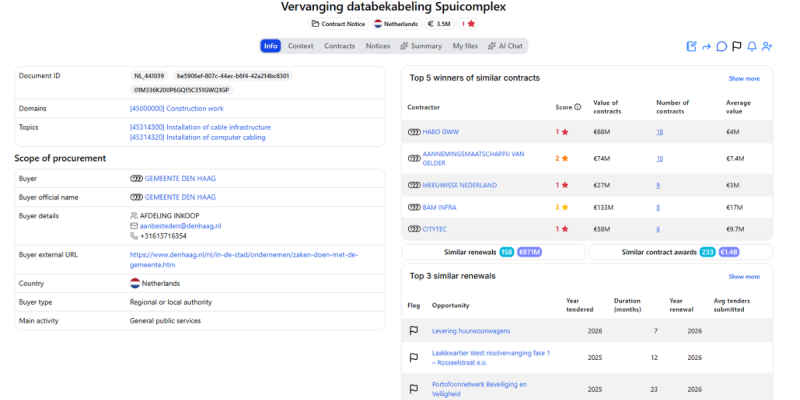
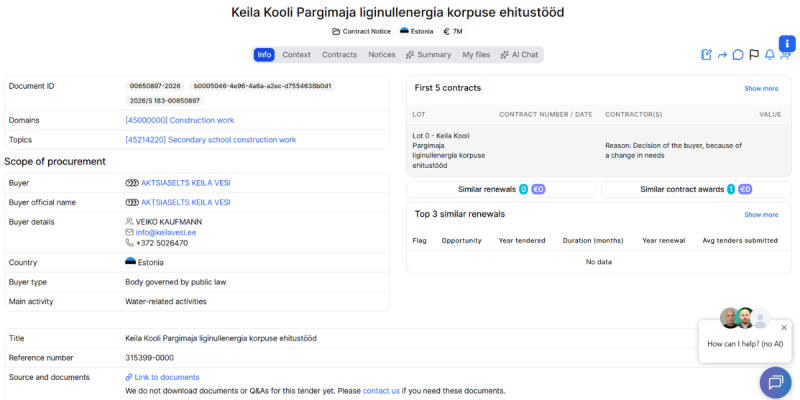
- Cómo utiliza esto Hermix: Los perfiles detallados de compradores muestran el historial de compras, los patrones de gasto, los proveedores preferidos y los ciclos de renovación de contratos
Contratista
Adjudicatario de un procedimiento de contratación (oportunidad). Proveedores de servicios, productos o obras para un comprador. A veces un contratista es tu competidor, a veces un socio potencial.
- Puede ser una ONG, una empresa privada o incluso otro comprador público que preste servicios a otros compradores
- Los contratistas privados suelen tener número de IVA, dirección registrada, número de teléfono y otros datos oficiales
- También llamado: Vendedor, proveedor (en la adjudicación de un contrato), licitador, participante (en una oportunidad), beneficiario (de una subvención)
- Cómo utiliza esto Hermix: Los perfiles de contratistas revelan el historial de adjudicaciones, los valores típicos de los contratos, el enfoque geográfico y las redes de asociaciones
Grupo de Contratistas
Un grupo de contratistas con probabilidad de actuar de manera concentrada en el mercado del sector público. Las corporaciones multinacionales son el ejemplo típico.
- El Grupo IBM consta de cientos de empresas y filiales ubicadas en 177 países
- Cada filial de IBM es una organización independiente con información específica de dirección y registro
- Todo controlado en última instancia por una única empresa matriz (International Business Machines Corporation, registrada en Nueva York)
- Los miembros del grupo normalmente no compiten entre sí debido a la política interna y a las normativas de contratación formal.
- También llamado: Marca
- Cómo utiliza Hermix esto: Los grupos se consolidan para mostrar el verdadero panorama competitivo y evitar el recuento erróneo de competidores.
Oportunidad
Una oportunidad de negocio en el sector público. Típicamente un procedimiento de contratación para la adquisición de servicios o productos específicos, pero también puede ser una convocatoria de propuestas, una convocatoria de soluciones o una subvención.
- Pueden ser licitaciones futuras, pasadas, posibles, abiertas o cerradas u otros procedimientos de contratación
- Tiene uno o varios lotes
- Puede dar lugar a que no se adjudique ningún contrato o a la adjudicación de uno o varios contratos
- También llamado: Licitación, procedimiento de contratación, procedimiento negociado, raramente contrato o proyecto
- Cómo usa Hermix esto: Las alertas de monitoreo automatizado le avisan sobre oportunidades relevantes que coinciden con sus criterios en los portales europeos
Tipos de documentos de adquisición
Aviso
Pieza individual de información oficial sobre contratación. Puede ser un anuncio de licitación, anuncio de información previa, anuncio de adjudicación, información de pago, rectificación o adenda a otro anuncio.
- También llamado: Aviso de licitación, anuncio de licitación, anuncio de contrato, aviso de adjudicación
- Cómo usa Hermix esto: Monitorea avisos en múltiples portales para ofrecer una cobertura integral de oportunidades
Anuncio de contrato
Anuncio oficial de una oportunidad de contratación que contiene los detalles completos de la licitación, los requisitos, los criterios de evaluación y los plazos de presentación.
- Publicado en los portales oficiales de contratación
- Señal de inicio del proceso de contratación competitiva
- Cómo utiliza esto Hermix: Las alertas diarias le notificarán sobre nuevos avisos de contratos que coincidan con sus filtros
Anuncio de Información Previa (AIP)
Notificación previa de la intención del comprador de lanzar una futura licitación. Proporciona visibilidad temprana de las próximas adquisiciones.
- Permite a los proveedores prepararse antes de que se publique la oportunidad formal.
- No es un compromiso vinculante de adquisición
- Cómo usa Hermix esto: Rastreado para proporcionar una advertencia temprana sobre las próximas oportunidades
Aviso de Adjudicación de Contrato
Anuncio del adjudicatario(s) del procedimiento de contratación. Muestra qué contratista ganó, el valor del contrato, la duración y los términos clave.
- Publicado tras la firma del contrato
- Proporciona inteligencia competitiva sobre los resultados del mercado
- Cómo usa esto Hermix: Los datos de adjudicación revelan el rendimiento de la competencia, los puntos de referencia de precios y las preferencias de los compradores
Fe de erratas
Rectificación o modificación oficial de un anuncio de licitación publicado. Modifica los requisitos, los plazos u otras condiciones de la licitación.
- Todos los licitadores deben ser notificados de los cambios
- Se puede ampliar el plazo de presentación si los cambios son significativos
- Garantiza que todos los proveedores tengan acceso a información correcta
Términos de la estructura de adquisiciones
Lote
Una licitación puede constar de varios lotes. Por lo general, los contratistas pueden presentar su candidatura para cada lote de forma independiente. Cada lote se adjudica a uno o varios contratistas o consorcios.
- Separe los requisitos y el presupuesto para cada lote
- Permite a los proveedores más pequeños competir por porciones de contratos más grandes
- Los compradores suelen reservar lotes específicamente para pymes
- Cómo utiliza Hermix esto: Estructura de lotes mostrada en los detalles de la oportunidad
Consorcio
Agrupación de contratistas que participan conjuntamente en una licitación para firmar de forma conjunta un único contrato con el poder adjudicador.
- Formado por varios contratistas denominados miembros del consorcio
- El primer contratista de un consorcio suele denominarse líder del consorcio
- Combina capacidades para satisfacer requisitos que ninguna empresa por sí sola satisface
- También llamado: Agrupación, asociación, colaboración
- Cómo utiliza esto Hermix: el análisis de asociaciones muestra qué empresas colaboran en consorcios
Adjudicación de contrato
El resultado de un procedimiento de contratación (oportunidad). Un contrato es adjudicado por un comprador a uno o varios contratistas o consorcios compuestos por varios contratistas.
- Especifica el valor del contrato, la duración y los términos clave
- Posibilidad de adjudicación múltiple si la licitación tenía varios lotes
- También llamado: Contrato
- Cómo usa esto Hermix: Los premios históricos proporcionan inteligencia sobre los patrones de los compradores y el rendimiento de la competencia
Contrato
El resultado de la adjudicación de un contrato. En cada lote, el orden de los contratos suele ser importante. La ejecución suele realizarse en cascada desde el primer contrato hasta el último.
- Define obligaciones, entregables, condiciones de pago y requisitos de rendimiento
- Puede ser un contrato único o parte de un acuerdo marco
- El orden importa cuando se adjudican múltiples contratos en el mismo lote
Acuerdo Marco
Un contrato que se ejecuta a través de varios pedidos individuales independientes o contratos específicos.
- Establece los términos aplicables a múltiples compras durante el periodo del contrato
- Por lo general, dura de 2 a 4 años con un valor total estimado
- Pedidos individuales denominados contratos específicos, llamadas de suministro u órdenes de compra
- También llamado: Contrato marco
- Cómo utiliza Hermix esto: Adjudicaciones de marcos de trabajo rastreadas para mostrar patrones de acceso al mercado
Orden de compra
Partes de un contrato marco. Pedidos individuales realizados bajo los términos del marco.
- También llamado: Pedido, contrato específico, solicitud específica
- Utiliza los términos establecidos en el marco de referencia
- Puede implicar una minicompetencia entre proveedores de marcos de trabajo
Tipos de procedimientos de contratación
Procedimiento abierto
Un procedimiento de contratación en el que cualquier proveedor cualificado puede presentar una oferta. No se requiere fase de precalificación.
- Tipo de contratación más transparente y competitiva
- Todos los criterios de evaluación deben publicarse por adelantado
- Común para requisitos sencillos y bien definidos.
- Adecuado para bienes y servicios sencillos.
- Cómo Hermix utiliza esto: El tipo de procedimiento que se muestra en los detalles de la oportunidad le ayudará a comprender el nivel de competencia.
Procedimiento restringido
Un proceso de adquisición en dos etapas. La primera etapa precalifica a los proveedores, la segunda etapa invita solo a los proveedores seleccionados a presentar ofertas completas.
- Etapa 1: Los proveedores presentan un cuestionario de selección que demuestra su capacidad.
- Etapa 2: Se invita a los proveedores preseleccionados (normalmente entre 3 y 5) a presentar sus ofertas.
- Se utiliza para requisitos complejos que requieren capacidad comprobada.
- Reduce la carga de evaluación para los compradores.
- Cómo lo utiliza Hermix: El uso histórico de procedimientos restringidos por parte de las autoridades indica que favorecen a los proveedores de probada trayectoria.
Diálogo competitivo
Un proceso de adquisición iterativo para requisitos complejos donde la solución no está predeterminada. El comprador dialoga con los proveedores preseleccionados para desarrollar soluciones.
- Proceso multietapa con rondas sucesivas
- Permite refinar los requisitos a través del diálogo.
- Se utiliza para infraestructuras importantes y sistemas informáticos complejos.
- Finalmente, se llega a una licitación final basada en la solución desarrollada.
- También llamado: Procedimiento competitivo con negociación
Procedimiento negociado
Un procedimiento de adquisición en el que el comprador negocia los términos con uno o más proveedores en lugar de evaluar propuestas fijas.
- Puede ser con o sin publicación previa.
- Utilizado en circunstancias específicas (urgencia extrema, exclusividad técnica, etc.)
- Menos frecuente debido a los requisitos de transparencia.
- A menudo requiere justificación para su uso.
Sistema Dinámico de Compras (DPS)
Un sistema electrónico para artículos de compra habitual que permanece abierto a nuevos proveedores durante toda su vigencia.
- Los proveedores pueden unirse en cualquier momento durante la vida útil del sistema.
- Competiciones individuales organizadas dentro del DPS
- Común para servicios informáticos, consultoría y material de oficina.
- Reduce los plazos de adquisición para compras repetidas.
- También llamado: DPS
Invitación a licitar (ITT)
Invitación formal para presentar una oferta. Término británico equivalente a solicitud de propuesta (Request for Propuesta).
- Contiene las especificaciones y requisitos completos de la licitación.
- Incluye criterios de evaluación y ponderación.
- Especifica la fecha límite de entrega y el formato.
- También llamado: ITT
- Cómo lo utiliza Hermix: Los documentos ITT del Portal de Financiación de la UE se pueden descargar como archivos ZIP.
Términos relacionados con subvenciones
Conceder
Una suma de dinero entregada por un gobierno u otra organización para un propósito específico.
- Tipo específico de oportunidad destinada a satisfacer las necesidades del contratista.
- Los contratistas suelen ser llamados beneficiarios.
- El comprador también se denomina donante.
- Los criterios de evaluación difieren de los de la contratación tradicional.
- Cómo lo utiliza Hermix: Seguimiento de oportunidades de subvención junto con la contratación tradicional.
Beneficiario
En el contexto de una subvención, el contratista recibe financiación mediante una subvención y entrega los resultados del proyecto utilizando dichos fondos.
- Sujeto a los requisitos de presentación de informes y cumplimiento.
- Puede ser una ONG, una institución de investigación o una empresa privada.
Donante
En el contexto de las subvenciones, el comprador proporciona la financiación. Establece las prioridades de la subvención y los criterios de evaluación.
- Ejemplos: programas de investigación de la Comisión Europea, agencias nacionales de innovación.
Proyecto piloto
Oportunidad de proyecto mixto que combina características de subvenciones y licitaciones. Financia a una entidad privada para satisfacer una necesidad de interés público general.
- Prueba enfoques innovadores antes de su implementación a mayor escala.
- Puede dar lugar a oportunidades de contratación más importantes en el futuro.
- A veces se les llama programas cuando son de muy gran escala.
Términos de clasificación y categorización
Industria
Nivel de clasificación más amplio para servicios y productos adquiridos en el mercado del sector público. Incluye dominios y temas. Forma parte de una estructura de clasificación jerárquica.
- Ejemplos: Construcción, Informática
- Si una oportunidad se clasifica en un tema específico, se clasifica automáticamente en un dominio principal y en una industria principal.
- También llamado: Vertical
- Cómo lo utiliza Hermix: Filtra las oportunidades por sector para encontrar licitaciones relevantes.
Dominio
Contiene una agrupación de temas (códigos CPV) según lo define el Vocabulario Común de Contratación oficial. Correspondencia directa de la división CPV en la clasificación oficial.
- Ejemplo: Para la industria de la construcción, el dominio es “Arquitectura, construcción, ingeniería”.”
- Las especificaciones oficiales completas están disponibles en la documentación oficial de CPV.
- También conocida como: división CPV
- Cómo lo utiliza Hermix: Refinar las búsquedas dentro de las industrias para enfocarlas en dominios específicos.
Tema
Clasificaciones específicas de todos los servicios o productos de contratación pública, según lo define el vocabulario común oficial de contratación pública.
- Nivel de clasificación más detallado
- Ejemplo: Para la industria de la construcción, en el dominio “Arquitectura, construcción, ingeniería”, el tema es “Arquitectura y servicios relacionados”.”
- Las especificaciones oficiales completas están disponibles en la documentación oficial de CPV.
- También llamado: código CPV
- Cómo lo utiliza Hermix: Búsqueda por tema para oportunidades dirigidas con precisión.
Términos de análisis de mercado
Fragmentación
Mide el grado de diversidad de oportunidades de proyectos en un segmento de mercado específico. Muestra la diversidad de compradores y oportunidades.
- Indica la cantidad y la variedad de oportunidades, productos, servicios y puntos de entrega en un segmento de mercado específico.
- Una alta fragmentación implica muchas oportunidades diversas.
- Una baja fragmentación implica oportunidades concentradas y similares.
- Cómo lo utiliza Hermix: Los análisis muestran la fragmentación del mercado para evaluar la diversidad de oportunidades.
Diversificación
Mide el nivel de competencia en un mercado específico. Muestra el grado de diversidad del mercado desde el punto de vista de los contratistas.
- Una baja diversificación implica pocos proveedores (menos competencia).
- Una alta diversificación implica una fuerte competencia.
- Indica cuántos proveedores están activos en un segmento de mercado específico y desde cuántas ubicaciones diferentes se entregan servicios y productos.
- Cómo lo utiliza Hermix: El análisis competitivo revela patrones de diversificación del mercado.
Renovaciones
Oportunidades para contratos con una duración específica que probablemente se prorroguen mediante otra oportunidad de contratación muy similar a la inicial.
- Ocurre cuando expiran los contratos existentes.
- Por lo general, los requisitos son similares a los de la contratación original.
- Predecible en función de la duración del contrato.
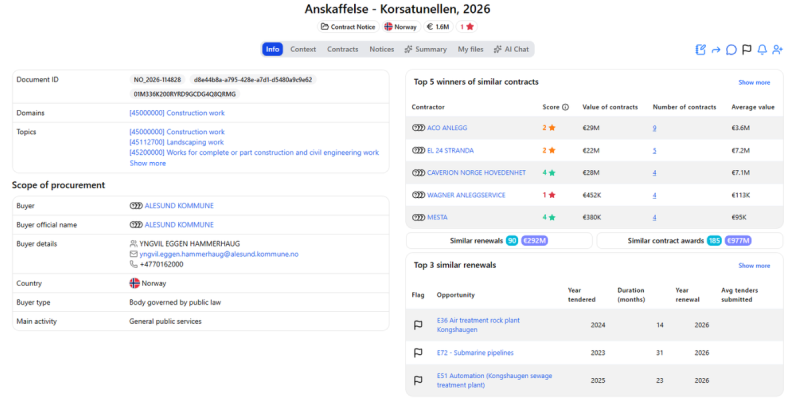
- Cómo lo utiliza Hermix: La previsión de renovaciones muestra cuándo expiran los contratos y cuándo es probable que se produzca una nueva licitación.
Términos organizativos
Autoridad Contratante
Un organismo público con autoridad legal para realizar contrataciones públicas. Debe cumplir con las normas de contratación pública al gastar fondos públicos.
- También llamado: Comprador, autoridad, organismo público
- Ejemplos: Departamentos gubernamentales, ayuntamientos, fideicomisos del NHS, universidades
- Cómo lo utiliza Hermix: Los perfiles de autoridad muestran el historial y los patrones completos de adquisiciones.
Organismos públicos
Organizaciones del sector público que pueden realizar contrataciones. Incluye al gobierno central, las autoridades locales, las administraciones descentralizadas y otras organizaciones del sector público.
- Con sujeción a la normativa de contratación pública
- Hay que garantizar la transparencia y la competencia.
- Cómo lo utiliza Hermix: Cobertura en todo tipo de organismos públicos.
PYME (Pequeña y Mediana Empresa)
Empresas con menos de 250 empleados y una facturación inferior a 50 millones de euros.
- El sector público se centra cada vez más en la participación de las PYME.
- Pueden enfrentarse a obstáculos relacionados con los requisitos de cualificación.
- A menudo se accede a oportunidades a través de lotes o membresía en consorcios.
- También llamadas: Pequeñas y medianas empresas
- Cómo lo utiliza Hermix: Los datos ayudan a las pymes a identificar compradores que se ajusten a sus necesidades y oportunidades del tamaño adecuado.
Términos de evaluación y adjudicación
CARNE (Tierno más ventajoso económicamente)
Enfoque de evaluación que equilibra calidad y precio, en lugar de simplemente seleccionar el más económico. Considera el valor y los beneficios a lo largo de todo el ciclo de vida del producto.
- Sustituido por “licitación más ventajosa” en la Ley de Contratación Pública de 2023.
- Pesos típicos: 60-70% calidad, 30-40% precio
- Refleja una buena relación calidad-precio, en lugar de simplemente el precio más bajo.
- Enfoque estándar para servicios y bienes complejos.
- También llamado: Oferta más ventajosa, evaluación de calidad-precio
Criterios de adjudicación
Factores publicados utilizados para evaluar y puntuar las propuestas. Deben constar en los documentos de licitación.
- Ejemplos: Enfoque técnico, experiencia relevante, cualificaciones del equipo, precios
- Cada criterio tiene una ponderación definida.
- Debe ser objetivo y estar relacionado con el objeto del contrato.
- No se puede discriminar a ningún tipo de proveedor.
- Cómo lo utiliza Hermix: El análisis histórico revela qué criterios específicos son los que más valoran los compradores.
Ponderación
Puntos o porcentaje asignados a cada criterio de evaluación, que muestran su importancia relativa.
- Ejemplo: Técnico 40%, Experiencia 20%, Equipo 15%, Precio 25%
- Debe publicarse con antelación
- Orienta a los licitadores sobre dónde centrar sus esfuerzos en la propuesta.
- Cómo lo utiliza Hermix: El análisis de licitaciones anteriores muestra patrones de ponderación típicos por autoridad y tipo de contrato.
BAFO (Mejor y última oferta)
Ronda final en la que se invita a los licitadores preseleccionados a mejorar sus ofertas tras la evaluación inicial.
- Normalmente se solicita a los 2 o 3 postores mejor clasificados.
- Puede requerir reuniones de aclaración antes de la presentación de BAFO.
- No se pueden introducir nuevos requisitos en esta etapa.
- Los resultados finales determinan al ganador.
- También llamado: Mejor y última oferta, licitación final
Criterios de aprobación/reprobación
Requisitos obligatorios que descalifican automáticamente las ofertas que no cumplen con los requisitos, independientemente de sus otras fortalezas.
- Ejemplos: Certificaciones requeridas, mínimos de seguro, autorizaciones de seguridad
- No hay discreción en la aplicación.
- Debe estar claramente identificado como obligatorio en la licitación.
- También llamados: Requisitos obligatorios, criterios esenciales, estándares mínimos
Capacidad técnica
Capacidad para ofrecer la solución técnica requerida en función de las cualificaciones, la experiencia y los recursos.
- Demostrado a través de estudios de caso, certificaciones e instalaciones.
- Puede requerir acreditaciones técnicas específicas.
- A menudo incluye los currículos del personal clave.
- Parte de la evaluación de calificación de proveedores
Situación económica y financiera
Requisitos de estabilidad financiera que garanticen que el contratista pueda cumplir con sus obligaciones sin riesgo de quiebra financiera.
- Requisitos típicos: Volumen de negocios mínimo (a menudo 2 veces el valor del contrato), niveles de seguro específicos, calificaciones crediticias.
- Puede requerir estados financieros auditados y referencias bancarias.
- Las garantías de la empresa matriz pueden satisfacer los requisitos
- Protege al comprador de la insolvencia del contratista durante la entrega.
Términos de calificación y selección
PQQ (Cuestionario de Precalificación)
Documento de primera fase que evalúa la capacidad del proveedor antes de la invitación a licitar. Se utiliza en procedimientos restringidos.
- Evalúa la capacidad técnica, la situación financiera y la experiencia relevante.
- Determina quién avanza a la etapa ITT
- Normalmente, esto da como resultado una preselección de entre 3 y 5 proveedores.
- También conocido como: Cuestionario de precalificación, etapa de expresión de interés
- Cómo lo utiliza Hermix: El uso de PQQ por parte de la autoridad indica preferencia por proveedores de probada trayectoria.
Cuestionario de Selección (CS)
El formulario estándar del Reino Unido para la cualificación de proveedores sustituyó a los formatos PQQ anteriores para lograr uniformidad.
- Parte de la estandarización de la Ley de Contratación Pública de 2023
- Cubre los motivos de exclusión, los criterios de selección, el seguro y la situación financiera.
- Diseñado para reducir la carga sobre los proveedores.
- También llamado: Cuestionario de selección, cuestionario de selección estándar
Motivos de exclusión
Razones por las que un proveedor puede ser rechazado en un proceso de contratación, independientemente de la calidad de su propuesta.
- Causales obligatorias: Condenas penales, incumplimiento tributario, insolvencia.
- Motivos discrecionales: Mal desempeño anterior, tergiversación grave, conflictos de intereses
- Debe ser declarado por los proveedores en SQ
- Puede conllevar la exclusión automática de la competición.
Requisitos de rotación
Los contratistas deben demostrar un nivel mínimo de ingresos para poder optar a una licitación.
- Generalmente 2 veces el valor anual del contrato, a veces 3 veces.
- Evaluado durante un período de 2 a 3 años
- Se puede agregar a través de los miembros del consorcio
- Puede ser cuestionado como una barrera desproporcionada para las PYME.
- Cómo lo utiliza Hermix: Los requisitos históricos de facturación ayudan a las pymes a identificar oportunidades accesibles.
Términos financieros y comerciales
Fianza de cumplimiento
Garantía financiera (normalmente entre el 5% y el 10% del valor del contrato) de que el contratista cumplirá con los términos acordados.
- El banco o la compañía de seguros emite el bono.
- El comprador puede reclamar contra la fianza por incumplimiento.
- Regresó tras la finalización exitosa del contrato.
- Común en la construcción y en contratos de alto valor.
- También llamado: fianza contractual, fianza de licitación
Garantía de la empresa matriz
Compromiso legal de la empresa matriz para respaldar las obligaciones contractuales de la filial.
- Permite a la filial cumplir con los requisitos de solvencia financiera.
- La empresa matriz garantiza el pago en caso de impago por parte de la filial.
- Es común cuando la facturación de la filial no cumple con los requisitos.
- Debe ser un documento legal debidamente ejecutado.
- También conocida como: PCG, garantía corporativa
Requisitos de seguro
Niveles de cobertura obligatorios que los contratistas deben mantener durante la ejecución del contrato.
- Responsabilidad profesional: Normalmente entre 1 y 10 millones de libras esterlinas, dependiendo del contrato.
- Responsabilidad civil: Normalmente entre 5 y 10 millones de libras esterlinas.
- Responsabilidad del empleador: Mínimo 5 millones de libras esterlinas (requisito legal en el Reino Unido).
- Debe estar en vigor antes del inicio del contrato.
- Cómo lo utiliza Hermix: El análisis histórico muestra los requisitos típicos de seguro según la autoridad y el tipo de contrato.
Retención
Porcentaje del pago (normalmente 5-10%) retenido hasta la finalización satisfactoria del contrato o el período de defectos.
- Liberado tras entrega y aceptación satisfactorias.
- Protege al comprador contra defectos o entrega incompleta.
- Común en la construcción, menos común en los servicios.
- También llamado: Dinero de retención, retención
Condiciones de pago
Términos contractuales que definen cuándo y cómo el contratista recibe el pago.
- El sector público suele tardar 30 días desde la fecha de la factura.
- Puede basarse en hitos o en el tiempo.
- Algunas autoridades se comprometen a realizar pagos más rápidos (10-14 días).
- Según la legislación británica, se aplican intereses por demora en el pago.
- Cómo lo utiliza Hermix: Las cláusulas contractuales son visibles en los contratos adjudicados.
Cronograma y términos del proceso
Período de inactividad
Se establece un periodo de espera obligatorio de 10 días entre la notificación de la decisión de adjudicación y la firma del contrato, lo que permite a los licitadores no seleccionados presentar una reclamación.
- Requerido para contratos que superen el umbral
- Comienza cuando todos los postores son notificados de la decisión.
- El contrato no se puede firmar durante el período de suspensión de actividades.
- Permite tiempo para el desafío de la adquisición
- También llamado: período Alcatel, período de reflexión, suspensión voluntaria (por debajo del umbral)
Fecha de inicio del contrato
Cuándo debe comenzar la entrega y cuándo empiezan las obligaciones del contratista.
- Especificado en el contrato o determinado después de la firma.
- Puede tardar varias semanas después de la firma (período de movilización).
- Importante para la planificación de recursos.
- Cómo lo utiliza Hermix: Las fechas de los contratos que aparecen en los contratos adjudicados ayudan a predecir cuándo es probable que se vuelva a licitar.
Período del contrato
Duración desde la fecha de inicio hasta la fecha de finalización, excluyendo cualquier opción de prórroga.
- Duración típica: de 1 a 5 años, según el tipo de contrato.
- Debe indicarse en los documentos de licitación.
- Aparte de las opciones de extensión que pueden añadir 1-2 años
- Cómo lo utiliza Hermix: Los datos de duración de los contratos impulsan el calendario de previsión de renovaciones.
Opción de extensión
Posibilidad preestablecida en el contrato original de extender la duración sin necesidad de una nueva licitación.
- Debe especificarse en la licitación original (no se puede añadir posteriormente).
- Normalmente, una duración adicional de 1 a 2 años.
- Por lo general, queda a discreción del comprador, no es automático.
- Contabiliza el valor total del contrato para el cálculo del umbral.
- Cómo lo utiliza Hermix: Se realiza un seguimiento de las opciones de extensión para pronosticar las fechas de finalización reales de los contratos.
Condiciones de gestión posterior a la adjudicación
Indicadores clave de rendimiento (KPI)
Métricas que miden el desempeño del contratista en comparación con los estándares definidos durante la ejecución del contrato.
- Ejemplos: Tiempos de respuesta, porcentajes de tiempo de actividad, puntuaciones de satisfacción del cliente
- Especificado en el contrato con niveles objetivo
- Puede estar vinculado al pago (deducciones por desempeño).
- Informes periódicos (mensuales/trimestrales)
- También llamados: Indicadores clave de rendimiento, métricas de rendimiento
Niveles de servicio
Estándares de rendimiento requeridos que definen la calidad de entrega aceptable.
- Ejemplo: Disponibilidad del sistema 99.5%, tiempo de respuesta de 4 horas.
- El incumplimiento puede dar lugar a créditos de servicio o soluciones.
- Más específicos que los KPI generales.
- Formar parte del seguimiento del contrato
- También llamados: Acuerdos de nivel de servicio, SLA
Gestión de contratos
Supervisión continua de la ejecución del contrato para garantizar que el contratista cumpla con sus obligaciones y que el comprador obtenga el valor esperado.
- Incluye supervisión del rendimiento, resolución de problemas y gestión del cambio.
- Generalmente se asigna un gerente de contrato al lado del comprador.
- reuniones de revisión periódicas entre las partes
- Fundamental para una entrega exitosa
Variación
Modificación formal del alcance, precio o condiciones del contrato después de la firma.
- Requiere acuerdo por escrito de ambas partes.
- Las variaciones significativas pueden requerir una nueva adquisición (evite eludir las normas).
- Debe estar justificado y documentado.
- Puede extender el valor o la duración del contrato.
- También llamado: Variación de contrato, orden de cambio, enmienda
Movilización de contratos
Periodo entre la firma del contrato y el inicio del servicio durante el cual el contratista establece la capacidad de entrega.
- Duración típica: de 4 a 12 semanas, dependiendo de la complejidad.
- Actividades: Reclutamiento de personal, configuración del sistema, capacitación, transición del titular.
- Puede tener resultados de movilización específicos.
- Fundamental para un inicio de contrato sin problemas.
- También llamado: período de movilización, período de transición
Términos de subcontratación y cadena de suministro
Contratista principal
El contratista principal tiene el contrato directamente con el comprador y es responsable de la entrega general.
- Relación jurídica con el comprador
- Gestiona subcontratistas
- Conlleva riesgo de entrega
- También llamado: Contratista principal, contratista jefe
Subcontratista
La empresa presta parte del servicio contratado bajo la supervisión del contratista principal, sin tener un contrato directo con el comprador.
- Relación contractual con el contratista principal, no con el comprador.
- Puede haber especialistas para elementos de trabajo específicos.
- A menudo debe declararse en la oferta
- El comprador puede tener derecho a aprobación.
- También llamado: Subcontratista, socio de la cadena de suministro
Proveedor de nivel 1
Contratista principal con contrato directo con el comprador.
- Primer nivel en la cadena de suministro
- Tiene la responsabilidad general de la entrega.
- También llamado: Nivel 1, primer nivel
Proveedores de nivel 2/3
Subcontratistas (Nivel 2) y sub-subcontratistas (Nivel 3) en la cadena de suministro de entrega.
- Nivel 2: Subcontratistas al contratista principal
- Nivel 3: Sub-subcontratistas del Nivel 2
- Más alejado de la relación con el comprador
- Cómo lo utiliza Hermix: El análisis del consorcio revela las relaciones entre contratistas principales y subcontratistas, así como las estructuras típicas de la cadena de suministro.
Cadena de suministro
Red de empresas involucradas en la ejecución del contrato, desde el contratista principal hasta todos los niveles de subcontratistas.
- Incluye a todos los proveedores de nivel 1, 2, 3+.
- Los compradores exigen cada vez más transparencia en la cadena de suministro.
- Puede tener requisitos específicos para pymes o proveedores locales.
- También llamada: Cadena de valor, cadena de suministro
- Cómo lo utiliza Hermix: Los gráficos de asociación visualizan las relaciones de la cadena de suministro a través de múltiples contratos.
Términos adicionales
Alias
Un nombre diferente para la misma organización. Tanto los contratistas como los compradores tienen alias.
- Ejemplos: Abreviaturas, nombres comerciales, nombres anteriores, variaciones de nombres legales
- Cómo lo utiliza Hermix: Los alias se consolidan para mostrar el historial completo de la organización bajo un perfil unificado.
CE (Comisión Europea)
El poder ejecutivo de la Unión Europea. Principal comprador de bienes y servicios en todos los Estados miembros.
- Publica miles de licitaciones anualmente.
- Utiliza portales de contratación específicos como eTendering y el Portal de Financiación de la UE.
FTS (Sistema de Transparencia Financiera)
Sistema de Transparencia Financiera de la Comisión Europea. Base de datos que muestra los pagos y contratos de la CE.
- Cubre subvenciones, contratos y otros compromisos financieros.
- Proporciona datos históricos sobre los patrones de gasto de la CE que se remontan a 19 años atrás.
- Cómo lo utiliza Hermix: Integración de datos FTS para proporcionar una visión completa de las compras de la CE y analizar las asociaciones.
Proyecto
Un proyecto empresarial implementado a través de varios contratos, algunos en paralelo, otros posteriores. Los proyectos de gran envergadura a veces se denominan programas.
- Múltiples contratos relacionados que cumplen un único objetivo.
- Puede abarcar varios años e involucrar a múltiples contratistas.
- También llamado: Programa (para proyectos muy grandes)
Programa
Proyecto empresarial de gran envergadura implementado mediante varios contratos. Similar al proyecto anterior, pero de mayor escala.
Términos legales y de cumplimiento
Desafío de adquisiciones
Recurso legal contra la decisión de contratación pública, alegando que el proceso fue defectuoso o ilegal.
- Debe levantarse durante el período de inactividad o dentro de los 30 días.
- Motivos: Incumplimiento de la normativa de contratación pública, evaluación injusta, razones insuficientes.
- Puede resultar en la anulación del contrato o en una indemnización por daños y perjuicios.
- Riesgo relativamente raro pero significativo para las autoridades.
- También conocido como: Impugnación legal, disputa de contratación pública
Directiva sobre medidas correctivas
La legislación de la UE (que se mantiene vigente en el Reino Unido) permite impugnar los procedimientos de contratación pública y ofrece soluciones para los incumplimientos.
- Otorga a los proveedores el derecho a impugnar el contrato antes y después de su adjudicación.
- Establece límites de tiempo para los desafíos.
- Define los recursos legales disponibles (rescisión de contrato, indemnización por daños y perjuicios).
- Aplicado a través del Tribunal Superior
Transparencia
Obligación de publicar públicamente la información sobre adquisiciones, garantizando la transparencia y la rendición de cuentas.
- Incluye avisos de licitación, avisos de adjudicación, detalles del contrato
- Publicado en Contracts Finder, Find a Tender y sitios web de autoridades.
- Los valores de los contratos, los ganadores y los términos clave deben ser públicos.
- Principio fundamental de la contratación pública
- Cómo lo utiliza Hermix: Los requisitos de transparencia permiten una inteligencia de mercado integral al hacer que los datos sean accesibles al público.
No discriminación
Principio según el cual todos los proveedores deben recibir un trato igualitario, independientemente de su nacionalidad, tamaño u otras características.
- No se puede favorecer a los proveedores locales/nacionales en la evaluación.
- No se pueden establecer barreras innecesarias que favorezcan a proveedores específicos.
- Los criterios de evaluación deben ser objetivos y justificables.
- Principio fundamental de la competencia leal
Reglamento de Contratos Públicos de 2015
Legislación británica que rige la contratación pública desde 2015 hasta la entrada en vigor de la Ley de Contratación Pública de 2023.
- Directivas de contratación pública de la UE transpuestas a la legislación británica.
- Procedimientos definidos, umbrales, soluciones
- Sustituida en gran medida por la Ley de Contratación Pública de 2023 (a partir de finales de 2024).
- Todavía rige los contratos adjudicados antes de la implementación de la nueva ley.
- También conocido como: PCR 2015, Reglamento de 2015
Términos de valor e impacto social
Valor social
Beneficios que van más allá de la prestación de servicios básicos, como la creación de empleo, programas de aprendizaje, inversión en la comunidad o impacto económico local.
- Criterio ponderado en muchas evaluaciones (normalmente 10-20%)
- Consideración obligatoria en virtud de la Ley de Servicios Públicos (Valor Social) de 2012.
- Ejemplos: Creación de programas de aprendizaje, apoyo a las pymes locales, reducción de emisiones de carbono
- Adquiriendo mayor relevancia en la Ley de Contratación Pública de 2023.
- También llamado: Valor añadido, beneficios para la comunidad, beneficios más amplios
Criterios de sostenibilidad
Requisitos ambientales y factores de evaluación que abordan el impacto climático y ecológico.
- Puede incluir objetivos de reducción de carbono, economía circular y biodiversidad.
- Cada vez tiene mayor peso en las evaluaciones.
- Puede ser un requisito de aprobado/suspenso o un criterio de puntuación.
- Los compromisos de cero emisiones netas impulsan requisitos de sostenibilidad más estrictos.
- También llamados: criterios ambientales, criterios ecológicos
Proveedores locales
Las empresas con sede en la zona de la autoridad contratante o en sus proximidades suelen recibir preferencia en la evaluación.
- Puede ser un criterio de evaluación (especialmente para las autoridades locales).
- Definido por límites geográficos (por ejemplo, dentro de una región/condado).
- No debe discriminar a otros proveedores del Reino Unido o de la UE.
- A menudo vinculado a objetivos de valor social
Amigable con las PYMES
Proceso de contratación estructurado para facilitar la participación de pequeñas y medianas empresas.
- Características: Tamaños de lote adecuados, criterios de calificación proporcionales, procesos simplificados.
- Puede incluir lotes reservados para PYMES.
- Evita una rotación de personal o requisitos de experiencia innecesariamente altos.
- Objetivo del gobierno: 331 TP3T de gasto con PYMES
- Cómo lo utiliza Hermix: Los perfiles de autoridad muestran patrones de premios para pymes, lo que ayuda a los pequeños proveedores a dirigirse a compradores que favorecen a las pymes.
Características de la plataforma específicas de Hermix
Resumen de licitaciones de IA
Hermix incluye una función que extrae información clave de documentos de licitación extensos en cuestión de minutos.
- Analiza automáticamente documentos de entre 100 y 300 páginas.
- Extractos: Requisitos, presupuesto, criterios de evaluación, plazos, requisitos obligatorios
- Reduce el tiempo de análisis de documentos de 2-4 horas a 5 minutos.
- Permite una calificación de oportunidad más rápida
- También conocido como: Resumen de licitaciones, resumen mediante IA
Chat de IA
Función interactiva que le permite formular preguntas específicas sobre los requisitos de la licitación y obtener respuestas instantáneas.
- Haga preguntas como "¿Qué certificaciones son obligatorias?" o "¿Cuántos estudios de caso se requieren?".“
- Extrae automáticamente las respuestas de los documentos de licitación.
- Ahorra tiempo buscando entre cientos de páginas.
- Disponible para licitaciones a través de múltiples portales de contratación pública.
- También llamado: asistente de IA, chat de licitación
Banderas de oportunidad
Etiquetas y categorías que puedes asignar a las oportunidades para el seguimiento del equipo y la gestión del flujo de trabajo.
- Nombres de banderas personalizadas (por ejemplo, "Alta prioridad", "Calificado", "Oferta", "Ganado", "Perdido")
- Compartido entre los miembros del equipo de su organización.
- Permite el seguimiento sistemático de oportunidades
- Se integra con el tablero Kanban para una gestión visual.
- También llamado: Etiquetas, rótulos
Tablero Kanban
Panel de flujo visual para gestionar las oportunidades señaladas a lo largo de las etapas del proceso de licitación.
- Arrastra las oportunidades entre columnas (por ejemplo, “Para calificar” → “Calificado” → “Oferta” → “Enviado”)
- Filtrar por miembro del equipo, bandera o fecha límite
- Proporciona una visión general de todo el proceso.
- Columnas y banderas personalizables
- También llamado: Tablero de banderas, tablero de oportunidades
Informes guardados
Búsquedas y filtros preconfigurados que puedes guardar y reutilizar para acceder rápidamente a la información relevante.
- Guarda combinaciones de filtros complejas (geografía, sector, tipo de autoridad, valor del contrato).
- Acceso con un solo clic a sus informes más importantes.
- Se puede compartir con los compañeros de equipo.
- Biblioteca de plantillas estándar disponibles
- Ahorra tiempo en comparación con reconstruir las búsquedas repetidamente.
- También llamado: Marcadores, búsquedas guardadas
Alertas diarias
Recibirás notificaciones por correo electrónico cada mañana sobre nuevas oportunidades que coincidan con tus criterios.
- Configurar filtros: Palabras clave, sectores, países, tipos de autoridad, códigos CPV
- Reciba varias alertas al día si es necesario (por la mañana y por la tarde).
- Garantiza que nunca te pierdas oportunidades relevantes.
- Las alertas se envían a las pocas horas de su publicación en los portales de origen.
- También llamadas: alertas por correo electrónico, alertas de oportunidades, notificaciones
Perfil de autoridad
Historial y análisis completos de adquisiciones para una organización compradora específica.
- Muestra: Todas las licitaciones y contratos anteriores, patrones de gasto, proveedores preferidos, valores contractuales típicos.
- Incluye cobertura geográfica, frecuencia de adquisición y enfoque del dominio.
- Ayuda a evaluar la idoneidad del comprador antes de realizar una oferta.
- Revela las preferencias y patrones de los compradores.
- También llamado: Perfil del comprador, perfil del cliente
Perfil del contratista
Historial de éxitos y análisis de mercado para una organización proveedora específica.
- Muestra: Todos los contratos adjudicados, los compradores con los que trabajan, los valores típicos y el enfoque geográfico.
- Incluye tasas de éxito, patrones de asociación y especialización de dominio.
- Permite obtener información competitiva sobre los rivales.
- Identifica socios potenciales
- También conocido como: Perfil del proveedor, perfil de la competencia
Análisis de la asociación
Característica que muestra qué contratistas forman consorcios y sus patrones de colaboración.
- Visualiza asociaciones frecuentes
- Muestra patrones de liderazgo del consorcio
- Identifica socios potenciales para sus ofertas.
- Revela las amenazas competitivas derivadas de las alianzas ya establecidas.
- Basado en datos históricos de adjudicación de contratos.
- También llamado: análisis de consorcio, análisis de colaboración
Gráfico de competencia
Visualización de las relaciones y patrones del mercado entre compradores, contratistas y oportunidades.
- Gráfico de red que muestra las conexiones
- El tamaño de los nodos indica los niveles de actividad.
- Revela la estructura del mercado y los principales actores.
- Profundidad y alcance personalizables
- También llamado: Red de mercado, gráfico de relaciones
Calendario de renovación
Cronograma visual de las fechas de vencimiento de los contratos con pronósticos de posibles oportunidades de nueva licitación.
- Muestra cuándo expiran los contratos existentes.
- Predice la necesidad de volver a licitar en función de la duración del contrato.
- Da aviso con meses de antelación antes de que se publique la licitación.
- Permite la preparación estratégica para las reevaluaciones.
- Ordenado por fecha o valor del contrato.
- También conocido como: Previsión de renovación de contratos, calendario de vencimientos
Análisis de mercado
Análisis de los patrones de gasto, las tendencias y la distribución de oportunidades en el sector público.
- Muestra: Gasto por dominio/industria/geografía, crecimiento/declive del mercado, niveles de actividad de las autoridades
- Identifica las mayores oportunidades y a los compradores más activos.
- Revela las tendencias del mercado a lo largo del tiempo.
- Informa el desarrollo de negocios dirigido a
- También llamado: Inteligencia de mercado, análisis de gastos
Tasa de victorias
Porcentaje de ofertas ganadas frente a las presentadas, indicador clave de rendimiento para el éxito de las ofertas.
- Realiza un seguimiento de tu rendimiento a lo largo del tiempo.
- Comparar entre tipos de oportunidades, compradores y tamaños de contrato.
- Promedio de la industria: 15-20% sin inteligencia, 40-60% con inteligencia
- Identifica dónde eres más competitivo
- También llamado: Tasa de éxito, tasa de conversión
Tubería
Conjunto de oportunidades que estás siguiendo, evaluando o persiguiendo activamente.
- Organizar las oportunidades por etapa: Observando, Calificado, Licitando, Enviado
- Valor potencial de previsión del contrato
- Gestionar la carga de trabajo y la capacidad del equipo.
- Se integra con banderas y tablero Kanban.
- También llamado: Embudo de oportunidades, embudo de ventas
Calificación de oportunidad
Proceso sistemático para evaluar si conviene presentarse a una licitación antes de invertir recursos significativos.
- Evaluar: Adecuación al comprador, competencia, probabilidad de éxito, requisitos de recursos
- Utilice datos históricos: ganadores anteriores, precios típicos, preferencias de los compradores.
- Tomar decisiones de proceder o no proceder basándose en la inteligencia.
- Mejora las tasas de éxito al centrarse en oportunidades de alta probabilidad.
- También conocido como: Calificación de ofertas, evaluación de viabilidad.
Cómo Hermix conecta estos conceptos
Hermix conecta a compradores, contratistas y oportunidades para formar un gráfico complejo. La plataforma calcula parámetros y características avanzadas, mapeando y analizando el mercado en detalle, incluyendo sus diversas relaciones, patrones, grupos y afinidades.
El modelo de conexión:
- Un comprador crea oportunidades
- Una oportunidad se forma a partir de varios lotes.
- Para cada lote, se adjudican contratos a un contratista o a un consorcio.
- Hermix representa sistemáticamente todas estas relaciones.
Lo que esto significa en la práctica:
- Cuando visualiza el perfil de un comprador, verá todas sus oportunidades y a qué contratistas se las adjudica.
- Cuando ves el perfil de un contratista, puedes ver todos sus logros y con qué compradores trabaja.
- Cuando analizas una oportunidad, ves el historial del comprador y los posibles competidores en función de los premios otorgados anteriormente.
- El análisis de las asociaciones muestra qué contratistas forman consorcios juntos.
- Los gráficos de competencia visualizan las relaciones y patrones del mercado.
- Los análisis de mercado revelan fragmentación, diversificación y tendencias en todos los segmentos.
Este enfoque interconectado transforma los datos individuales en información útil que le ayuda a calificar oportunidades, comprender a la competencia, fijar precios adecuados y dirigir el desarrollo comercial de manera efectiva.
Conclusiones clave: Terminología esencial B2G
- Tres conceptos fundamentales forman la base. de contratación pública: compradores que gastan dinero, contratistas que reciben dinero y oportunidades que los conectan
- Los compradores crean oportunidades que pueden tener varios lotes, cada uno de los cuales da lugar a la adjudicación de contratos a contratistas o consorcios.
- Los grupos de contratistas consolidan múltiples filiales. bajo marcas individuales para mostrar el verdadero panorama competitivo en lugar de fragmentar una empresa en cientos de entidades legales.
- Los diferentes tipos de avisos cumplen propósitos específicos. desde avisos de información previa que señalan oportunidades futuras hasta avisos de adjudicación de contratos que revelan resultados de competencia
- Los lotes permiten a los compradores dividir grandes contratos. en porciones más pequeñas accesibles a las PYME y a los proveedores especializados que no pueden entregar el alcance completo por sí solos.
- Los consorcios permiten a los contratistas combinar capacidades. y buscar conjuntamente oportunidades que requieran habilidades o capacidades que ninguna empresa por sí sola posea.
- Los acuerdos marco establecen las condiciones para compras múltiples. durante el período del contrato, con pedidos individuales denominados contratos específicos u órdenes de compra
- Asuntos relacionados con la orden de ejecución del contrato con contratos en cascada desde el primero hasta el último cuando se otorgan múltiples premios en el mismo lote
- Las subvenciones difieren de los métodos de contratación tradicionales. donde los beneficiarios reciben financiación de donantes en lugar de que los contratistas presten servicios a los compradores.
- La clasificación CPV proporciona una jerarquía estandarizada. de industrias, ámbitos y temas que permiten una categorización coherente en toda la contratación pública europea
- La fragmentación mide la diversidad de oportunidades Mientras que la diversificación mide los niveles de competencia, ambos informan la evaluación del atractivo del mercado.
- Hermix conecta estos conceptos de forma sistemática. Proporcionar información de mercado, revelando relaciones, patrones y perspectivas invisibles al analizar los datos de forma aislada.
- Comprender la terminología mejora la eficiencia. para encontrar oportunidades relevantes, calificarlas eficazmente y posicionar propuestas competitivas basadas en los patrones de compra y la inteligencia de la competencia.