Public procurement can offer long-term revenue, credible references and access to some of Europe’s largest buyers. It can also consume weeks of work when a company pursues the wrong opportunity, overlooks one mandatory document or begins writing without understanding how the tender will be scored.
These EU procurement bid tips focus on more than proposal writing. They cover the complete commercial decision: where to compete, which opportunities to qualify, how to understand the buyer, how to structure the response and how to use AI without surrendering human judgment.
Successful EU tendering is a repeatable process of selecting the right market, qualifying each opportunity, satisfying every mandatory condition, writing directly against the award criteria, supporting claims with evidence and submitting a fully checked response before the deadline.
1.Research the market and qualify before you bid
Tip 1: Target buyers instead of only keywords
A tender alert containing your preferred keyword is not automatically a suitable opportunity.
Start by identifying the countries, public organisations and contract types that match your delivery capacity. A Belgian municipality, a Luxembourg-based EU institution and a Romanian ministry may purchase similar services, but their language, portal, contract structure, qualification requirements and competitive environment can differ substantially.
Research:
- What the organisation previously purchased
- Typical contract values and durations
- Existing suppliers and incumbents
- Whether it uses frameworks or individual contracts
- How frequently similar requirements return
- Which countries previous winners came from
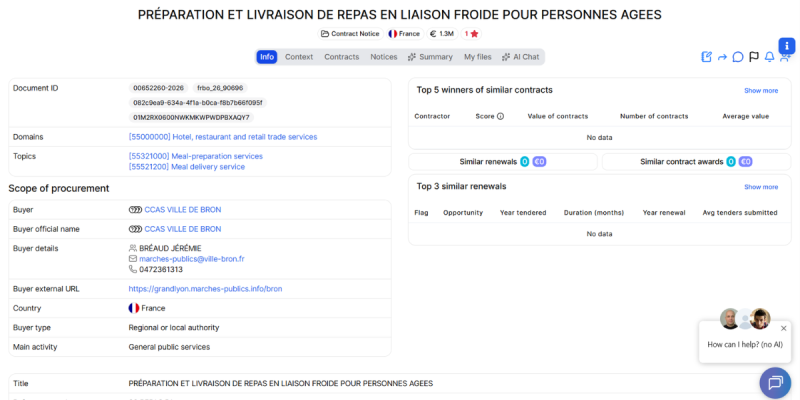
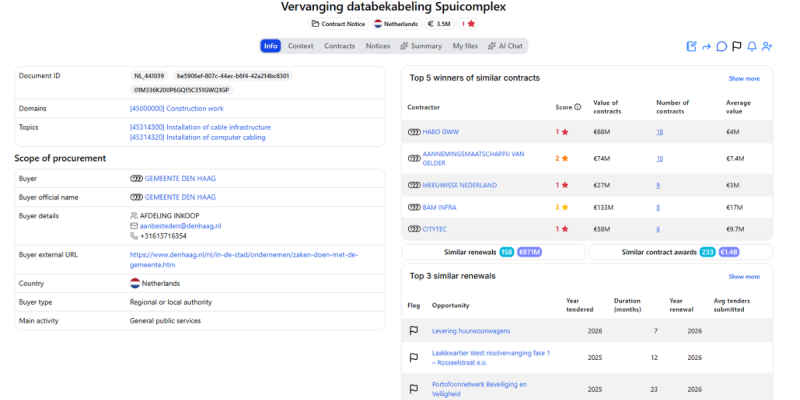
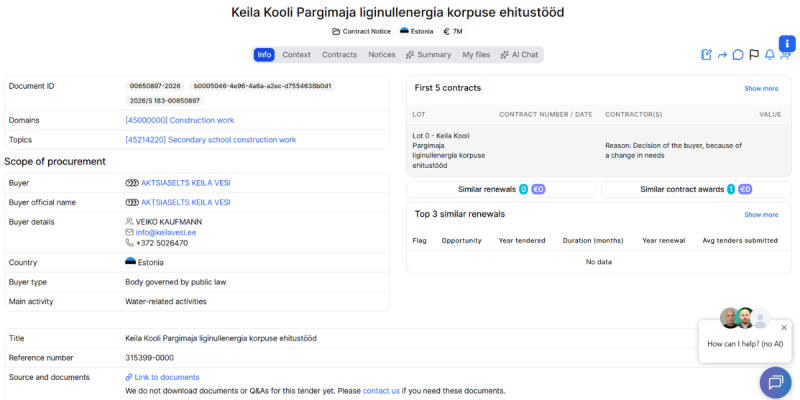
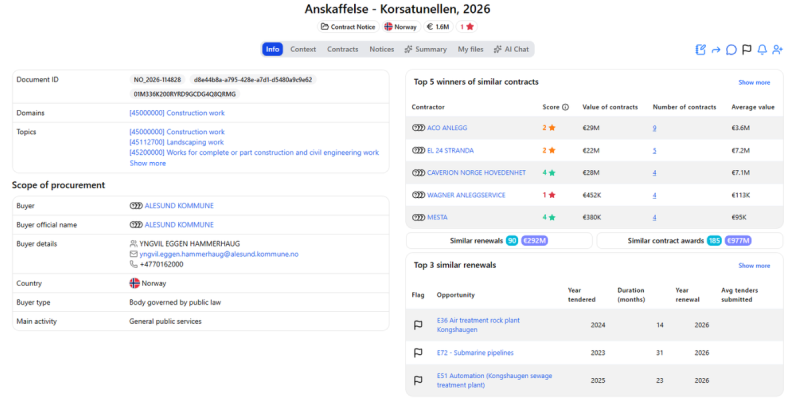
Hermix supports this approach through buyer and contractor profiles, public-spending analytics, contract awards, renewals and market segmentation. Its company-reported July 2026 dataset includes 16 million contracts worth €20 trillion, four million indexed tender specifications, approximately 3,000 new daily tenders, 260,000 buyer profiles and 1.24 million contractor profiles.
Tip 2: Apply a formal bid/no-bid decision
Do not ask only, “Can we submit?” Ask, “Can we win and deliver profitably?”
Score each opportunity against five factors:
- Mandatory eligibility
- Service and reference fit
- Buyer and competitor position
- Delivery and partner capacity
- Commercial and strategic value
Reject an opportunity when a critical requirement cannot be demonstrated. A large contract value does not compensate for an unavailable certification, insufficient turnover, an unrealistic timetable or an incumbent advantage you cannot overcome.
A 2026 Hermix webinar featuring Shipley business-winning specialists made the same strategic point: SME success depends more on visibility, qualification and well-structured bids than company size alone.
2.Understand the rules and reverse-engineer the score
Tip 3: Confirm the procedure, threshold and publication route
EU procurement is implemented through national rules, with harmonised EU requirements applying above specified thresholds.
For 2026–2027, headline thresholds include €140,000 for many central-government services and supplies contracts and €5.404 million for works contracts. Other thresholds apply to sub-central authorities, utilities, social services, defence and concessions. Always verify the category, buyer and national implementation rather than relying on one general figure.
Higher-value opportunities are generally published through TED. Lower-value contracts may appear only on national systems, so companies pursuing a public tender in Belgium, the Luxembourg public procurement process or Romania tender bidding strategies should monitor the relevant national portals as well as European sources.
Confirm:
- Open, restricted or negotiated procedure
- Whether the contract is divided into lots
- Required language
- Electronic signature rules
- ESPD or national declaration requirements
- Clarification and submission deadlines
- Exclusion and selection conditions
Tip 4: Build a compliance and scoring matrix
Public buyers evaluate tenders against criteria disclosed in advance. Official EU guidance gives the example of a tender in which price represents 40%, technical quality 50% and environmental impact 10%.
Turn every instruction into a controlled action:
| Requirement | Evidence | Owner | Status |
| Minimum turnover | Audited accounts | Finance | Complete |
| Three relevant projects | Reference forms | Sales | In progress |
| Named project manager | CV and declaration | Delivery | Complete |
| Sustainability plan | Method statement | Bid lead | Review |
Then allocate writing effort according to available points. A ten-page description of a low-weight feature will not compensate for a weak answer under the highest-scoring criterion.
3.Use buyer, award and competitor intelligence
Tip 5: Study previous contract awards
A contract notice explains what the buyer is purchasing now. Previous awards help explain how that buyer behaves.
Examine comparable projects to identify:
- Recent winners and incumbents
- Typical budgets
- Winning consortium structures
- Contract renewal cycles
- Frequently purchased technologies or services
- Geographic distribution of successful suppliers
Historical patterns do not predict a winner with certainty. They help your team recognise risks, gaps and positioning opportunities.
The European Commission found that average bid numbers have fallen and direct cross-border participation remains limited. This makes buyer and competition analysis particularly valuable for companies entering a new national market.
Tip 6: Replace fragmented research with one intelligence workflow
A 2026 analysis of B2G procurement technology describes the value of bringing tender feeds, AI summaries, buyer information, awards and bid management into one environment. Its useful shorthand is: “It’s like a CRM purpose-built for selling to government.”
That is the right objective. A public-sector sales team needs more than another notification inbox. It needs organisational memory.
In Hermix, teams can save reports, export analysis, assign opportunity owners, share comments and move qualified tenders across a flags-based Kanban workflow. This prevents market research from disappearing into personal spreadsheets and email threads.
4.Build the right team and write for the evaluator
Tip 7: Choose partners before the deadline becomes urgent
A consortium should close specific gaps, not merely make the bidder look larger.
Evaluate potential partners against:
- Relevant public-sector references
- Buyer or country knowledge
- Certifications and technical capability
- Available experts
- Financial capacity
- Proposal-writing commitment
- Delivery responsibility
- Previous consortium relationships
Contract-award and partnership data can reveal which organisations already work together and which companies possess complementary experience.
Agree responsibilities early. Define who owns the technical solution, pricing, references, CVs, legal documentation and final submission.
Tip 8: Write answers that can be scored
An evaluator should not have to infer your answer.
Use a simple structure for each scored response:
- Answer: State exactly what you will do.
- Method: Explain how it will work.
- Evidence: Prove that you have done it before.
- Outcome: Connect the method to the buyer’s objectives.
- Risk control: Explain how problems will be prevented or managed.
Replace claims such as “we provide excellent service” with measurable evidence: response times, delivery milestones, named responsibilities, past results or quality controls.
The Commission’s finding that SMEs win 71% of contracts is important here. Smaller businesses do not need to imitate multinational companies. They need to provide a compliant, credible and well-evidenced response.
5.Use AI carefully and control the final submission
Tip 9: Use AI for speed, not final authority
AI can accelerate tender summarisation, translation, requirement extraction and question answering. Hermix Tender Summary and Tender Chat, for example, can help teams locate budgets, expert requirements, award criteria, deliverables and contractual conditions across large document sets.
The OECD’s 2025 procurement research identifies end-to-end process integration, emerging technologies and data-informed decisions as central to digital procurement. It also warns about siloed infrastructure, limited skills and implementation barriers.
Stefan Morcov, Hermix co-founder and public-sector technology specialist, gives a useful rule:
“AI is a tool. A powerful one when used correctly. A liability when treated as a black box.”
Use AI to find and organise information. Verify every requirement, figure and contractual commitment against the original tender documents and published clarifications.
Tip 10: Freeze, test and submit early
Aim to complete the substantive proposal before the final day.
Your submission process should include:
- Independent compliance review
- Scoring review against every criterion
- Financial and legal approval
- Attachment and signature check
- File-name and format verification
- Portal access test
- Final upload well before the deadline
Electronic portals can reject files, signatures or permissions. A technically stronger proposal submitted one minute late may receive no evaluation at all.
After the award, request available feedback, compare the result with your original bid/no-bid assumptions and update your evidence library. Winning more tenders requires learning from losses as systematically as celebrating wins.
Frequently asked questions
What is the best tender platform?
The best tender platform depends on the markets you target. Official systems such as TED and national portals remain the authoritative sources for notices and submissions. A commercial platform should add relevant alerts, buyer profiles, award history, contract renewals, document analysis, partner intelligence, collaboration and exports.
What is the threshold for a public tender in the EU?
There is no single threshold for every contract. The amount depends on the buyer and whether the contract covers services, supplies, works, utilities, social services, defence or concessions. For 2026–2027, two headline examples are €140,000 for many central-government services and supplies contracts and €5.404 million for works.
Can AI prepare an EU tender response?
AI can help summarise documents, extract requirements, translate text, organise evidence and produce drafts. It should not independently approve compliance, pricing, technical commitments or the final proposal. Qualified human reviewers must verify the output against the original procurement documents.
Conclusion
The most effective EU procurement bid tips are not tricks for making an average proposal sound more persuasive. They are controls that improve the quality of every decision.
Target buyers with genuine demand for your services. Qualify opportunities before committing expensive resources. Convert every instruction and award criterion into a controlled action. Study previous awards, incumbents and partnerships. Write answers that evaluators can score, use AI to reduce repetitive work and submit before the portal becomes a last-minute risk.
Hermix connects these activities through European tender monitoring, buyer and contractor profiles, contract-award intelligence, renewals, AI document analysis, shared reports and team workflows.
The practical next step is to select one live opportunity and apply all ten tips. By the time writing begins, your team should already understand the buyer, the competition, the score, the evidence and the reason the opportunity is worth pursuing.
Create your free account here: https://hermix.com/sign-up/